


Articles
62 Years Ago, A Monstrous Cartoon Became a Live-Action Sitcom & Ran for Two Seasons (Until Batman Beat It)
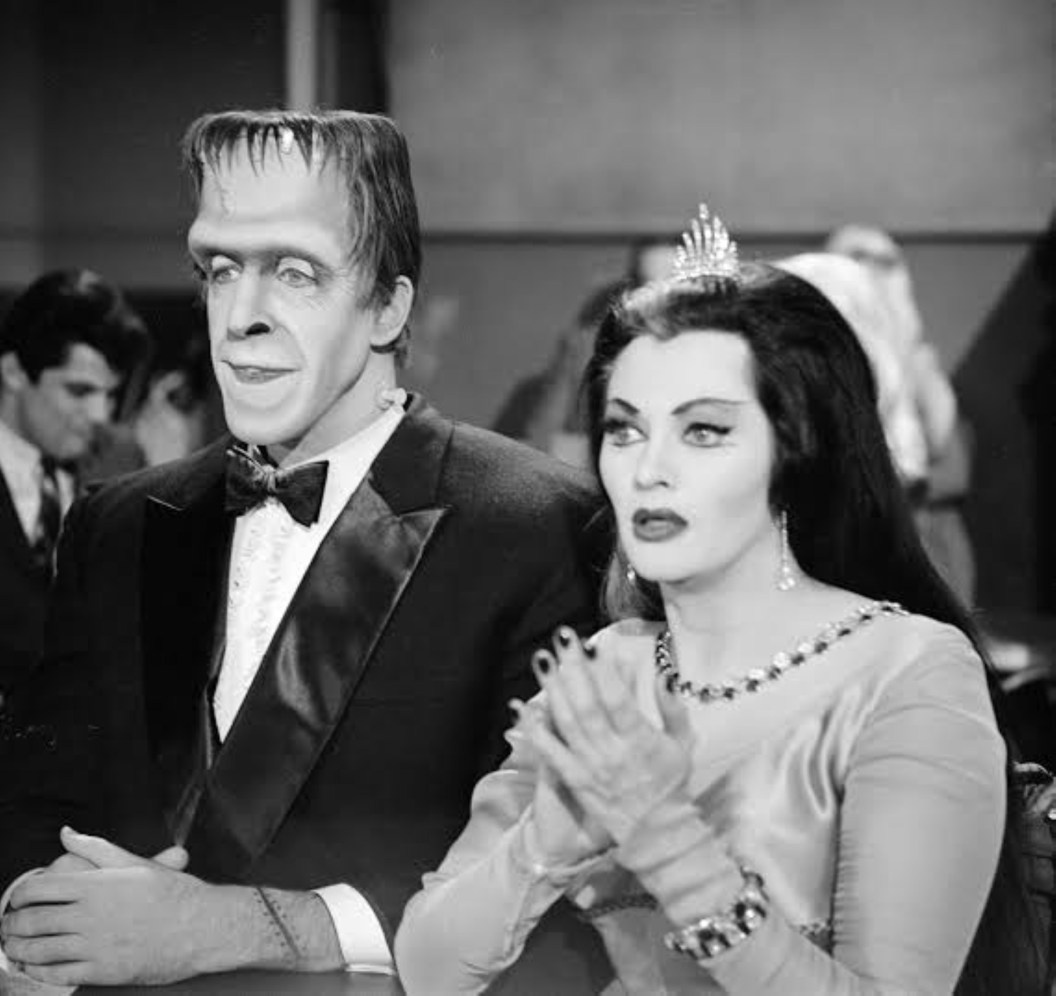
In the mid-1940s, Universal Studios animator Bob Clampett pitched a new cartoon to studio heads— a family-sitcom-style show about a group of monsters. The pitch sat in corporate purgatory for almost two decades until veteran Hanna Barbera writers Allan Burns and Chris Hayward, inspired by the single-panel comics of cartoonist Charles Adams and intrigued by possibility of utilizing Universal’s own catalog of monsters for a sitcom-style show, agreed to combine Clampett’s project with their own. Multiple producers soon took interest in the idea, and, after debates over whether animation or live-action TV was the best vehicle for this concept, the show was picked up by CBS as a live-action series. The Munsters‘ first season premiered on CBS on September 24th, 1964— just six days after the premiere of The Addams Family comics’ own TV sitcom adaptation.
Despite its steep competition on a television landscape that seemed to have abruptly become full of monster families, The Munsters met with positive reception and quickly established itself as a distinct property outside of its inspiration in Addams’ comics— even outperforming The Addams Family tv show with The Munsters’ first season ranking #18 in the Nielsen Household Ratings— and would go on to air for two seasons total. In a grim twist of fate for the series, the second half of season 2 of The Munsters would end up sharing a timeslot with the new live-action Batman series, and due to the resultant dip in The Munsters was renewed further.
Meet The Munsters

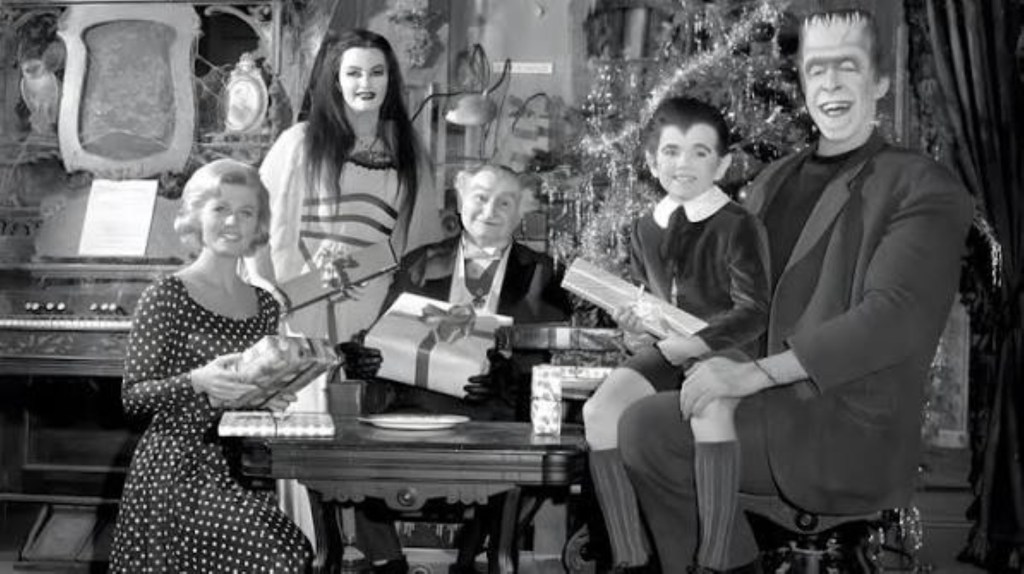
The Munsters, living at 1313 Mockingbird Lane in the heart of the stately, immaculately pruned paradise that was 1960s American upper-middle-class suburbia, fill their two-stories-and-a-dungeon home comfortably with a total of five members. Patriarch Herman Munster (Fred Gwynn) is a massive, flat-headed, stiff-limbed, lumbering creature who (as he often points out to humorous effect) was apparently constructed from the sewn-together parts of various corpses. Clearly a take on Boris Karloff’s 1931 interpretation of Frankenstein’s Creature in terms of physical appearance, Herman was initially written as a standard family sitcom father, kind and fun-loving while still being authoritative and, if need be, stern. However, as the show went on, Gwynn’s clear talent for comedic line deliveries, slapstick action, and general tomfoolery led Herman’s character to shift first to an occasionally oblivious and overemotional comic-relief character, and then later to a petulant, hyperactive, bumbling man-baby absolutely lacking in self-awareness.
Playing the straight man to Herman’s later ridiculousness was his wife, the perpetually cheerful vampire housewife Lily Munster (Yvonne De Carlo), who, while she did have her own moments of obliviousness now and then, was otherwise a perfectly capable, organized, and deeply loving woman who runs the Munster household on a perfect schedule and still finds time to sit down with a tall mug of something ominously smoky. Lily’s father, a more elderly vampire of the Dracula and Nosferatu tradition, is known only as “Grandpa” (Al Lewis) and actually fills two monster-movie archetypes at once due to his hobby of mad science. When he isn’t puttering about in his dungeon lab, Grandpa plays checkers, provides dry commentary on the events of the household, rambles on about “how we did things in the Old Country” (as, yes, it does seem that the Munster family are of Transylvanian origin), and more often than not spends the episode getting one of the other family members to join him on some sort of chaos.
Rounding out the family are the two children, Eddie (Butch Patrick) and Marilyn (Beverly Owen/Pat Priest). Eddie is werewolf boy— albeit with some extra powers— who seems to be somewhere between the ages of seven and ten. Eddie is charmingly creepy with his habits of howling, perching on the walls, and sitting in the lit fireplace— modern audiences may find Eddie’s 21st-century successor in the demon Abaddon from Netflix’ Haunted Hotel, whose antics were almost definitely inspired by the youngest Munster.
Finally, Marilyn Munster is functionally the eldest sibling of the family, although she is actually the daughter of Lily’s sister. Taken in by the Munster family as an infant, Marilyn is now in her late teens or early 20s, blonde, fashionable, practical, pretty, kind, and fully human. While she cares deeply for her extended family and can be found picking up errands and appointments when Lily and Herman are busy, Marilyn’s defining trait— both in terms of her own goals and in how others perceive her— is her inability, despite many, many first dates, to find a husband. While numerous potential suitors are inevitably scared off when Marilyn introduces them to her family, Marylin, in a bit of comic irony, believes that she is the one who they are frightened of, and loudly bemoans that she cannot stop scaring off her boyfriends. However, this running bit is actually far deeper than just an ironic joke— it illustrates exactly what The Munsters is all about— and what makes them distinct from the Addamses.
The Munsters Actually Were Your Average American Sitcom Family— Appearances Aside
The Munsters do not understand that they are different, and they definitely do not know that they are scary. With the occasional exception, the plot of every episode revolves around this- it is the show’s central gimmick. This is the factor by which The Munsters sets itself apart from its inspiration-turned-sister-property. The Addams Family seem to be at least somewhat aware of their strangeness (if not especially concerned with how it affects the more normal people they interact with), with the whole family regularly taking part in macabre, dangerous and gruesome activities— while the show itself features characterizations and plots that invert, satirize, or question the established tropes of the family sitcom genre. The Munsters, by contrast, truly seem to have no idea how out-of-place they are and are happy to remain within the family-sitcom norm in terms of self-image, activities (mostly), family roles and plotlines.
The Munsters consider themselves an average American family, albeit with old and prestigious roots- remember, Grandpa was a count in Transylvania! The only unusual trait the family seems to notice in themselves is that they are perhaps a bit old-fashioned, speaking often about The Old Country, sporting clearly outdated or even medieval clothing in public, being critical of “modern” architecture and clothing (often using this term to refer to styles that were already antiquated by the 1960s), and regularly mentioning their own advanced age.
Outside of this, however, they could barely be more normative— Herman works (at a funeral parlor) and Lily stays home as the beloved mother and perfect housekeeper, while Eddie goes to the local public school, where he looks human enough to not raise suspicion). Regarding the extended family, Marilyn goes to college classes and Grandpa putters around at his hobbies in the basement— the nature of Grandpa’s hobbies, and the fact that the basement is a dungeon, being the only place where The Munsters’ monstrous nature is really reflected in their activities. Even their house illustrates the family’s commitment to normalcy, as while the Munsters Mansion is a bit gawky and overgrown, it is still a large, brownish-beige, upper-middle-class home surrounded on both sides by human-inhabited homes of seemingly similar stature. Only after entering through the creaking front doors of the Munster Mansion do incoming guests seem to realize that they’ve come upon anything more unusual than an old home in severe need of a gardener.
This earnest and joyful commitment to average suburban life is especially clear in the Munsters’ many interactions with their very human, and rather uptight, community at Mockingbird Lane. While the family attempts, consistently and with only the best intentions, to be a part of their local community— being friendly to the neighbors, joining a country club, attending Eddie’s school events- they are met consistently with reactions ranging from confusion, to scandal and disdain, to leaping-fences-running-away terror. However, it seems that even this cannot sway the Munsters’ belief that they are the normal ones here, as, upon returning home from such disastrous outings, they remark on how rude their neighbors are and decide that, if that particular social circle is so strange, crass and disrespectful, then they are not the kind of people a distinguished old family like themselves should be mingling with anyway.
Nowhere is this running theme more obvious, or more painful, than in the case of poor Marilyn- her belief that she is the one scaring off her suitors is shared by her aunt, uncle and grandfather, all of whom point to Marilyn’s own lack of monstrosity as the cause for her lack of marriage options (a fact which does show that the Munsters are aware that they are different from those around them in some regard, although they still seem unaware that their specific type of difference makes them very frightening).
It is this combination of appearances and behavior with a total lack of self-awareness that creates the central gimmick, and the unique charm, of The Munsters. Far different from the indulgent, gleeful, everyday morbidity and set-apart opulent lifestyle of the Addams Family comics that inspired it, The Munsters’ titular scary family truly are scary in appearance only. This gaggle of classic cinema horror superstars are, in every way that counts, your everyday American middle-class family- and it’s that mismatch that gives the show not only its plot, but its heart.
A Legacy That Won’t Stay Dead
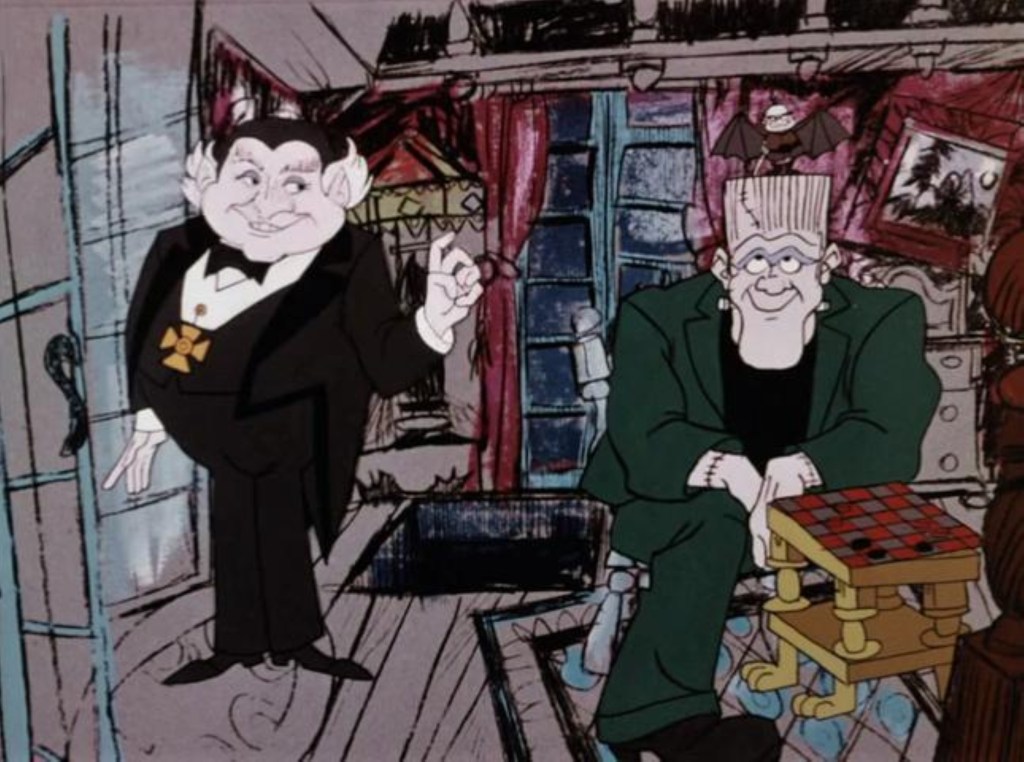
Much like the ghosties and ghoulies that make up its titular family, The Munsters has happily risen from the proverbial grave many times since Batman pushed them off the air in 1966. The show has gotten many attempts at revival- some more successful than others- including the 1966 film Munster, Go Home!, 1973’s animated The Mini-Munsters, the 1988-91 TV revival The Munsters Today, which ran for a season longer than the original, and a 2022 film titled simply The Munsters that was created in part by macabre music legend Rob Zombie. 2012 even brought us an edgy modern take on The Munsters with NBC’s failed pilot for Mockingbird Lane, which was received about as well as most of the tail end of the 2000s’ modern-edgy-remake phase (which is to say, not well at all). However, recent years have seen a surge in popularity for hauntingly nostalgic shows such as Stranger Things and- most relevant to the topic at hand- Wednesday, meaning that while there’s been no word on a possible new The Munsters revival since 2024, fans might do well to keep their eyes peeled.
