


Articles
This Classic Sixties Toy That Let Kids Melt Plastic Was As Cool As It Was Dangerous
Some toys make you wonder whether they were even safety tested at all. Gilbert’s Atomic Energy Lab (which would set you back $49.50 in 1950) let kids play with actual samples of uranium-238. The motorized mouth of the Snacktime Cabbage Patch Doll cost many a child the tip of their finger. The natural curiosity of kids, whose brains seem to constant need the answer to the question of “what if I stuck my finger in this” is a poor match for toys with sharp, scalding, or otherwise dangerous components. Of course, that adolescent brain also wants whatever its parents say it can’t have, making those dangerous, often rapidly-discontinued toys into collector favorites once those kids grow up. And few dangerous classic toys are as collectible or iconic as Mattel’s Strange Change Machine.
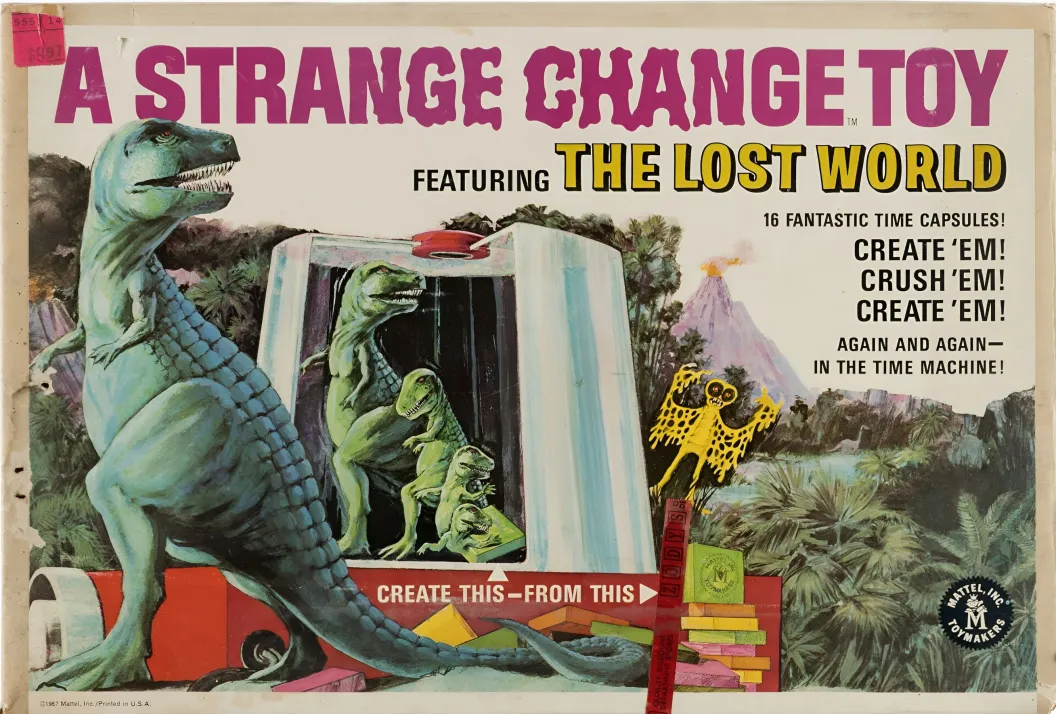
The Strange Change Machine should never have made it past the pitch phase: in brief, it was a hot plate that came with plastic capsules that melted into small figurines. A plastic canopy was included to cover the heating element, and tweezers were included for peeling the still-hot (and fuming — kids who owned the set say it reeked of plastic when in use) figures from the heat, but this did little to curb the set’s hazardous nature. The Strange Change Machine proved short-lived, pulled from the market after numerous safety complaints. Its sister line, the Thingmaker, was much longer lived, though ultimately discontinued over those same safety concerns. Like the Strange Change Machine, the Thingmaker was themed around letting kids create their own armies of creatures, monsters, and creepy-crawlies. Just in time for Halloween, Heritage Auctions is offering a rare lot of still-in-box Thingmaker and Strange Change playsets, all incredibly scarce items in any condition.
How Mattel’s Strange Change &Thingmaker Toys Worked
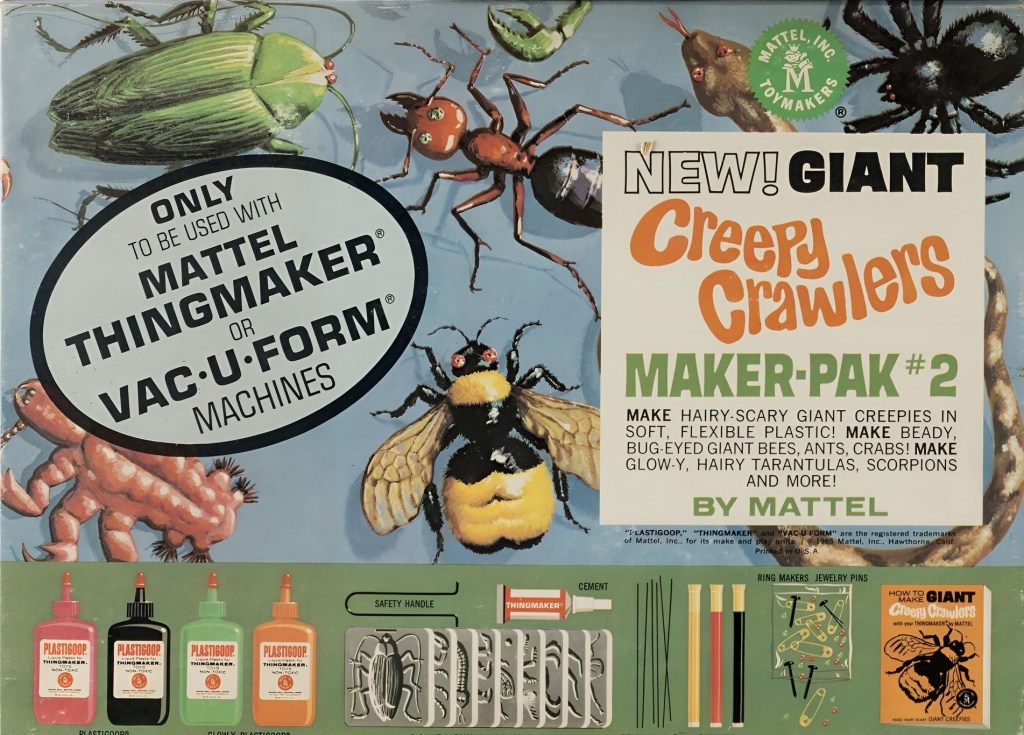
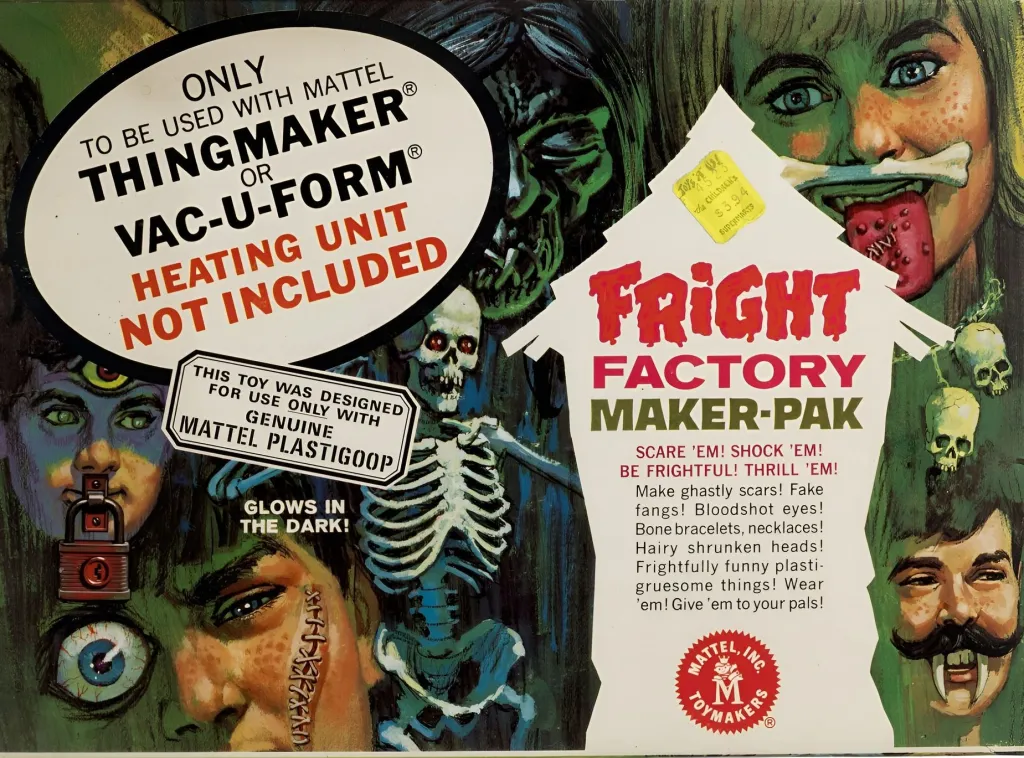
The Thingmaker came first, introduced in 1964. It was a horror-tinged, gross-out version of an existing product called the Vac-U-Maker, which let kids turn plastic goop into plastic figures through aluminum molds and an electric heater. Though it attracted some of the same safety concerns as the later Strange Change Machine, the Thingmaker was generally held as safer: the metal plates prevented direct contact with the heating element, and while these also got hot, you couldn’t touch or play with the toy until they cooled. The first set offered was “Creepy Crawlers,” which included molds to turn the “Plasti-Goop” (a patented technology) into various insects and arachnids. It proved popular enough to inspire numerous spin-off sets, including a second group of Creepy Crawlers (one of the items included in the Heritage lot). The majority of Thingmaker toys kept with the light horror motif set by the Creepy Crawlers. Other Thingmaker sets produced included the bizarre, troll doll-like “Creeple People,” the “Fright Factory” costume disguise kit, Mini-Dragons, and Eeeeks! – which were really just another set of insects. Non-horror sets included the Peanuts-themed Super Cartoon Maker, a Hot Wheels set, and the Dolly-Maker, which was only frightening if you watched too much of The Twilight Zone.
The Strange-Change Machine came onto the market in 1968, building off of the basic principle of the Thingmaker, just … significantly more dangerous. Instead of “Plasti-Goop” and a mold, the figures were pre-molded into shapes and held together chemically in a compressed pellet. Heat released those chemical bonds, causing the figure to spring out from the compressed pellet. To return the figure to its pellet form, the user simply returned to the heat until it became malleable, and then place it in the “Compressor,” a hand-powered screw-press. Sixteen designs were included, all part of a loose “Lost World” theme for the playset, which also came with a green plastic base sculpted as a volcanic jungle valley. The packaging described the heating element (which looked a bit like the business end of a hair-dryer) as a “Time Machine,” with some versions of the toy also including this label directly on the product.
Speculation has it that the Strange-Change Machine was meant to be its own toyline, with the “Lost World” playset one of several intended offerings. This is supported by the verbiage on the box, which describes it “A Strange Change Toy Featuring the Lost World,” though no hard information has ever surfaced regarding what – if any – additional playsets were planned. Even for this one, the “Lost World” theme is loose, with dinosaurs and prehistoric creatures included as well as bugs, an octopus, and several made-up monsters. The break-out star of the Strange Change Machine is a creature called “Membrane Man,” who appears on the toy’s packaging. Despite tweezers and a plastic dome designed to dissuade children from touching the heating element, safety concerns saw the toy discontinued shortly after it came onto the market. The Thingmaker line survived into the early seventies, when a new regulatory body (the Consumer Product Safety Commission) was placed in charge of toy safety. They decided that the Thingmaker, too, posed too much of a risk to kids, and the line came to an end.
The Legacy of Mattel’s Thingmaker & the Strange Change Machine
Mattel unsuccessfully revived the Thingmaker line in 1978, trying and failing to engineer a safer version that worked as well as the original. The 1978 toy kept the Plasti-Goop separate from the heat element, and as a result, took up to an hour to properly heat. In 1992, company ToyMax used design principles borrowed from the Easy Bake Oven to design a new “Creepy Crawlers” line, which went on to use many of the ideas and names from the original Mattel Thingmaker line. It also made expansive use of licensed properties, including Batman, Power Rangers, Toy Story, and The Mask, practically carbon-dating it to the mid-nineties. Mattel would announce a revival of the Thingmaker brand in 2016, which their press release stated would be built off 3-D printing technology. After several delays, the concept was ultimately shelved.
The Strange Change Machine has never been revived, leaving the original toy as a one-of-a-kind relic of a bygone era. It represents a figurative “lost world” of a time before strict safety standards for children’s toys, and has the dubious distinction of being dangerous enough that it was pulled from the market back then. For those lucky enough to own one, it’s a product that was lucky to make it to shelves once, and which will never be seen again. The sample on auction at Heritage is “brittle,” with Heritage stating that its condition is so delicate that its inside contents can’t be inspected without risking damage to the box. As the wit who wrote the auction listing phrases it, “Mattel invited children to create ’em, crush ’em, and create ’em again; though at this stage, it may be best to treat the contents gently.” Though perhaps no longer functional, the lot represents an incredible display place for the right collector, and with bright, comic-book colored packaging, it’s easy to see why a generation of kids were fascinated by these toys.
