


Articles
5 Times Star Trek Broke the Prime Directive (& #1 Was the Right Choice)

The Prime Directive is the closest thing Starfleet has to a commandment. Do not interfere with the natural development of alien civilizations, particularly ones that have not figured out warp drive yet. As Picard put it in “Symbiosis,” it “is not just a set of rules; it is a philosophy, and a very correct one.” It is also a rule that Starfleet’s most celebrated officers have violated with a regularity that borders on recreational.
Part of that is era. Kirk treated General Order 1 as a strongly worded suggestion, particularly where computer gods were concerned, and he has a rap sheet long enough to need its own list. Picard treated it as scripture, occasionally to the point of watching people die rather than bend it. Sixty years on, the franchise is still rewriting what the rule even means. William Shatner has been refreshingly blunt about the whole thing, telling a convention crowd that the Directive was infinitely malleable and that if a society is worshipping a rock, you blow the rock up. Here are five times Starfleet broke its own biggest rule, counting down to the one that was unambiguously the right call.
5. Kirk Starts an Arms Race in “A Private Little War”
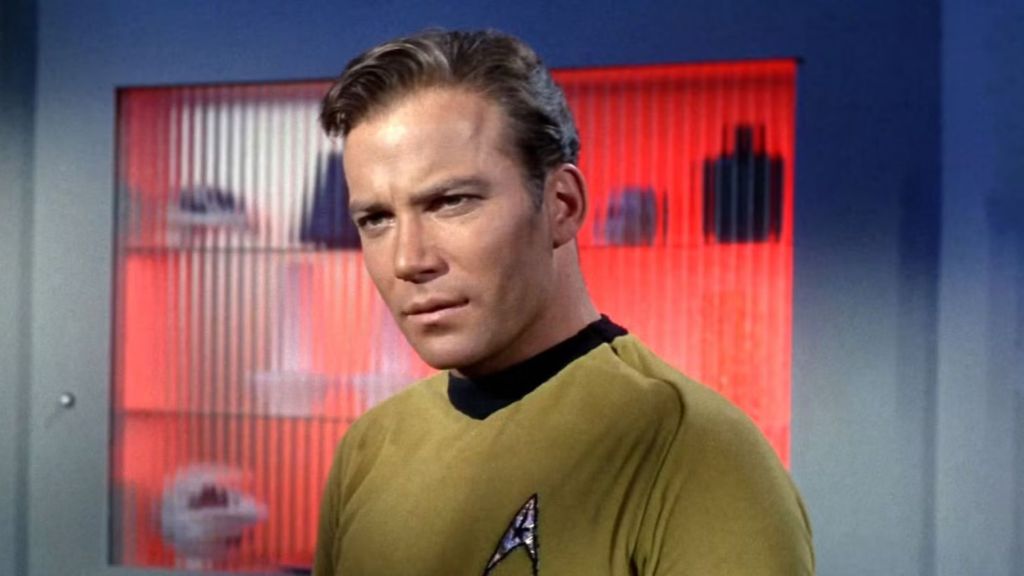
The bleakest entry on this list. Kirk returns to a planet he surveyed thirteen years earlier and remembers as a paradise, and finds the Klingons have been quietly arming one faction with flintlocks. His solution is to arm the other side with flintlocks too. The show never lets Kirk pretend he is the reasonable one here. The villagers he is arming against are not monsters, just people who happened to be handed better weapons by somebody else first, and the Hill People he chooses to back are not innocents either once they have rifles in their hands. Tyree, the friend Kirk made on that survey thirteen years earlier and the man he is supposedly protecting, spends the entire episode refusing to fight and ends it asking for guns. The pacifist becomes a combatant because Kirk made it possible, and the episode simply stops there instead of offering anybody a way out of it.
There is no happy ending, no clever third option, and no computer to punch. Kirk himself names the logic: “A balance of power. The trickiest, most difficult, dirtiest game of them all, but the only one that preserves both sides.” It is 1968 and the episode is not subtle about which real war it is thinking of. What makes it stick is that Kirk knows exactly what he is doing. He is not saving anyone. He is deciding that a permanent, escalating arms race is preferable to losing it, and the episode has the nerve not to let him off the hook. McCoy spends the hour telling him so.
4. Kirk Falsifies His Log After the Nibiru Incident
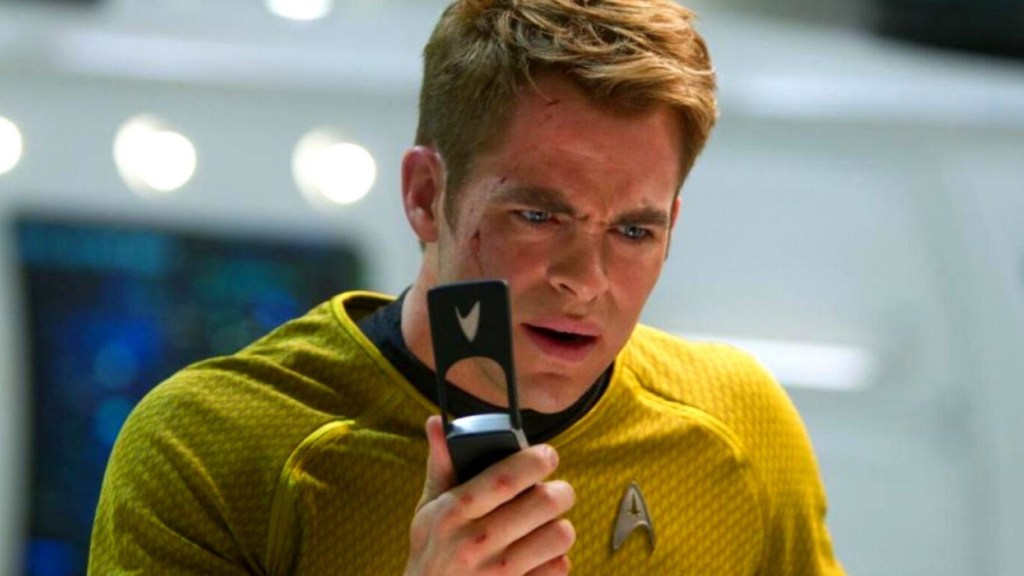
The opening of Star Trek Into Darkness has Kirk sprinting through a red jungle with a stolen scroll while Spock dangles into a volcano, and it ends with a pre-warp civilization watching the Enterprise rise out of the ocean and immediately beginning to worship it. Kirk then files a captain’s log claiming nothing of the sort happened. Spock, being Spock, files an honest one. Pike demotes him on the spot. It’s a good setup to the central tension of the film that follows – especially as it pertains to how much responsibility and power had been thrust on Kirk at such a young and reckless age. When Starfleet is shattered and all the rules go out the window. How does someone like Kirk lead in a moment where his worst instincts could run away with him?
Notice how small the lie actually is. Kirk does not cover up a massacre or a war crime. He writes down that the Nibirans never saw the ship, which would have gone unnoticed forever if Spock’s report had not landed on the same desk an hour later. Spock is not trying to sabotage him either. He simply cannot conceive of a reason to write something false in an official record, and that gap between the two of them turns out to be the actual subject of the movie. The violation was arguably defensible and the cover-up absolutely was not. Kirk saved a species and his first officer, then lied about it because he assumed nobody would check. The Prime Directive did not break him. Paperwork did.
3. Kirk Blows Up a God in “The Apple”
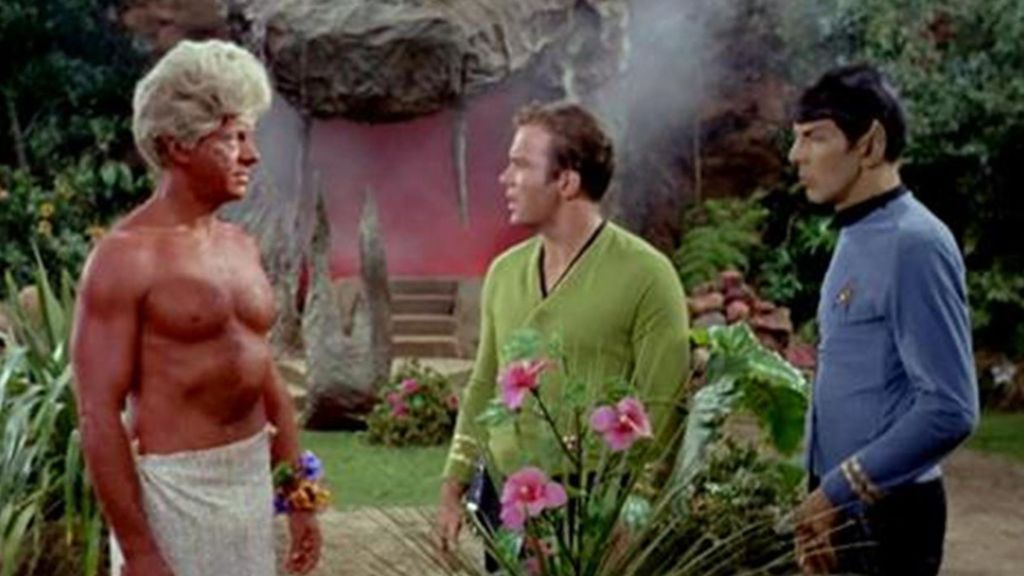
The template for every Kirk-versus-computer episode. On Gamma Trianguli VI, a society of childlike humanoids feeds a machine called Vaal, which in return keeps them fed, ageless, and completely stagnant. Nobody grows. Nobody dies. Nobody has any idea what a kiss is. Kirk destroys it, then delivers a cheerful speech about how they will figure out farming and reproduction eventually. McCoy is on board, arguing the Vaal arrangement has kept an entire people in permanent infancy. Spock is not, and raises the Prime Directive before Kirk overrides him.
The episode is honestly uncomfortable to watch now, because the Vaal arrangement is presented as a kind of paradise right up until Kirk decides it is not one. The people are healthy, peaceful, and completely incurious, and the show frames that incuriosity as the horror instead of the peace. McCoy argues they have been robbed of the right to grow, Spock counters that they might not want it, but neither of them asks the people themselves.
This is the one Trek fans argue about hardest, because both readings hold up. Either Kirk liberated a species from stunted servitude, or he strolled onto someone else’s planet and dismantled their entire way of life because it made him uncomfortable. Shatner’s position, for the record, has always been the rock-blowing-up one.
2. Picard Almost Lets a Species Go Extinct in “Homeward”
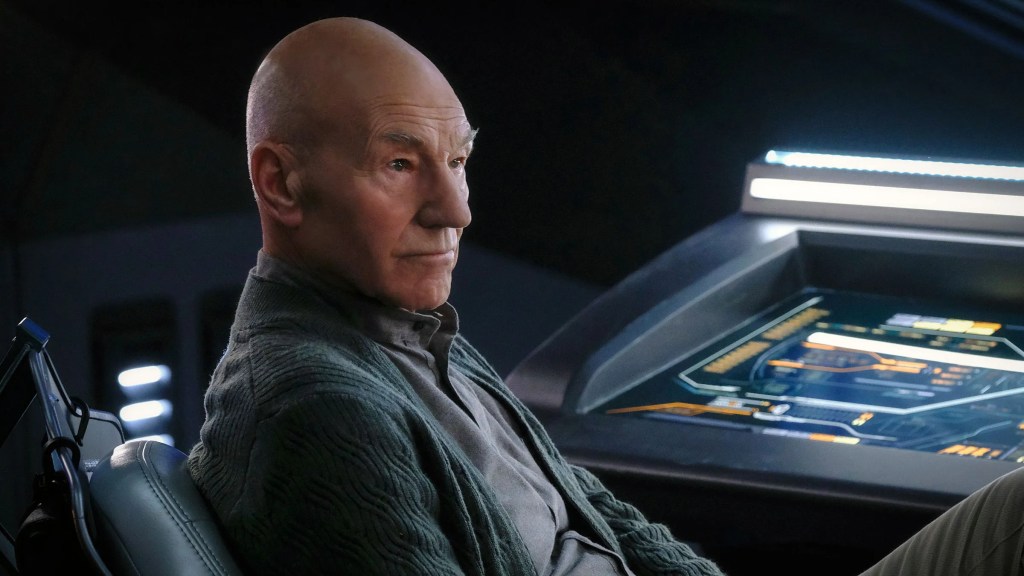
Here is the rule taken to its cruelest possible conclusion. Boraal II’s atmosphere is dissipating. The Boraalans are a pre-warp people who will all be dead within days. Picard’s position is that the Prime Directive forbids intervention, and that is essentially that. Worf’s foster brother Nikolai disagrees strongly enough to secretly beam an entire village onto the holodeck and walk them through a simulated landscape to a new world, which he pulls off largely by lying to a starship captain for several days.
What makes it worse is how the episode handles the one Boraalan who works out what has happened. Vorin wanders off the holodeck by accident, sees the ship for what it is, and cannot reconcile it with everything he believes. Instead of letting him return home carrying all that knowledge, the story has him take his own life, which is the price the episode quietly assigns to the interference Picard was trying to prevent.
The episode wants you to find Nikolai reckless, and he is. But it cannot quite get around the fact that Picard was prepared to sit in orbit and watch a species die on principle, and that the only reason any Boraalans exist is that somebody ignored him. It is the single strongest argument the franchise has ever made against its own favorite rule.
1. Data Answers a Little Girl in “Pen Pals”
“Is anybody out there?”
Data, running a routine survey, picks up that signal from Drema IV and does something no Starfleet officer is supposed to do. He answers it. On the other end is Sarjenka, a child on a pre-warp world, and over six weeks of conversation Data does the exact thing the Prime Directive exists to prevent. He becomes her friend. Then her planet starts tearing itself apart.
The senior staff debate that follows is one of the best scenes in early TNG, precisely because nobody in the room is a villain. Everyone is right. Picard’s opening position is the correct one by the book, and Data demolishes it in eleven words: “The Dremans are not a subject for philosophical debate. They are a people.” What ends the argument is not logic. It is hearing her. Sarjenka’s voice comes over the comm calling for help as the eruptions start, and Picard, who had been referring to her as a life form, says quietly, “Your whisper from the dark has now become a plea.” That is the moment the rule loses.
This one fails none of the tests, which separates it from sentimentality. Drema IV was dying of geology, not of anything a rival culture did. Saving it took nothing from anyone. There was no side to pick, no balance of power to preserve, no way of life being dismantled by a starship captain who knew better. And the interference had already happened the moment Data said “hello.” Picard tells Data afterward that he reminded him there are obligations that go beyond duty. That is the whole argument. A rule that would require you to listen to a frightened child ask for help and then switch off the comm is not a philosophy. It is a technicality wearing one.
