


Articles
I’m Worried About Assassin’s Creed Getting One Thing Right In Black Flag Remake
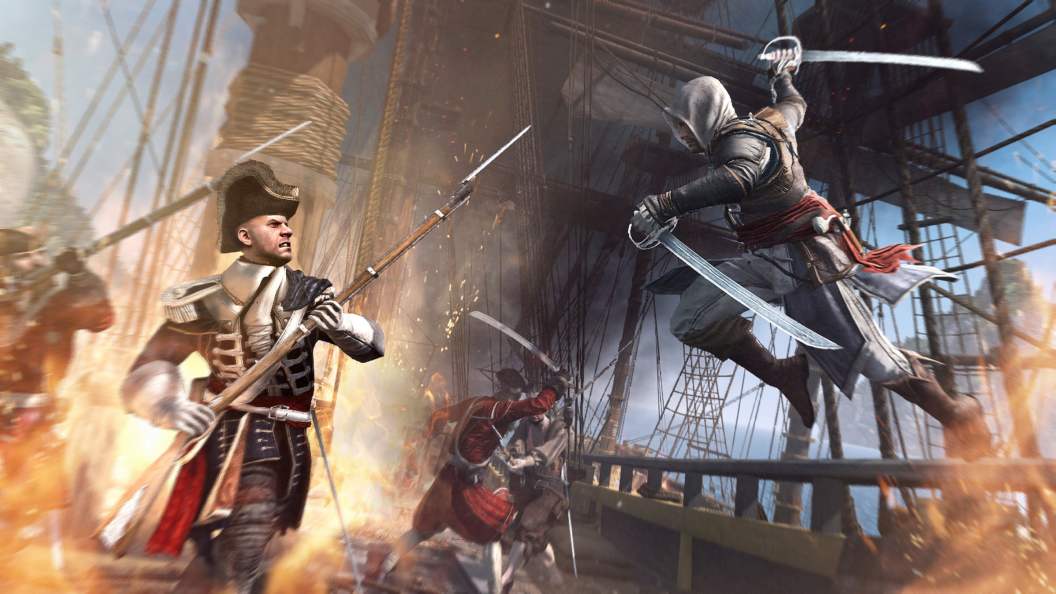
Whenever a remake starts circulating in rumor territory, there’s an automatic assumption that something needs to be “improved.” That assumption is rarely comforting, especially when the original game is remembered fondly and still holds up surprisingly well. Ubisoft, in particular, has a reputation for revisiting its past with a very heavy hand, often under the belief that modern systems automatically mean better design.
That’s why the heavily rumored Assassin’s Creed IV Black Flag remake immediately raises two very specific concerns for me. Sailing and ship combat were the standout features of the original game, so successful that Ubisoft spent years trying to build an entire spinoff around them with Skull and Bones. The results were not exactly confidence-inspiring in any shape of the phrase. The worry now is that Ubisoft might look at Black Flag and decide that its best feature needs to be updated using lessons learned from a game that never even remotely came close to capturing the same lightning in a bottle.
Black Flag’s Ship Combat Worked Because It Didn’t Try Too Hard

Black Flag’s naval combat succeeded largely because it stayed in its lane. Sailing felt smooth, combat encounters were easy to read, and players didn’t need to study a tutorial menu just to understand how to sail a ship on the open seas. What was happening on screen was very simple to comprehend, and that did the game a lot of favors. Everything was designed to support the fantasy of being a pirate, not the fantasy of managing systems: one of Skill and Bone‘s biggest problems that Ubisoft, to this day, does not understand.
More importantly, though, ship combat respected the flow of Assassin’s Creed without jeopardizing its core gameplay. You sailed with the game’s signature system, but fought foes on board ships and on land in that typical Assassin’s Creed fashion, all without sacrifices and without friction. It never felt like the game was stopping to show off how deep its mechanics were. The ship was a tool, not a personality trait, and that restraint made the experience memorable.

Skull and Bones went in the opposite direction by making naval combat the entire point, going so far as to even remove the ability to have any sort of combat on land. The game is just now adding that aspect in, when it should have obviously been there from the start. Layers of tedious progression and mechanical complexity just for the sake of it turned what was once breezy into something far more deliberate. That approach works for a game built entirely around ships (or not), but it clashes with what Black Flag was originally designed to be. If the remake starts borrowing too heavily from that design philosophy, it risks turning a smooth pirate adventure into something much heavier than it ever needed to be.
Ubisoft’s Reputation Makes This Hard To Ignore
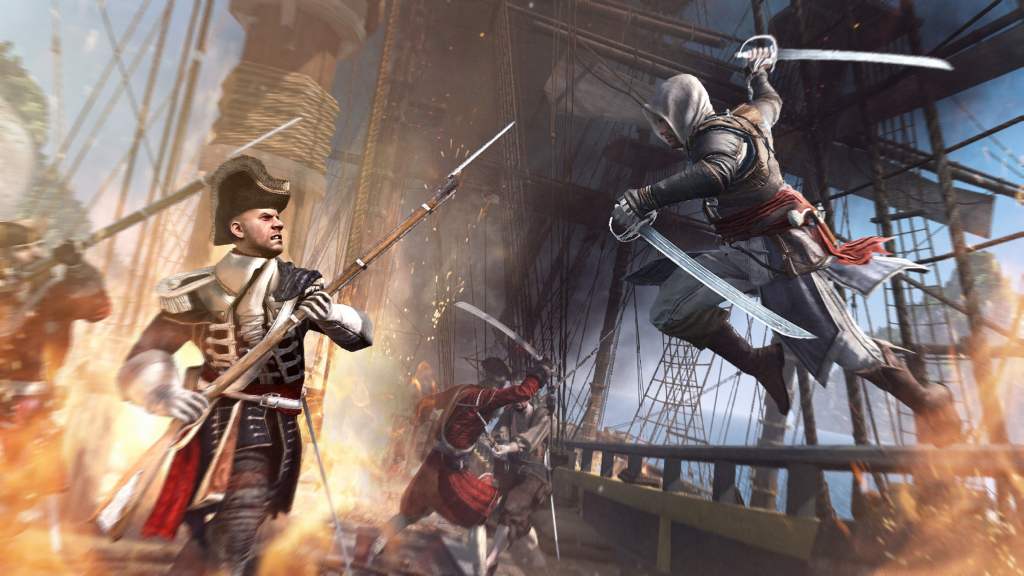
The skepticism around this remake is not coming out of thin air. Ubisoft’s recent history has been defined by constant course correction and controversy. One game goes all-in on size and longevity, the next pulls back dramatically in response. The company clearly understands that its franchises need refinement, but execution has been inconsistent enough to make even safe projects feel uncertain.
A Black Flag remake should be highly straightforward. Update the visuals, smooth out older mechanics, improve performance, and avoid unnecessary re-inventing of the wheel. Unfortunately, Ubisoft has a habit of treating familiarity as a problem rather than a strength. When something worked in the past, the instinct often seems to be retooling it to justify its existence in the present.
Then there’s Skull and Bones. Ubisoft invested years and a significant amount of resources into that project, and it’s hard to imagine those systems not being considered for reuse somewhere. From a developmental standpoint, it makes sense to do so in order cut down on cost. But, while the Black Flag remake remains unconfirmed, the concern is, nevertheless, understandable. Black Flag is often cited as the greatest version of Assassin’s Creed that has ever existed. It does not need validation from a newer, less celebrated experiment. If Ubisoft remembers why the original worked and resists the urge to overcorrect, the remake could be great. If not, it risks becoming a reminder that sometimes getting one thing right is harder than it looks, or at least, for Ubisoft it is.
What do you think? Leave a comment below and join the conversation now in the ComicBook Forum!
The post I’m Worried About Assassin’s Creed Getting One Thing Right In Black Flag Remake appeared first on ComicBook.com.
