


Articles
The Best 2000s Horror Franchise Reinvented Itself 17 Years Ago, And Surprising Competition Destroyed It
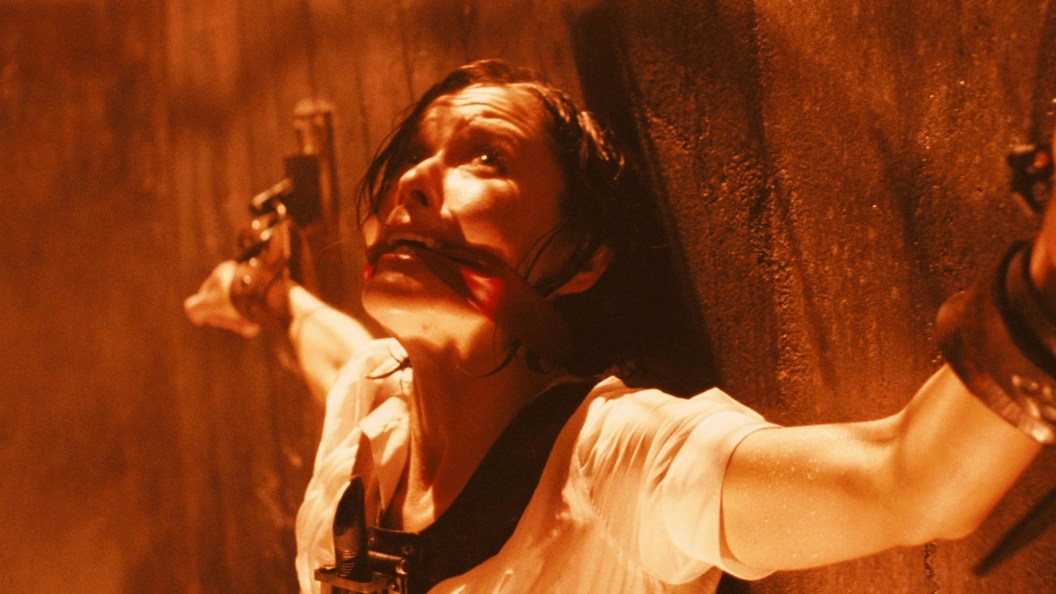
Like every other era of Hollywood, the 2000s saw some pretty distinct formulas become the norm for horror movies. Not only was it the decade that gave rise to a gold rush of American remakes of Asian horror movies, but the rise of the subgenre that came to be called “torture porn.” Though movies like Hostel, The Devil’s Rejects, and Wolf Creek were all given this label in a derogatory fashion, there’s one franchise that not only became the baseline for the subgenre but the one that audiences couldn’t get enough of: Saw.
Kicking off in 2004 with James Wan and Leigh Whannell’s original film, Saw not only became an annual fixture for audiences, but the bottom line of Lionsgate as a studio. Sequels in the Saw franchise would arrive every Halloween on schedule, to the point that the franchise tagline became “If it’s Halloween, it must be Saw.” Each Saw sequel was bolstered by the fans eager to see the next chapter of the story and to compare notes on how easily they might survive, with the first five grossing more than $100 million each (the peak being Saw III at $164 million), but the Rotten Tomatoes score only moved downward. That all changed 17 years ago today, though, when Saw VI showed up and revived the entire concept, including some critical reappraisal.
Saw VI Revitalized the Franchise With Fresh Ideas
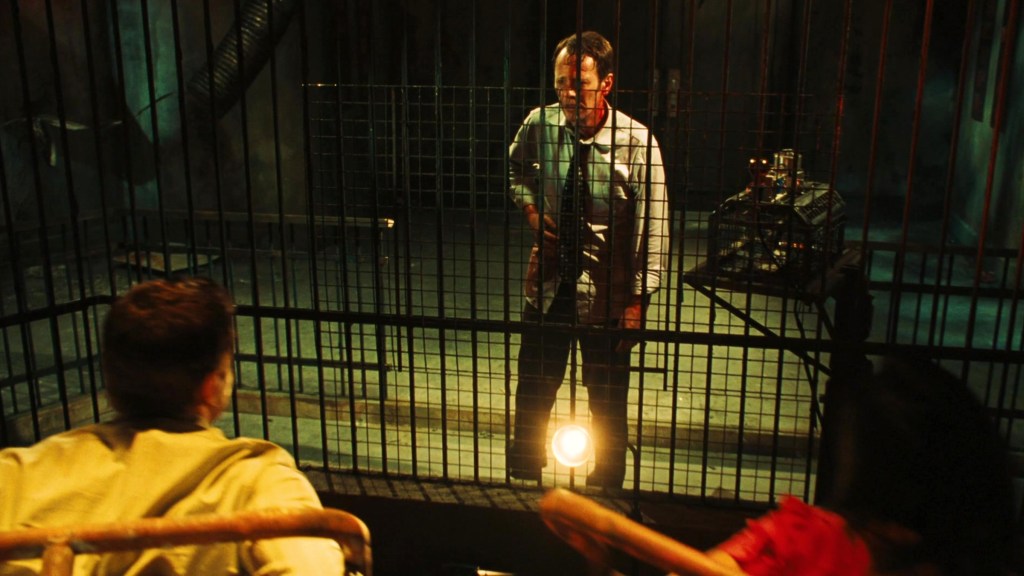
By this point in the franchise’s history, the formula for Saw was very well established. Victims of the Jigsaw killer would be forced into deadly games where they must suffer and learn a moral lesson, or die, all culminating in some kind of nearly unpredictable twist by the film’s end. Along the way, there would be all manner of gore and guts, plus wildly violent “traps” that became a staple of the series.
On its surface, Saw VI was no different, focusing on health insurance executive William Easton (Peter Outerbridge), revealed to have been a person at least partially responsible for Jigsaw’s creation when he denied the character treatment for his cancer. The result was a film that had a twist on the formula, forcing Easton to choose who lives and who dies and taking his “job” to the extreme. Even the final twist had this in mind, forcing the family of another person Easton had “doomed” to die by denying healthcare coverage are given the chance to make the same choice for him (spoiler alert: they do).
What’s worth remembering, though, is that when Saw VI premiered on October 23, 2009, it was nine months into Barack Obama’s first term as President of the United States, and came at a time when the debate surrounding what would eventually become the Affordable Care Act was a massive part of the political discourse. The idea that health insurance companies held the fate of their customers in their hands and could decide the outcome of their lives because of cost was a key piece of this argument, and became the entire thesis statement for Saw VI as a movie. As a sequel, Saw VI continued the larger narrative of the franchise, but it also had a bite to it that none of the other sequels had ever achieved.
Though the Saw films had seen a steady growth at the box office with only marginal ups and downs, critically they had become a punch bag. Even though the original film holds a 50% approval rating on Rotten Tomatoes, each entry afterward fell even lower, with Saw V holding a dismal 13%. Saw VI, though, was seen for what it was: a horror movie that was acting in response to the time it was being made and responding in kind to political issues with a cathartic story, and critics noticed. Upon release, Saw VI leaped to a 39% approval on Rotten Tomatoes.
Saw vs. Paranormal Activity Kicked Off in 2009
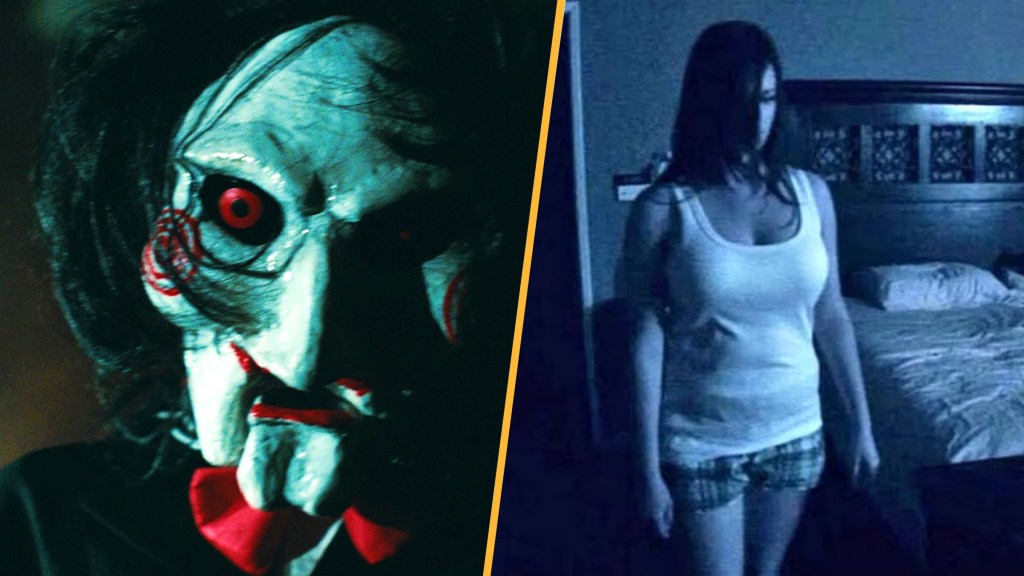
There was just one problem for Saw VI, and it was ironically a buzzsaw that the movie never realized was coming. Despite planting a flag and claiming Halloween as its very own thing once again, successfully scaring off other horror movies over the years, Saw got its first real competition in 2009 when the found footage horror movie Paranormal Activity finally made its way out into theaters. On its face, one may not think that the overlap in audience for a loud and gory horror movie would be the same one showing up for a ghost-centric found footage movie, but the reality is that it gave Saw its first real competition…ever.
On Friday, October 23, 2009, not only did Saw VI open in theaters, but it marked the date that Paranormal Activity actually went into wide release, expanding to 1,945 theaters from 760 (which was up from 160 the week before that). The hype around Paranormal Activity was immense, akin to Obsession in 2026 in many ways, as the demand to see the movie became a fixture of the actual marketing campaign (fans could “demand” to see it in their town, with winners getting earlier access to the theatrical rollout).
Even though Saw VI was released in more than 1,000 more theaters than Paranormal Activity, and had the best reviews of any of the Saw sequels ever, it wasn’t enough to hold off the next horror phenom. Saw VI opened to $14.1 million to Paranormal Activity‘s $21.1 million, opening in second place – a first for the franchise – and an opening weekend that was less than half of the previous Saw movie.
The results were seen as both conclusive and catastrophic. Plans for Saw‘s future were immediately shifted, with ideas for two more sequels in the series condensed into one last movie, billed as “The Final Chapter” and hastily put together to capitalize on the 3D craze. As a result, Saw ended with its worst-reviewed movie of the series, and failed to keep the magic that its sixth movie had managed to achieve (like other horror movies before it, the “last” Saw movie would be followed by multiple additional sequels).
The release of Saw VI is one of the most distinct in the entirety of the franchise, and a piece of its story that gets lost in the bigger picture of both the series itself and the history of horror. Not only did it prove that there was still new life to be found in a franchise that many assumed had gone stale, but that adding a little bit of subtext to the film itself could go a long way.
Since the release of Saw VI, the series has released four more movies, with the best-reviewed of them all being 2023’s Saw X, a film that not only brought back Saw VI director Kevin Greutert, but had a bit of subtext on its mind as well. Another film in the series is confirmed, with Mike P. Nelson set to direct; here’s hoping it finds a prescient angle that can give it a little something extra.
