


Articles
The New Cat in the Hat Is a Movie Executive’s Idea of Dr. Seuss’s Legacy [Review]
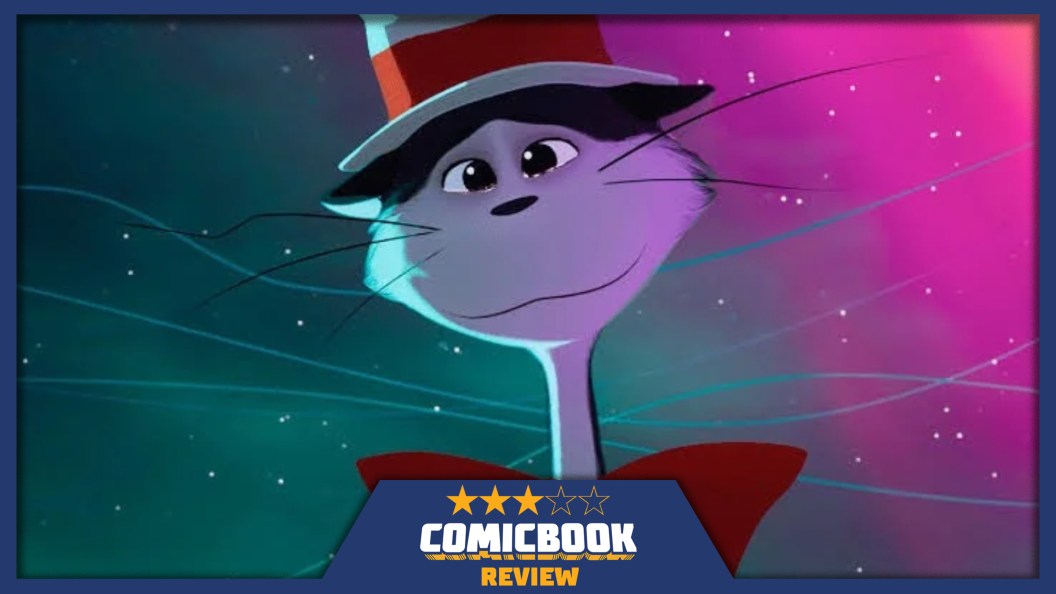
Animated films have always been huge business, but it feels like they’ve been much more ambitious in the last few years. Sony Pictures Animation has raised the bar with the Spider-Verse movies, while Illumination has found plenty of success with completely fresh characters that drive memorable adventures. Warner Bros. has a long history of great animation, so bringing Dr. Seuss’s The Cat in the Hat back to theaters seemed like a perfect opportunity to show what the studio could do. Throw in Bill Hader, returning to a major animated starring role after Cloudy with a Chance of Meatballs, and there was plenty to be excited about. With that much talent and history behind it, The Cat in the Hat had a lot of promise.
For the first twenty minutes of the movie, it feels like it could pull it off. The movie opens like an absurdist episode of Doctor Who, with Hader’s Cat standing in for the Doctor. He’s a force of nature who can bend reality, travel to impossible places, and generally make a mess of everything. But the rest of the movie feels like Dr. Seuss filtered through a franchise optimizer, wrapping the kind of story we’ve seen in a dozen other animated movies around a character whose appeal is pure nonsense.
That is not to say that The Cat in the Hat isn’t entertaining. It’s adorable, with some surprisingly hilarious adult humor, and Hader is pretty much perfect in the title role. So spontaneous is his performance that it’s hard not to wonder how much of the dialog was improvised by the SNL alum. There is also a catchy theme song, which made me think this was going to become a musical, but alas, it is just a missed opportunity. Which seems to be a running theme with this movie.
Rating: 3 out of 5
| PROS | CONS |
|---|---|
| Bill Hader is perfectly cast as the Cat in the Hat | Feels engineered to launch a franchise |
| Charming humor and some impressive 3D animation | Inconsistent character designs and animation |
| Surprisingly heartfelt band nerd storyline | Forced villain and derivative action sequences |
| One of the best end-credit bits in a while | Doesn’t fully embrace Dr. Seuss’s imagination |
The Cat in the Hack Movie
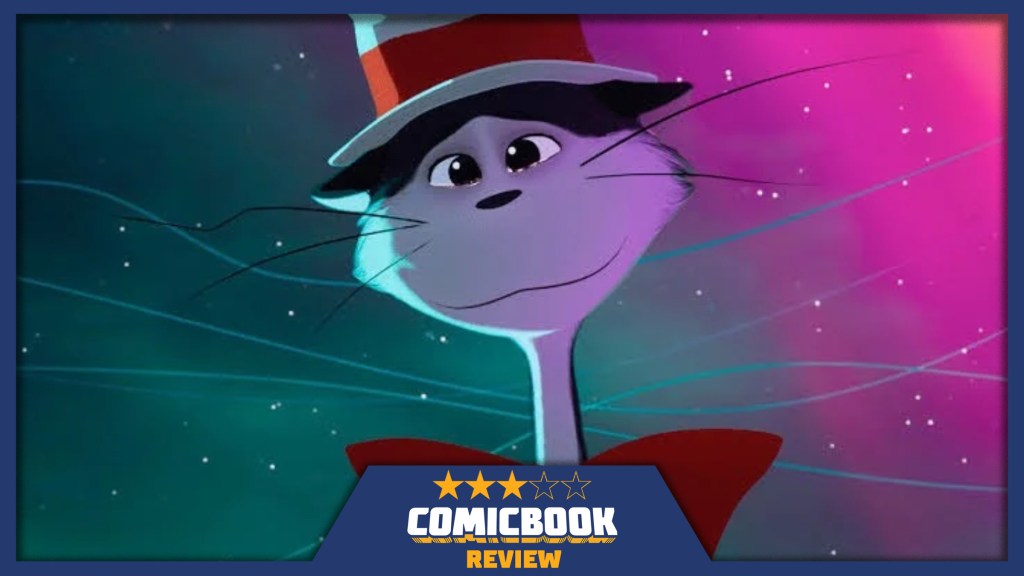
One of the movie’s surprising strengths is Gabby’s love of marching band. The film treats her passion for music seriously, capturing the dilemma middle school musicians face when deciding whether to continue in high school. It’s a relatable experience that rarely gets attention in movies. And there is a fun moment set to a Taylor Swift song that does spark joy. In that respect, The Cat in the Hat might be the best marching band movie since Drumline. Unfortunately, the human characters aren’t nearly as interesting to look at. The mixture of animation styles creates a vibrant, occasionally beautiful world, but the humans look waxy and bland. Gabby’s mom Carmen is especially distracting, resembling an unadjusted character mesh downloaded into Unreal Engine.
The voice cast fares better. Matt Berry, best known for What We Do in the Shadows, plays Waffles, the talking goldfish. Berry is fine, but his voice practically begs for jokes that never arrive. Giancarlo Esposito plays Mr. Hoogeboom, the Cat’s boss, whose design looks like a cel-shaded Dreamcast remnant. Ultimately, the movie loses momentum whenever the Cat isn’t around, leaving Hader to do most of the heavy lifting.
Dr. Seuss Meets The Flywheel Franchise Machine

The biggest disappointment is how much The Cat in the Hat borrows from other animated franchises. Thing 1 and Thing 2 have evolved into The Things and essentially become Minions, complete with the manic sidekick comedy that made Despicable Me a merchandising empire. The villain storyline feels equally forced, as though every animated family movie needs a big bad guy to defeat. But the villain is a very dark bad guy. The character design is genuinely frightening, introducing serious nightmare fuel into a movie based on a book that helped generations of children learn to read. Things get stranger when the movie launches into a sequence resembling the climax of Ready Player One or a Fortnite crossover trailer. It’s oversized blockbuster spectacle that doesn’t feel much like Dr. Seuss. The Cat’s appeal comes from the absurdity of what he does, not how big the action gets.
In a key flashback to Carmen’s childhood, it’s pretty frustrating to see the lack of imagination. The sequence uses frozen illustrations to keep the revelation under wraps, instead of letting us fully experience the memory. It’s a common cost-cutting move in anime, but here it seems like they’re using illustrated exposition instead of actual storytelling at a key moment. For a film about imagination, The Cat in the Hat has a frustrating habit of asking viewers to imagine the most interesting scenes for themselves.
Horton Hears a Who! took many liberties with Seuss, expanding the story and adding modern jokes, but it still felt like Horton Hears a Who! Maintaining Seuss’ distinct visual style and storytelling appears less important than competing with the latest animated blockbuster. There’s also very little educational value. The original Cat in the Hat helped kids learn to read. The lessons in this film are overly simple: use your imagination and accept that children make messes. Ultimately, Warner Bros. appears to be more interested in launching its next animated franchise than in producing a great Cat in the Hat film. That’s a shame because the corporate packaging conceals a genuinely funny, wonderfully absurd film. Hader is fantastic, and the film even includes one of the best end-credits scenes in a while.
It’s a vast improvement over the Mike Myers live-action movie, but there’s something missing from the movie surrounding the Cat that makes all of Hader’s charm feel wasted. For anyone looking for something to do with their kids, The Cat in the Hat isn’t a bad option. It’s just not as good an option as we’d hoped, considering the cat’s pedigree.
