


Articles
Mortal Kombat II Director Reveals Detail Process of Deciding What Characters (And Fatalities) to Use From the Games [Exclusive]
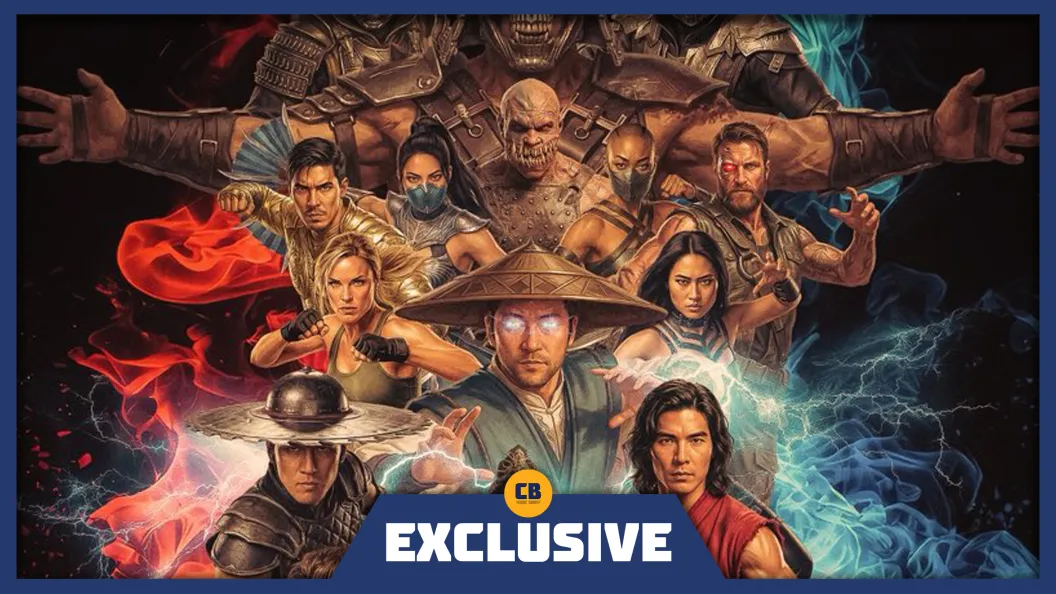
When you have a franchise that’s been around for as long as Mortal Kombat, it’s always going to be a challenge when deciding who gets a spotlight, especially when you are talking about a two-hour movie. Impressively, Mortal Kombat II upped the ante on the first movie and added in even more characters and fatalities, and even that wasn’t enough to cover everyone and everything. ComicBook had the chance to speak with Mortal Kombat II director Simon McQuoid all about how the team decided which characters and fatalities to use from the games, and the challenges of bringing certain fatalities to life on the big screen.
With a roster as stacked as Mortal Kombat’s, it was never going to be easy to decide on the final lineup for the movie, but McQuoid revealed one key element that helped them cut down the options. “Well the thing that Ed Boon has done, and all those geniuses over there with him, is that over the years, there’s a massive amount of characters to draw from. So what was really hard was actually trimming off characters that were interesting and sort of pruning it down to the set we had, which was already very large,” McQuoid said. “You know, it’s a lot of characters, and I think that the goal is to find characters that have some way of connecting on a very primal, human level to the audience. And so the audience can go on that journey with them. Not only on the surface but also with the story that they’re emotionally going through.”
McQuoid also highlighted the purpose they have for the story, bringing Baraka into the spotlight. Baraka is a beast onscreen, but his main purpose was to build up Johnny Cage, not get himself over (to use a wrestling term). “So I guess you look at characters for the love that people have for them, but then you also look at what narrative job they’re going to do for us with the storytelling. So there are lots of different layers to it, but there are lots of different characters, and so you don’t want to get too many in there. You don’t want to spread yourself too thin, and I think perhaps, you just want to make who’s there really count,” McQuoid said.
Mortal Kombat’s Simon McQuoid Reveals Perception vs Reality On Creating a Fatality
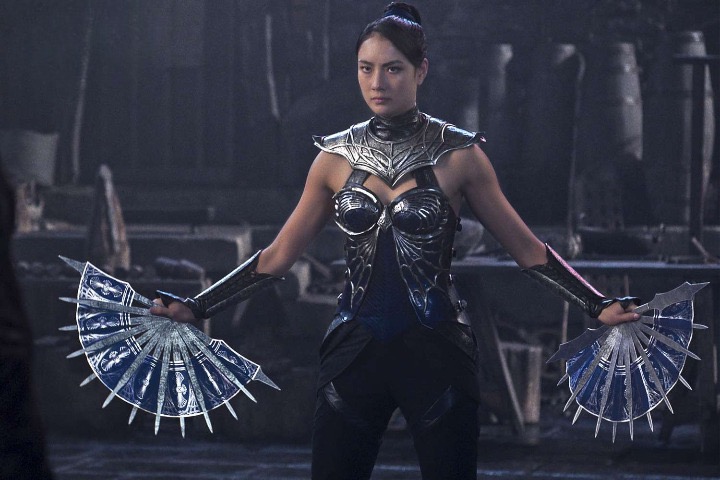
Mortal Kombat II featured several fatalities as well, though in many cases, there are differences between the fatalities from the games and the ones used in the films. That’s due to a number of factors, with one important element being that the more realistic and detailed you make the fatality for the film, the more scrutinized it becomes.
“The fatality is really interesting, because in a video game when it’s just sort of CG, you can get away with so much, but when it’s actually real and if it looks too real and if there’s too much blood, it gets really tricky,” McQuoid said. “So I think the thing we always tried to do with any of the fatalities was make them count emotionally. Make them arrive at a time, like Kitana and Shao Khan, for instance, at the end.”
Tying the Fatality into a poignant or shocking moment gives the move some additional impact, but it also needs to resonate with that particular character’s story for all of it to work.
“You wanted to match with what’s going on with the character, so that not only do you love the fatality, but you care that the fatality was used at that point because it’s right for the story for that character. I think that’s really the, it’s using them at the right time for them to pack an emotional punch, but also all the other punches that we want out of them,” McQuoid said.
“Because I think that’s what’s so great about what Ed and the team have done with Mortal Kombat, is the characters are just, people love the characters,” McQuoid said. “Everything is in support of the characters and their relationships, so it’s all just in support of that and if we can see and watch a glorious fatality, then it’s a wonderful thing.”
Mortal Kombat II is now available on Prime Video, Apple TV, Fandango, and participating digital platforms.
What do you think? Leave a comment below and join the conversation now in the ComicBook Forum!
