


Articles
In Theaters 18 Years Ago, A Fantasy Series Based on a Classic Monster Movie Changed A Trusted Formula, & Released A Franchise-Killing Third Entry

Universal Pictures built one of Hollywood’s most enduring horror brands nearly a century ago, long before “shared universe” became an industry buzzword. Starting in the early 1930s, the studio’s roster of Universal Monsters turned gothic literary villains into movie stars, including Dracula, Frankenstein’s Monster, the Wolf Man, the Invisible Man, the Bride of Frankenstein, the Creature from the Black Lagoon, and Imhotep, the resurrected high priest at the center of The Mummy. These black-and-white classics helped shape the cinematic horror genre and gave Universal its identity, spawning decades of sequels and crossovers. Of that entire roster, the Mummy would go on to have arguably the strangest path of them all.
On May 7, 1999, writer-director Stephen Sommers pulled the Mummy out of black-and-white horror and into full-color, big-budget spectacle. The Mummy traded the property’s slow-building dread for swashbuckling adventure, casting Brendan Fraser as roguish treasure hunter Rick O’Connell opposite Rachel Weisz’s Egyptologist Evelyn Carnahan, with John Hannah supplying comic relief and Arnold Vosloo playing a genuinely menacing Imhotep. The pivot toward Indiana Jones-style thrills, paired with humor, made the material accessible to a mainstream audience that had zero interest in old monster movies. The gamble paid off, as the film opened at number one and pulled in well over $400 million worldwide against an $80 million budget, becoming one of the biggest hits of 1999. Critics were split at the time, but audiences loved it, and the 2001 follow-up, The Mummy Returns, repeated the trick commercially while also launching Dwayne Johnson’s film career. Unfortunately, Universal decided to change the formula for the third instalment.
The Tomb of the Dragon Emperor Derailed The Mummy Franchise
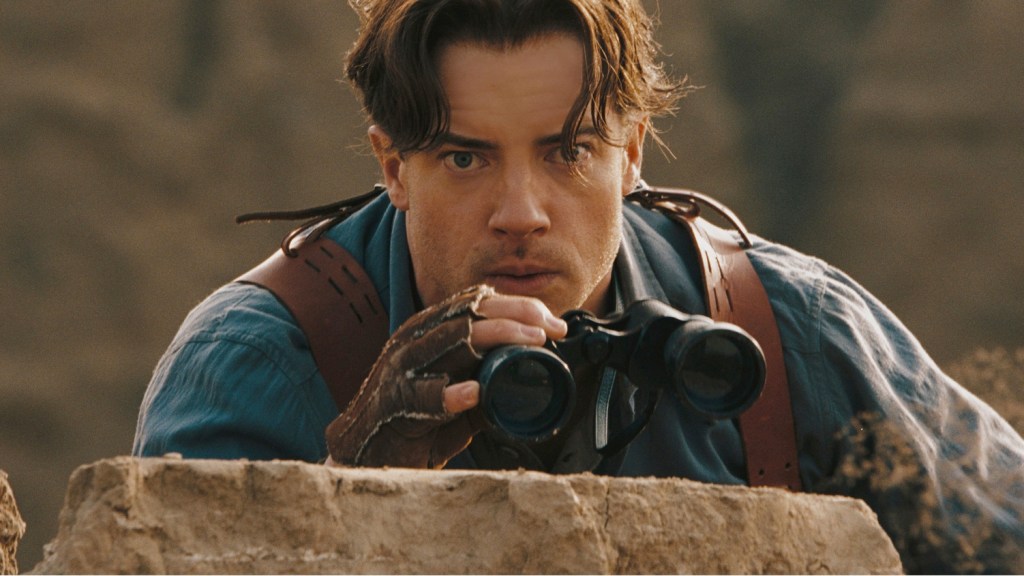
Stephen Sommers stepped away from the director’s chair for the third installment, a decision that snowballed into the franchise being shelved. On August 1, 2008, The Mummy: Tomb of the Dragon Emperor swapped Egypt for China, built its story around the Terracotta Army and a resurrected Dragon Emperor played by Jet Li, and made the franchise’s most consequential misstep by recasting a main star. Rachel Weisz didn’t return, reportedly over concerns with the script, scheduling conflicts, and creative differences, and Maria Bello stepped in as Evelyn instead. Even though Fraser stayed on as Rick, now alongside a grown son played by Luke Ford, the chemistry that had carried the first two films was gone.
The box office numbers alone didn’t kill the franchise outright, as the film grossed north of $400 million worldwide against a $145 million budget, technically a profit. Still, Tomb of the Dragon Emperor was by far the weakest commercial performer of the trilogy, and the critical response was universally negative. Audiences were equally displeased, with fans complaining about the recast Evelyn, the abandonment of the series’ Egyptian mythology, and a script that leaned on CGI spectacle over character and wit. Whatever goodwill the two previous movies had built evaporated, and Universal shelved the Fraser version of the franchise for good.
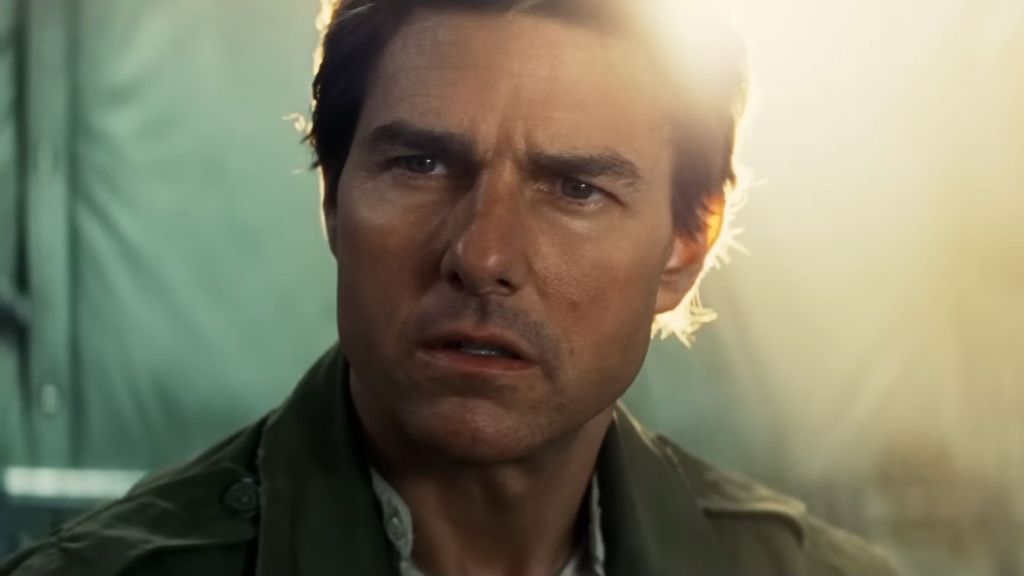
The studio’s next swing was even more ambitious, and it went even worse. In 2017, Universal tried to relaunch its monster stable entirely with Tom Cruise’s The Mummy, intended as the launchpad for a planned “Dark Universe” that would eventually link Frankenstein’s Monster, the Invisible Man, and other classic creatures into one shared cinematic universe. The film scraped past $400 million worldwide against a reported budget somewhere between $125 million and $195 million, but marketing and production costs left it an estimated net loss for the studio. Critics also tore it apart, and the Dark Universe died with its very first entry.
More recently, the Mummy name resurfaced in 2026 with Lee Cronin’s movie, a Blumhouse and New Line production with no connection to either the Fraser or Cruise timelines. It swapped adventure and CGI spectacle for a hard-R possession story about a family whose long-missing daughter returns changed. The reception was split, with critics largely dismissing it as derivative and tonally unfocused, while general audiences more warmly. Still, the movie didn’t even break the $100 million ceiling at the box office, which, despite a low budget, doesn’t inspire much trust. Over two decades later, the original Fraser-Weisz duology remains the version of The Mummy that audiences actually love. Fortunately, Universal is bringing it back.
Brendan Fraser Will Lead the Whole Mummy Cast Back for a New Movie

The next Mummy movie seems to be like everything fans want. Universal has closed deals for Brendan Fraser and Rachel Weisz to return as Rick and Evelyn O’Connell in a fourth mainline Mummy film, with John Hannah also expected back as Jonathan. The project is being directed by Matt Bettinelli-Olpin and Tyler Gillett, the filmmaking duo known as Radio Silence, who previously helped revive the Scream franchise and made Ready or Not, working from a script by David Coggeshall. Franchise veterans Sean Daniel, William Sherak, James Vanderbilt, and Paul Neinstein are producing, ensuring the franchise’s continuity. Fraser has spoken publicly about training to get back into action shape for the role, and the production is reportedly leaning on practical effects and real locations rather than heavy CGI, a deliberate return to what made the earlier films click in the first place.
Plot details remain closely guarded, but the creative team has already addressed some obvious questions hanging over the project, confirming Tomb of the Dragon Emperor will be scrapped from the timeline. For a franchise defined as much by its stumbles as by its early highs, erasing the misstep might be the smartest move Universal has made with these characters in almost two decades.
The Mummy will come to theaters on October 15, 2027.
