


Articles
Disney Tried to Copy the Magic of Their Pirates Franchise 5 Years Ago Today, But Lost $150 Million+ in the Process
Before Pirates of the Caribbean became a multi-billion-dollar film franchise, it was nothing more than a boat ride. Disneyland opened the attraction in 1967, sending guests past animatronic pirates ransacking a Caribbean village, with no characters, no dialogue, and no plot beyond the scene passing by the boat. That blank slate gave Disney’s screenwriters room to build an entirely original story when the studio adapted the ride into a feature film decades later. Pirates of the Caribbean: The Curse of the Black Pearl premiered at Disneyland in June 2003 ahead of its wide theatrical release, introducing Captain Jack Sparrow (Johnny Depp) to audiences and kicking off an unprecedented success. The film opened to $654.3 million worldwide against a $140 million budget, a result that launched a five-film franchise now credited with more than $4.5 billion in combined box office revenue, with a reboot currently in development.
Replicating that formula turned out to be nearly impossible. Disney’s attempt to give the Haunted Mansion themed ride the same treatment produced two separate films, and neither matched Pirates’ impact. The 2003 version, starring Eddie Murphy and directed by Rob Minkoff, grossed $182.3 million against a $90 million budget, a profitable outcome undercut by universally negative reviews. Disney returned to the same ride two decades later with the 2023 Haunted Mansion, directed by Justin Simien and led by LaKeith Stanfield, Tiffany Haddish, Owen Wilson, Danny DeVito, Rosario Dawson, and Jamie Lee Curtis. That version fared worse on both fronts, repeating negative reviews and producing an estimated $117 million loss against its $150 million budget. Even that total sits below the ride-to-movie pipeline’s most expensive miscalculation. Released on July 30, 2021, Jungle Cruise stands as Disney’s clearest example of the strategy failing at scale.
Why Has Jungle Cruise Failed?
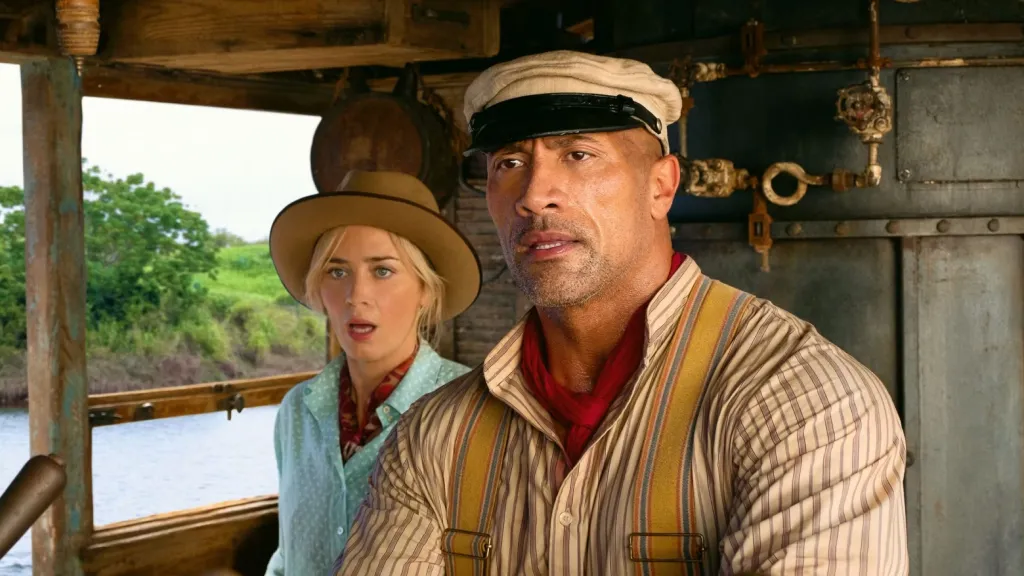
Jungle Cruise spent seventeen years in development before reaching theaters, tracing back to an initial Disney announcement in 2004. By the time production locked in director Jaume Collet-Serra and a $200 million budget, the project had assembled a cast built for mainstream reach. Dwayne Johnson’s Frank Wolff anchored the film opposite Emily Blunt’s Dr. Lily Houghton, with Édgar Ramírez, Jack Whitehall, Jesse Plemons, and Paul Giamatti in supporting roles. Johnson’s box office track record and the built-in recognition of the Disneyland ride gave the company the confidence to justify a budget of that size. Pre-release box office tracking called for a domestic opening between $25 million and $30 million, a decent number considering the context of the pandemic.
Jungle Cruise actually cleared those early projections, opening to $34.2 million domestically. Nevertheless, the film collapsed almost immediately afterward. A resurgence of COVID-19 cases tied to the Delta variant kept theatrical audiences home throughout the back half of 2021, and Disney’s decision to make the film available through Disney+ Premier Access rentals the same day it opened in theaters gave remaining audiences a reason to skip cinemas altogether. The result was a worldwide theatrical total of $220.9 million against a $200 million budget, a number that undersells the total loss once marketing and distribution costs enter the calculation. Films at this budget level typically need to gross over double their production costs to break even, so the project resulted in at least a $150 million loss for Disney once those additional expenses were factored in. As a result, no sequel was greenlit, even though Jungle Cruise had been developed to be a franchise starter.
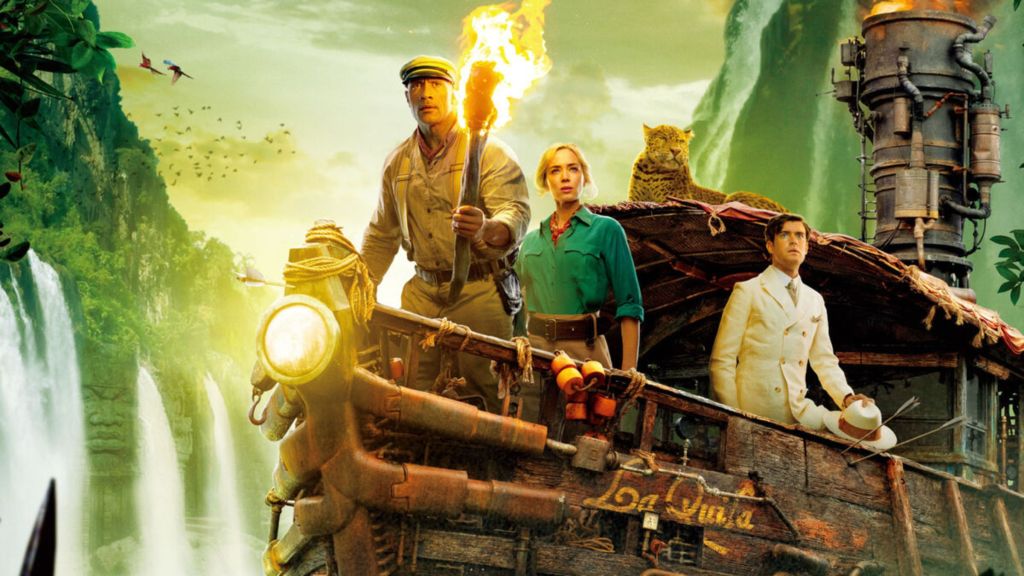
The circumstances behind Jungle Cruise‘s failure make its outcome especially frustrating. The pandemic’s grip on theatrical attendance and Disney’s decision to release the film for a same-day rental on Disney+ did far more damage to its bottom line than any flaw in the film itself. Audiences who saw Jungle Cruise responded well, awarding it a 92% audience score on Rotten Tomatoes against a 62% critics’ score, which should be enough to show Disney there is genuine interest in the story. Sadly, the loss was just too big for Disney to consider the context, and it’s unlikely we ever see another Jungle Cruise movie.
Jungle Cruise is currently available to stream in its entirety on Disney+.
Do you think Disney should try adapting another theme park ride, or has the Pirates formula proven impossible to repeat? Leave a comment below and join the conversation now in the ComicBook Forum!
