


Articles
Assassin’s Creed Black Flag Resynced Beautifully Polishes One of the Series’ Shiniest Treasures (Review)
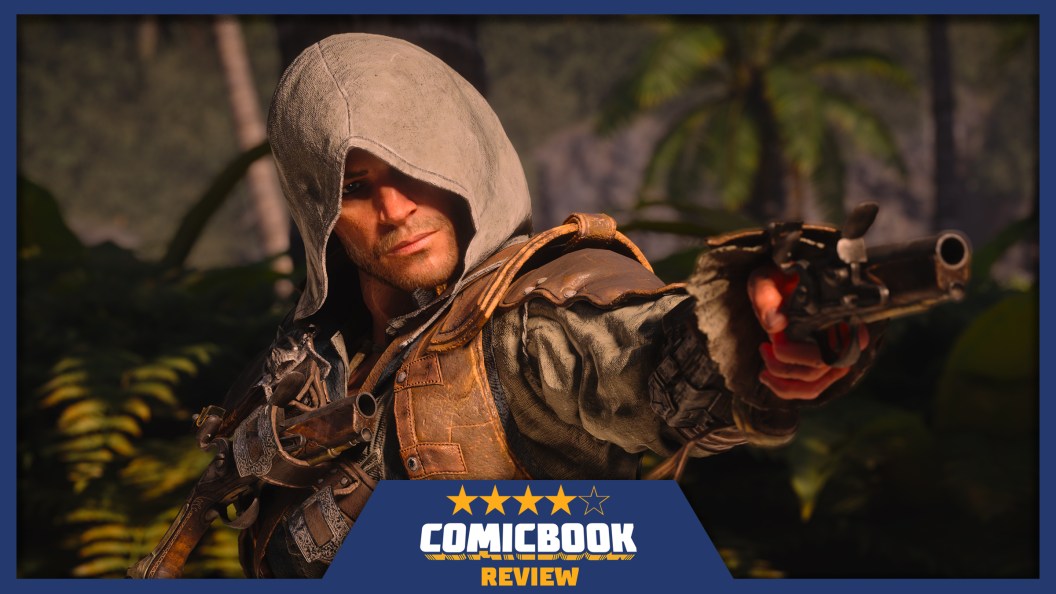
The Jackdaw is one of the finest pirate ships of its kind. Staffed with the saltiest sea dogs, it has felled countless Spanish schooners and British brigs, braved its share of rogue waves, and touched every port in the Caribbean. The legends surrounding it have only grown more hyperbolic in the 13 years since its maiden voyage in Assassin’s Creed 4: Black Flag, something easily attributed to the inconsistency and disappointment that primarily defined the series in that following decade or so. Assassin’s Creed Black Flag Resynced, its 2026 remake, does more than slap a fresh coat of paint on this storied vessel, though, and gives it a surprising amount of upgrades that only fortify it further against the tides of time.
Resynced’s visuals benefit most immediately from these upgrades. Unshackled from its cross-generational origins, Resynced’s portrayal of the West Indies is able to do more justice to this picture-esque portion of the world by dialing up the detail and saturation. The tropical foliage only covers the freshest swatches of green on the color wheel, while the ocean looks as if it consists purely of Cool Blue Gatorade. Storms shift the balance into something more violent and dark but aren’t any less stunning or impressive.
Rating: 4/5
| Pros | Cons |
|---|---|
| Its wonderfully balanced, heavily intertwined, and thematically fitting economy contains many upgrades and numerous ways to buy them | The overhauled combat has solid highs but stumbles due to its inconsistencies and limited interpretation of the original’s chain kill system |
| Snipping out many of the loading screens and streamlining the user interface makes Resynced so much snappier | Its story, while overall generally written and performed well, has too much filler and glosses over some key segments and characters |
| Tailing and eavesdropping missions have been thoughtfully overhauled, making the game far less punishing and frustrating | The new Rift segments are lackluster and highlight how unnecessary the modern-day elements are |
| Stealth, thanks to a few changes, is much more involved | |
| Its handful of new missions and narrative scenes fit in quite well and expand upon what was already there |
Assassin’s Creed Black Flag Resynced Looks Absolutely Stunning

Its more colorful approach only enhances the existing tropical aesthetic and also benefits its grand cast of sailors and ne’er-do-wells. Each is more lively, not only because of their spruced-up and newly vibrant garb, but also because of their cleaner facial animations that, while not industry-defining now, are far better than the more limited and dated expressions found in the 2013 original. The cutscenes may predominantly carry over the same camera shots and audio, yet Resynced is more entertaining to watch because of these types of visual flourishes. Said flourishes only highlight what was already present in Black Flag and push forward from there, something not all remakes or remasters do well.
This is more or less true for Resynced as a whole, as it is stuffed with touches that augment the existing scaffolding. The user interface, for one, is much cleaner and snappier. Choosing weapons and tools no longer requires shuffling with the D-pad under duress since each one is conveniently bound to a hotkey. Crafting and equipping gear is also much simpler, adopting the straightforward inventory screens from the contemporary entries. Jarring post-mission summaries are thankfully gone, as are the restrictive challenges that plagued the original.
One of Resynced‘s biggest improvements comes from the removal of loading screens when docking to a notable port or entering a shop. They pop up elsewhere every now again along with the occasional black fade-in, but Resynced is a significantly more streamlined experience because of the numerous tweaks that speed everything up.
Assassin’s Creed Black Flag Resynced‘s Stealth Mechanics Are Much Smoother

All of these indirectly make Resynced’s mechanics more fluid by enhancing the experience around them, however, Ubisoft implemented bolder changes that more clearly affect the gameplay. Black Flag’s numerous boring and overlong tailing and eavesdropping missions have been completely retooled or outright removed. Information gleaned from the eavesdropping parts has been peppered elsewhere or blurted out by stationary targets behind closed doors in brand-new scenes. Tailing, in most circumstances, is now entirely optional, as raising an alarm only shifts the mission objective and has players get clues through other means. Naval stealth — a wretched phrase that should evoke a dry heave — has also been almost completely eliminated in favor of objectives that make it impossible to get caught.
While this deviation technically removes gameplay and resistance since it is now possible to simply sprint through a few sections or immediately impale a target instead of tailing them first, the lack of fail states is worth the tradeoff since it makes Resynced noticeably less frustrating. Timers and narrow mission parameters were the bane of this era of Assassin’s Creed and opting for something more dynamic here is a huge relief. And this grand reshuffling and remixing has been done thoughtfully, often adding in new dialogue that seamlessly contextualizes the changes. It certainly doesn’t feel as though a huge swath of the missions have been heavily revised, a testament to the quality of said revisions.
Wonky stealth controls made failure an inevitability in Black Flag, and this is yet another area where Resynced makes some intelligent adjustments. Being able to crouch is a game-changing addition because it turns the tropical environment into a more liberating stealth sandbox where players are able to hide more easily and behind a broader range of objects. The modernized movement controls have wider positive impacts on general parkour and traversal, but these new controls also help greatly during stealth. More fluid movement cuts back on the accidental wall runs and botched platforming that would often lead to annoying alerts in the original. And while these goofs can sometimes still happen — they are as much of a series staple as the Hidden Blade — such irksome occurrences are much less prevalent.
Resynced even takes the welcome steps of both unlocking the rope dart much earlier and also turning it into an unlimited resource. Being able to more freely yank targets around to assassinate them behind cover is empowering and finally gives this underutilized tool the space to fully blossom. These adjustments don’t turn Resynced into a genre-defining stealth game, but they do make sneaking much more enjoyable and better realize the potential that was bubbling under the surface.
Assassin’s Creed Black Flag Resynced‘s Melee Combat Trips Over Itself a Little Too Often

A pirate is better defined through their proficiency with a cutlass over their knack for tip-toeing through tall grass, though. As such, Ubisoft took a heavier hand when redesigning Resynced’s melee systems, an experiment that has more mixed results. By stripping out redundant elements like tool takedowns, giving each tool a more tangible function, and assigning all of them to the aforementioned hotkeys, combat is more focused and streamlined. It’s centered around breaking posture meters by mixing up attacks or kicking enemies into walls, in addition to pulling off perfect parries that link into chain takedowns. When it works, it’s a hypnotic parade of executions and gunfire that rewards those who use everything at their disposal with a stylish path of destruction that’s rewarding to pull off.
But it doesn’t always work. Some of the frustrations stem from the inconsistent lock-on that doesn’t target a new foe once the current one falls — having to manually lock back on hampers the flow — but most of its problems lie in its lack of polish and noncommittal attitude toward execution streaks. Takedowns will sometimes fail to trigger for no reason, hostiles don’t always react accordingly when hitting a wall, and others will turtle up so severely and ruin the momentum, all of which are painfully highlighted in the chaos that comes with boarding a ship.
Polish-related problems like these halt the flow that’s crucial for a combat system like this, however, it’s even stranger that some of these interruptions are baked into the mechanics, too. Execution streaks where players chain kills from one enemy to the next only trigger after a perfect parry. While that makes for a fitting skill-based reward, it also disproportionately incentivizes parries over everything else. Even though executions can be triggered by whittling down posture bars, tripping an enemy, or booting one into a wall, their payoffs are limited. A more fitting fusion of both the new and old styles would be to allow for execution streaks to start with any takedown method and let players continue them if they are capable enough. So while Resynced is a sleeker saber with higher potential when compared to Black Flag, it’s also got a few more chips on its helm.
Assassin’s Creed Black Flag Resynced‘s Naval Encounters and Economy Remain High Points

Its cannons, on the other hand, are as deadly as they ever were. Naval battles remain an exercise in enemy prioritization, cooldown management, and adapting to the unexpected whims of Mother Nature. Aiming a broadside blast over a big wave, while also preparing to brace against or retreat away from a nearby Man O’ War as the adventurous score swells is a thrilling dance that fulfills the pirate fantasy better than almost any game in the medium.
That was true for Black Flag and even more so in Resynced because of how it builds upon that foundation. It borrows a few elements from the woefully underrated Assassin’s Creed Rogue and implements new alternate fires for every weapon to offer even more options to those seeking to plunder the souls careless enough to sail near the Jackdaw. A more expansive arsenal doesn’t suck the challenge out of aquatic skirmishes; legendary ships and the tougher forts still require crafty movement and resource management. Instead, this amplified armory only adds Black Flag’s sublime blueprint and allows Resynced to comfortably supplant it.
This also speaks to the tautness of Black Flag’s overall blueprint Resynced was lucky enough to inherit. Sailing around and gathering resources is built on an incredibly tight upgrade loop that is further strengthened by its piratical themes of hoarding gold. Hunting terrestrial and aquatic wildlife, boarding ships, sending fleets to trade, taking down forts, pilfering underwater shipwrecks, completing side missions, and exploring the various islands sprinkled around all offer different ways of accumulating wealth with their own styles and tempos that keep it from growing too monotonous.
The way in which they all feed into each other is where it all comes together. Boarding low-level ships earns resources that lead to low-level ship upgrades. Plundering underwater ruins yields high-level upgrades necessary to take down forts and the nastiest sea beasts. Conquering forts reveals map locations that lead to more opportunities, and skins gathered from slain creatures lead to better gear. Better gear only makes land missions slightly easier. And the process continues.
It’s a carefully designed cycle that encourages players to stay on and engage with the treadmill without resorting to the cheap and exploitative loot and leveling systems that overtook the series a few years after Black Flag’s debut; a curse Resynced thankfully doesn’t submit to. It’s still a safe “map game” with a checklist stapled to it — a marker of both the era it was made in and Ubisoft’s ongoing inability to innovate past that — but the engaging way its elements all connect to each other makes sure that label isn’t as negative as it sounds.
Assassin’s Creed Black Flag Resynced Has New Scenes and Missions That Fit in Well

Resynced’s story also doesn’t reimagine what Black Flag already laid down but still manages to decorate around the edges. Following Edward Kenway as he goes from an aimless and selfish privateer to a pirate who finds his own community within the Assassin Brotherhood gives him one of the more compelling arcs of the series. He speaks confidently with his own Welsh wit and piratey lingo, and these traits make him an entertaining character on the surface. But it’s his ability to learn, grow, and seek a more noble purpose that gives him more depth; they’re qualities that persist after the shanties die down and the rum runs dry. He’s not the most well-rounded hero in the series and some of the developments regarding his wife are weirdly not reflected on much, but he’s a solid leading man who sticks out even more now, given the litany of forgettable protagonists who donned the eagle-beaked cloak after him in Unity, Valhalla, Mirage, and Shadows.
But, as was the case in Black Flag, Resynced’s story is weighed down by uneven pacing. Too many portions of the campaign are dragged down by filler missions that have little bearing on the plot or characters. A few members of the cast on both sides of the mortality spectrum are also barely fleshed out, leading to deaths that leave little impact and villains who don’t get the space to evolve into something more than average, run-of-the-mill Templars.
Resynced adds welcome new flashbacks and a couple funeral scenes that help address a few of its shortcomings, but these are tantalizing revisions. All of these new scenes yield only a taste of what could have been possible if Ubisoft had been more bold and willing to rewrite what didn’t work and focus more on what did. The new side missions are more focused, show off greater storytelling chops, and contain superior camera work, further demonstrating what could have been possible if these practices were applied more freely to the base campaign.
Assassin’s Creed Black Flag Resynced Continues the Series Trend of Lousy Modern Segments

Resynced does make a few cuts, as it doesn’t include the fantastic Freedom Cry expansion or modern segments inside an Abstergo game development studio. Adéwalé’s journey of freeing slaves makes for a fitting foil for Edward’s adventure, since it is able to dive more into the theme of a person finding fulfillment in helping others that the base game only gets to by the end. Perhaps it wouldn’t sting as much if Ubisoft committed to remastering it down the line.
Nixing the original present-day chunks has had a stranger effect on the remake. The novelty of seeing an evil game developer that was essentially a stand-in for Ubisoft was a silly premise back then, but these segments, if not revamped and updated, might have just further thrown off the narrative pacing in Resynced. It’s tough to say if they would have still worked 13 years later or simply lost their novelty.
Weighing whether or not Resynced would be better with or without these segments is almost a moot point since the alternative to them is quite bad. The Dark Animus sections that make up the modern portions offer potentially interesting “what if” scenarios based around Black Flag’s characters. But the intrigue rapidly dissipates once the glitchy void textures load in and faceless voices start spouting gibberish. It quickly becomes obvious these levels are shallow gimmicks steeped in convoluted lore designed to dawdle on forever with no meaningful resolution, making it sadly consistent with the other nonsensical modern storylines that have haunted the series since Desmond drew his final breath. These segments have long been an anchor around Assassin’s Creed’s neck, and Resynced once again makes that abundantly clear.
The Dark Animus rifts stand in deep opposition to how naturally every other change in Assassin’s Creed Black Flag Resynced gels with the rest of the experience. From small additions like the cute cat or monkey that hangs near the Jackdaw’s wheel to sizable alterations like the overhauled stealth mechanics, Resynced does an excellent job of touching up a classic with features that feel like they were there in the first place. Ubisoft didn’t slowly swap out every board of the Jackdaw and turn it into something else; it’s no Ship of Theseus. Instead, the team cleverly fortified its existing foundation in order to ensure this famous pirate ship will stand up a little more accurately to the lofty tales that precede it.
A PS5 copy of Assassin’s Creed Black Flag Resynced was provided by the publisher for the purpose of this review.
What do you think? Leave a comment below and join the conversation now in the ComicBook Forum!
