


Articles
A Year Before the MCU, Robert Downey Jr’s Best Movie Was a Bomb, But Starred Two Other Marvel Favorites
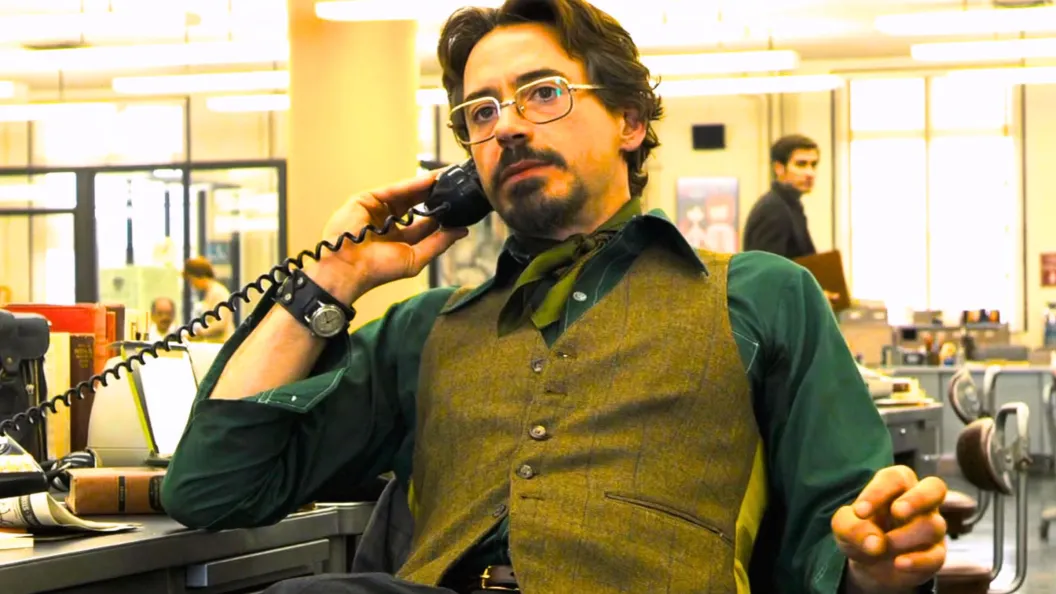
The Marvel Cinematic Universe officially kicked things off with Iron Man in 2008, completely changing Robert Downey Jr.‘s career. A year earlier, he was still trying to find his footing in Hollywood after a pretty rough period in his life. He had already proven his talent decades earlier, but he was still trying to get back the space he had lost. Luckily, around this time, he appeared in one of David Fincher’s best movies, alongside two actors who already had a reputation of their own and who, years later, would also become part of MCU history. Today, we can watch the film and recognize just how great it is as both an adaptation and a thriller, but when it hit theaters, it wasn’t exactly the success its director and cast seemed to promise.
It’s funny because, besides the story itself, today you can look at Downey, Jake Gyllenhaal, and Mark Ruffalo sharing the screen before they became Tony Stark, Mysterio, and Hulk, and think it’s pretty awesome, even though it wasn’t that big of a deal at the time. But more importantly, Downey gave such a great performance that it shows a side of his career that Marvel Studios’ movies would eventually push into the background — or maybe not, because, honestly, his character Paul Avery actually has a few things in common with Iron Man. And the similarities between the two are pretty fun to look at.
Robert Downey Jr.’s Work in Zodiac Is Career Best

Released in 2007 and not talked about nearly as much today, Fincher’s Zodiac is based on the real-life case of the serial killer known as the Zodiac and is an adaptation of Robert Graysmith’s book of the same name (as well as its follow-up, Zodiac Unmasked). The movie follows the investigation that took over San Francisco in the late ’60s and early ’70s, when a criminal started killing people and sending letters and coded messages to newspapers. But the whole point isn’t to tell a story about who the killer is; instead, it shows what can happen to people who spend years and years trying to find that answer. The film is all about obsession, so the suspense is built around it, especially during the final sequence. At the center of the story are cartoonist and author Graysmith (Gyllenhaal), Inspector Dave Toschi (Ruffalo), and journalist Avery.
And speaking specifically about Downey’s character, he’s interesting because he’s exactly the kind of character the actor is incredibly good at playing. In fact, he may have even played a part in shaping Stark later on. Avery is a crime reporter for the San Francisco Chronicle, smart, sarcastic, confident, and very convinced of his own abilities. He knows how to get a story, knows who to talk to, and always seems to be a few steps ahead. Early on, it’s easy to understand why he’s so respected at the newspaper. And if you think about it, those are pretty similar traits to the MCU hero, right? The only difference is that Avery isn’t a hero.
But the thing that really stands out about Downey’s performance is that he never lets Avery become just the “alcoholic journalist,” because, yes, the character drinks a lot, smokes, and eventually starts losing control of his life. Still, that change happens very gradually and, just like the movie as a whole, his character becomes affected by the case and starts deteriorating because of it (especially once the killer begins threatening him). Every character in Zodiac has a different way of showing obsession and its consequences, and for Avery, this is it, even though he remains funny and a guy who knows exactly what he’s doing. At first, those things just seem like part of his personality, but later they start to feel more like a defense mechanism. And it’s worth pointing out that he’s not exactly the protagonist of the story, but he absolutely steals the scene whenever he’s in it.

And maybe that’s one of the reasons Downey’s work in Zodiac is one of the best of his entire career. It’s not the most transformative performance he’s even given, but the actor understands how much he needs to do. Avery gets your attention without looking like he’s desperately trying to get it, and Downey lets him be unpleasant when he needs to be, funny when it makes sense, and vulnerable without turning that vulnerability into some big self-pity scene. That’s the kind of acting worth applauding, especially nowadays, when it feels like everything needs to be spelled out through dialogue, with very little left to interpretation. On top of that, Fincher’s direction helps a lot, since he keeps the killer from actually being present; he’s always something people talk about, but he’s hardly ever there. That’s where good performances become necessary to create the right thriller effect for the audience.
Avery isn’t consumed by the case in the same way Graysmith is, but he doesn’t walk away from it completely unscathed either. If Zodiac is phenomenal, it’s because of Downey and the entire cast for the most part. There is more than one way to be affected by an investigation like this: Graysmith becomes obsessed, Toschi keeps pushing, and Avery starts losing control. They’re different reactions to the same problem, and it’s interesting to see just far each of them goes.
Why Did Zodiac Bomb?

Okay, but if Zodiac is so good, then why didn’t it work at the time? Part of the answer is that the movie wasn’t really what audiences probably expected from Fincher. The director already had the infamous Se7en under his belt, so when a new project about a serial killer was announced, it was easy to imagine another dark investigation with murders, violence, and scenes made to shock. But Zodiac isn’t that — or, at least, it isn’t mainly that. The violence is definitely there, and some of the murder scenes are pretty disturbing, but Fincher’s goal is to focus more on the people trying to understand the case than on showing the killer in action.
In fact, Rotten Tomatoes’ critical consensus, for example, sums up this difference pretty well by describing the movie as a quieter, dialogue-driven thriller that relies more on the characters’ arcs and its recreation of the ’70s than on graphic details of the murders. Today, the movie has a 90% critics’ score on the platform, with a 78% audience score. And why the difference? It’s not that huge, but it is significant. Well, another factor that may have contributed is the fact that Zodiac is long, running for around two and a half hours. That’s not necessarily a problem, but it has to be taken into account when we’re talking about box office numbers, especially for that time. The whole plot is so intriguing because of the way it’s approached and structured, without giving the audience a traditional payoff; in other words, there isn’t a satisfying ending where the killer is arrested or killed (and he definitely doesn’t explain everything in some conclusive way).
So, imagine someone walking into a theater in the 2000s and finding out that a big chunk of the film is just cops discussing evidence, journalists looking for information, and Graysmith trying to make sense of codes and documents. If you’re into that kind of thing, it’s absolutely fantastic, but it’s definitely not going to work for everyone, right? For people who aren’t invested, it probably feels like the movie never gets to the point, and then they walk out not really understanding what they just watched.
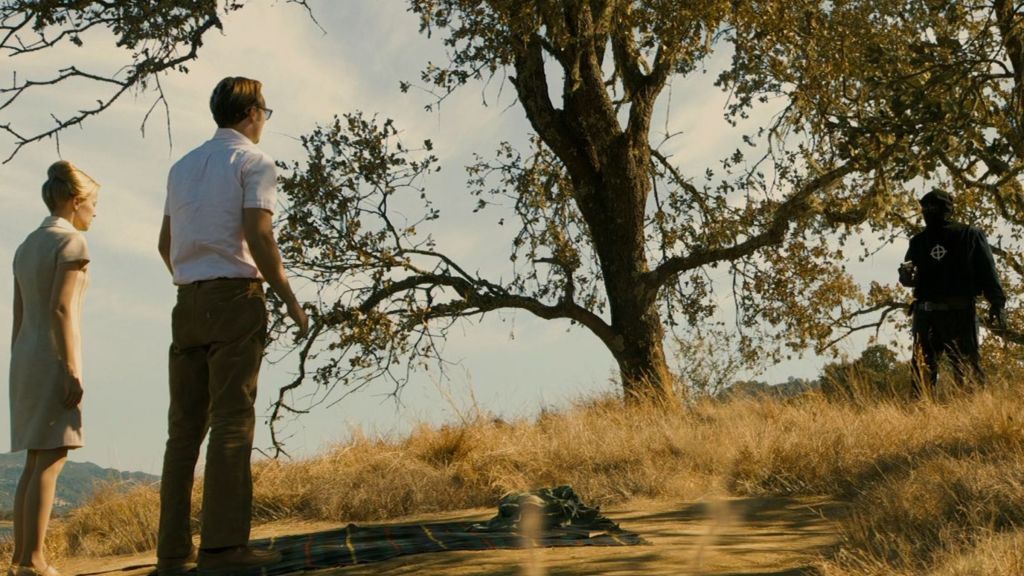
Plus, the marketing also didn’t help, since Zodiac‘s campaign emphasized the darker, more gruesome side of the story and drew comparisons to Se7en, when it was much more contemplative and investigative. In other words, some people went in with one set of expectations and left disappointed. And the box office numbers showed just how big the problem was: the movie had a budget of $65 million and made around $84 million worldwide. In the United States, it made just over $33 million, with its domestic opening bringing in roughly $13 million. For a movie with that kind of budget, that’s far from a great result.
The good thing is that the critical reception was very positive from the start, which possibly helped build its reputation over the years. Even though Zodiac tends to get overlooked, it’s still considered one of Fincher’s best movies. To be honest, it has aged pretty well, because nowadays, a lot of people can watch it and appreciate it for what it is, realizing that the real appeal comes from watching these people try to put the pieces of the mystery together. Maybe the film just needed some time.
And when it comes to Downey specifically, there you have it: a bomb (that never really should have been a bomb) that ended up helping Iron Man come fully formed into the MCU. What would Stark have been without Avery as a previous character study?
