


Articles
Ryan Gosling’s Career-Defining Movie Is a Cult Classic (But It’s Wildest Controversy Landed it In Court)
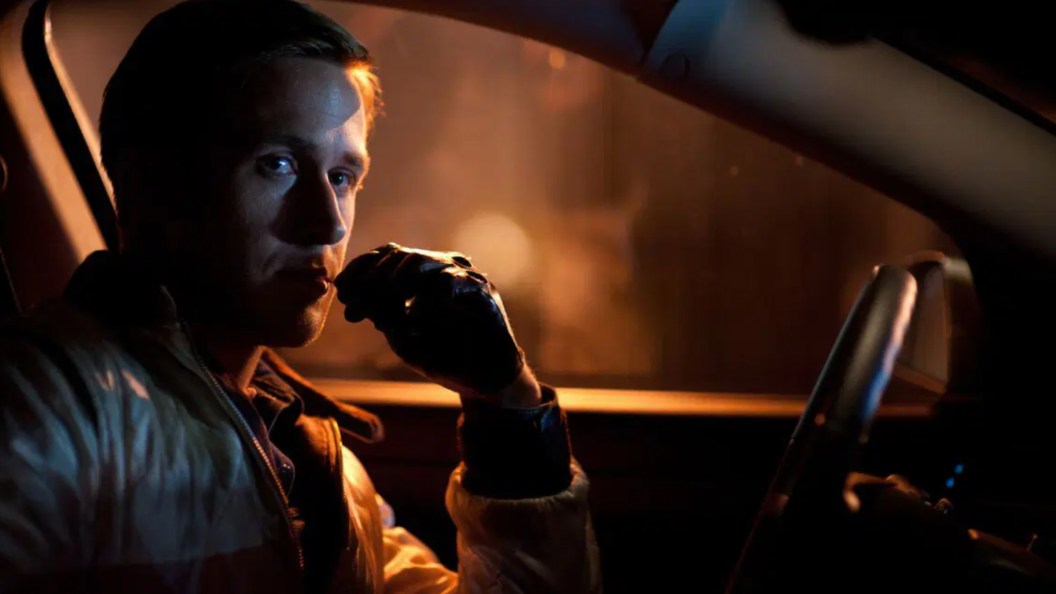
Ryan Gosling has played a wide variety of characters, including an awkward loner in love with a plastic doll and an actual plastic doll. He’s also played a stuntman a couple of times. One with considerably less talking than the other. Gosling starred as a Hollywood stuntman who moonlights as a getaway driver in Drive, released in theaters on September 16th, 2011. The film was acclaimed by critics, and director Nicolas Winding Refn had already won Best Director at Cannes. The role showed just Ryan Gosling’s presence was enough to make a compelling movie. The audience wasn’t as quick to embrace it. The film received a C-minus CinemaScore, and one unhappy moviegoer did more than just give a bad review. She sued the distributor, saying the trailer had deceived her into buying a ticket.
Drive follows an unnamed driver whose life becomes complicated after he befriends his neighbor, Irene (Carey Mulligan), and her son. When Irene’s husband, played by Oscar Isaac, is released from prison, the Driver agrees to assist with a robbery that goes disastrously wrong. The film featured solid supporting performances from Christina Hendricks, Bryan Cranston, and Albert Brooks. There is driving, of course, but the film is more interested in its characters, long silences, and sudden bursts of horrifying violence than elaborate car chases. It also showed that Gosling could play a badass. Anyone expecting another Fast & Furious flick got a surprise. One Michigan woman felt that surprise was enough to sue. Check out the court’s exhibit A (aka the trailer) below:
Drive’s Trailer Actually Ended Up in Court

Sarah Deming sued FilmDistrict and the theater where she saw Drive in October 2011, saying the advertising made her believe she was watching an action film in the vein of Fast & Furious. In her complaint, she said the film had “an unexpectedly low amount of driving” and antisemitic content not included in the trailers. She intended to seek damages in a class action under Michigan’s Consumer Protection Act. The case was dismissed in 2012, and the dismissal was affirmed by the Michigan Court of Appeals in October 2013. The judges said the trailer had shown both the graphic violence and the Driver’s romantic storyline, rebutting claims that viewers had been misled. The court also dismissed Deming’s anti-Semitic charges. Then a related lawsuit from Deming’s attorney, Martin Leaf, flopped. That’s a lot of lawyering for a movie ticket, especially considering the theater reportedly offered her a refund.
Watching the trailer today, it’s obvious why the marketing team used clever editing to amp up the trailer. A heist movie about a getaway driver is so much more compelling with car chases than long shots of Ryan Gosling staring off into the distance. But it is that self-restraint that makes Drive’s slow burn work. From Refn’s neon-drenched Los Angeles and Cliff Martinez’s electronic score to Kavinsky’s “Nightcall” and the signature jacket, the film has a distinctive neo-noir identity. That’s a harder sell than “good-looking guy goes fast.”
Gosling’s Movie Marketing Has Become an Event of Its Own

A woman demanded compensation for watching a Ryan Gosling film under false pretenses, but a Thai movie festival offered to pay both him and the director to appear at a screening. In the documentary My Life Directed By Nicolas Winding Refn, he recalls being invited to a screening of Drive when he was shooting Only God Forgives and being offered $20,000 to attend. He negotiated $40,000 each for himself and Gosling, and the two walked away with $80,000 in cash stuffed in a suitcase. The doc even shows Refn counting the money. It appears some people were willing to pay quite a bit more than the cost of a movie ticket to see Drive and its star in person.
The irony is that Gosling is now one of Hollywood’s most visible promotional faces. His Ken in Barbie was a pop culture phenomenon that even spawned a musical number at the Academy Awards. Then he returned as a Hollywood stuntman in The Fall Guy (2024), this time in an action comedy from former stuntman David Leitch. Universal really wanted to sell the stunts in The Fall Guy. At the film’s Hollywood premiere, there were motorcycle stunts, guys crashing through windows, and Gosling’s stunt doubles dragged across a giant movie poster. Unfortunately, all the spectacle in the world couldn’t make The Fall Guy a box office success.
This year saw the actor promote Project Hail Mary, a film and campaign that really only had Ryan Gosling to sell it. Well, him and a rock puppet. The actor was recently announced as the MCU’s Ghost Rider, a role he rallied to play for years. 15 years ago, someone sued Gosling for not driving enough in his film. Now he’s going to ride a flaming motorcycle in the Marvel Cinematic Universe. Hopefully no one sues. The flaming skull may not be enough to prove it’s not a Vin Diesel movie.
