


Articles
HBO’s Remake of a Classic Sci-Fi Film Turns 10, But This Iconic TV Show Failed in One Major Way
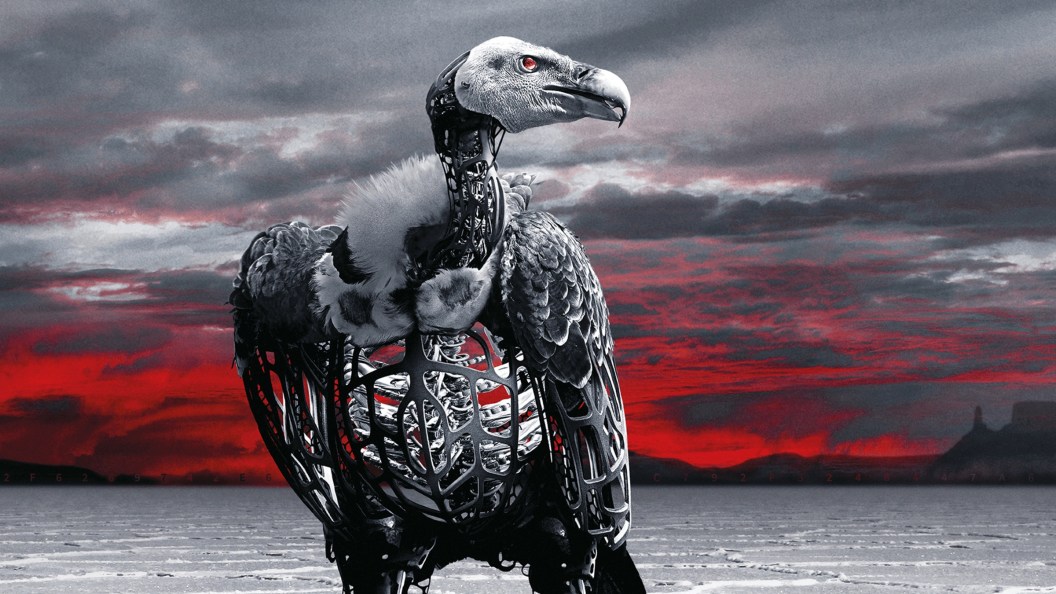
Two decades before Steven Spielberg would amaze audiences with an adaptation of the author’s Jurassic Park, Michael Crichton created another park, with equally disastrous results. Crichton had found success with plausibly plotted books that introduced big science ideas in ways that audiences could imagine happening here and now. The Andromeda Strain was adapted into a hit movie. When ABC came calling to secure the rights to another Crichton book, Binary, the author took the opportunity to bake directing the TV movie, renamed Pursuit, into the rights sale. A year later, MGM would give this one-time TV director his first feature film based on his own original script. 10 years ago today, a remake of that movie captured the pop culture zeitgeist when it launched on premium cable.
Westworld premiered on HBO October 2nd, 2016. The original 1973 film took viewers into a futuristic immersive amusement park where the staff and characters were all robots. The film starred Yul Brynner as a robot, known as the Gunslinger, hell-bent on killing the human visitors. The HBO remake, created by Jonathan Nolan and Lisa Joy, would tilt that angle on its head and make the park’s robotic hosts the sympathetic leads, and the evil Man in Black would be a human who terrorizes them for sport. The show starred Evan Rachel Wood as Dolores, a host who relives the same simple life every day with her beau Teddy, played by James Marsden. When we first meet the pair, it ends in tragedy as the hosts are viewed as disposable. They do get repaired and put back into service, but the constant reboots are beginning to cause issues. Anthony Hopkins would star as the park’s founder, Dr. Robert Ford, who is not only aware of the issues, but may have planted the seed for the coming chaos. He’s assisted by Bernard, Batman‘s Jeffrey Wright.
A New Vision of the West

On the show, the hosts all have their own storylines they play on loops for guests like William, played by Dark Matter‘s Jimmi Simpson, to take part in. The guests can rob trains, get in shootouts, or visit the saloon, but many guests take the roleplay too far. Thandiwe Newton’s Maeve serves as a counterbalance to Dolores’ programmed innocence. She remembers tragedy that the system tells her wasn’t real, while programming her as a prostitute in the Saloon. As she constantly dies and is brought back, she overcomes her programming and begins testing the limits of her Host body. Meanwhile, the Man in Black, played by Ed Harris, has found a deeper game hidden beneath the attraction’s programmed narratives. Then all hell breaks loose. The hosts become self-aware and turn on the humans, but the story accurately depicts it as a synthetic revolution instead of a senseless slaughter. It’s also revealed that William’s adventures in Westworld were actually a flashback, and the well-to-do businessman has been coming to the park for years, eventually becoming the Man in Black. All of the show’s mysteries would converge into a single narrative by season’s end. It’s not a trick the show manages to pull off again.
The first season launched to rave reviews and became a water cooler moment for viewers. Audiences were hooked on the show, and not necessarily for the mystery, but for the deep characters and their journeys through Westworld. As the show continued into its second season, it would open up into larger themed worlds like Shogun World. The host Maeve, now fully remembering that she at one point had a daughter, fights through the themed worlds to reach her. Dolores continues fighting back against the humans. Significantly, Dolores betrays her own cause when she reprograms Teddy to be a more violent soldier in her plans. Marsden’s host pushes back and takes his own life instead of living with the reprogramming. It’s a pivotal moment, but it won’t be the last time Wood’s Dolores manipulates someone into a rebellion. The season was more dense with lore than the first and served as an early warning that Westworld might be building a world bigger than the characters that occupy it.
A Good Breaking Bad Idea

Season 3 would give the show fresh life as it shifted to the perspective of a human in the real world who could never afford to go to Westworld. That doesn’t mean Westworld can’t come to him. Breaking Bad‘s Aaron Paul would join the cast as Caleb, a vet who can’t keep a job and continues to fall back on criminal gig work through an app. Dolores is in the real world, and after meeting Caleb, she draws him into the fight against Rehoboam, an AI using tech from the park to secretly manipulate the human race into narratives in the same way it tried to control the hosts. Aaron Paul brought a heroic but chaotic energy to the show, where doing bad things didn’t mean he was a bad guy. The season ended with them crashing the AI and saving humanity. This may have been the ideal place to end the show… but they didn’t.
By the time Westworld hit its fourth season, many of the supporting characters felt like they weren’t playing out their stories so much as filling in roles so the showrunners could build mythology. The season took many ideas from Crichton’s Westworld sequel, Futureworld. The show would relocate to New York, where the entire city is now a programmed “Westworld” unto itself. There were now duplicate Dolores hosts with their own personalities, and even James Marsden was back from the dead, but the series felt hollow. One of the Dolores clones, named Hale, aimed to replace politicians and public figures with hosts that they’ve programmed. When you get to see a character develop for three seasons, it’s a little off-putting when a writer treats them like an Etch A Sketch and shakes out their details. By the end, the series felt more and more like an anthology of four different series that shared continuity than a singular show.
At the Westworld‘s End

Westworld was canceled after the fourth season finale had Dolores returning to a digital version of Westworld in the Sublime. Essentially a digital heaven for the hosts’ personas to go live outside the physical world. Co-creator Lisa Joy said the tease set up its fifth season to return Dolores to the park environment, where she would run a final game of her own in the park. That would have addressed many viewers’ complaints that the show had drifted too far from its premise, but they wouldn’t get the chance. Jonathan Nolan confirmed they planned for the 5th season to be the show’s final, but HBO killed the series over weak ratings and a growing budget.
For fans still mourning the loss of the show, their hopes that Nolan would get to finish his vision were dashed when Warner Bros. announced they were remaking Westworld again, this time as a film. The new movie will abandon the sympathetic inversion of the series, with David Koepp adapting the original film. Koepp famously adapted Crichton’s other amusement-park-gone-wrong project, Jurassic Park, for Steven Spielberg. The first film was a pre-Terminator robotic slasher, while the TV series became a heady morality tale. With the success of movies like Five Nights at Freddy’s, M3GAN, and Companion, Westworld could be the perfect IP for a new horror franchise. That holds especially true because humanoid robots weren’t an actual thing yet in 2016. Now we have to face the potential reality of Westworld every day.
Which host’s storyline was your favorite from the show? Leave a comment below and join the conversation now in the ComicBook Forum!
