


Articles
9 Years Later, It’s the Right Time to Watch This 2017 Sci-fi Flop Before the Franchise’s Next Evolution

It’s kind of a weird truth about entertainment that some of the best movies don’t necessarily rock the box office. Think about it: how frequently do we people talk about movies being underrated gems or find themselves discovering a how good a movie really is once it hits streaming despite it not performing well financially at the box office? This is something that seems to be especially true when it comes to genre films, as there are countless examples of great movies underperforming in theaters only to become cult classics later on and, in some cases, even see their franchises continuing despite a lack of box office success. That’s the case for one 2017 sci-fi flop and now, as the next evolution of the story is headed to the small screen this fall, now is the perfect time to watch the movie that should have been a much bigger hit.
Nine years on, it’s pretty much accepted that 2017’s Blade Runner 2049 is a masterpiece. Directed by Denis Villenueve, the film had the deck stacked against it pretty much from the start. After all, Blade Runner is itself considered one of the best sci-fi movies ever made, with Ridley Scott’s original an absolute classic of the genre and the idea of creating a sequel worth of that film, much less one coming out decades later seemed like it could be too great a challenge. However, as first looks and trailers started to emerge, it began to look like Villeneuve had created something truly special and that he might have a bonafide blockbuster on his hands. That didn’t exactly happen. It’s become popular in the years since and with Blade Runner 2099 coming in November, now is a perfect time to watch it, but the story of why a near perfect film is still considered a failure is an interesting one.
Blade Runner 2049 Has Both Wide Critical and Fan Acclaim But Failed For Fairly Basic Reasons

Blade Runner 2049 isn’t a case of a film performing poorly with critics or audiences or even dividing them. The film actually was met with praise that declared the film not only visually stunning and a good story, but worthy as a sequel to Blade Runner. Like pretty much all of Villeneuve’s films, it received a lot of praise for its look and feel as well. The issues, then, fall largely with money. Blade Runner 2049 was not a cheap film to make. The film had a production budget between $150 and $185 million as well as a significant marketing budget, would have needed to make $400 million to simply break even. It ended up making only $276 million, far less than that break even number. This was a huge financial loss for the studios and backers which immediately puts the film in “flop” category no matter how good it is from a quality standpoint.
But going beyond the financial aspect of things, Blade Runner 2049 also isn’t an entirely perfect film. Even for all the praise, there are some valid complaints about the sequel, one of the biggest ones being that it is a long, slow movie. Blade Runner 2049 has a nearly 3-hour runtime. That’s something that certainly hinders the number of opportunities any given theaters has to screen the movie in a day (which results in a hit to box office receipts) but that is also a long movie to sit and watch when it’s a movie that isn’t particularly fast paced. Blade Runner 2049 prioritizes a slow burn story more than it does action, which is somewhat counterintuitive when trying to make a blockbuster. It’s great for the story — the film follows K (Ryan Gosling), a replicant working as a blade runner who discovers that a child was born to a replicant mother, sending him on a journey to find a ruined Las Vegas and retired blade runner Rick Deckard (Harrison Ford) — but it’s something you have to lock in and pay attention to That requires a specific sort of audience and not everyone is down for it. Since it’s not really for casuals, you don’t get as many people just checking the movie out. Which is a shame because it is very, very good.
You Don’t Necessarily “Need” to Watch Blade Runner 2049 Ahead of Blade Runner 2099 But You Should
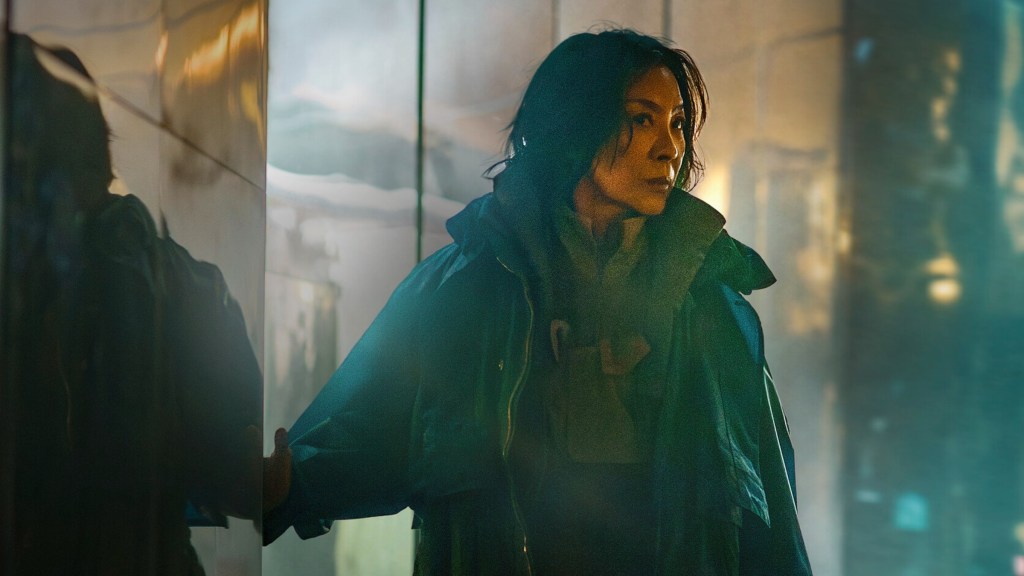
Despite Blade Runner 2049 flopping at the box office, the movie has become a solid streaming hit and is pretty universally considered to be a sci-fi masterpiece right alongside the original Blade Runner film. And the Blade Runner story isn’t over yet, with Blade Runner 2099 arriving on Prime Video in November. The limited series is set 50 years after the film and is something of an Uno Reverse of the world we’re used to seeing: Blade Runner 2099 will see Replicants now running the world and oppressing humans as humans once oppressed them. The new series stars Hunter Schafer and Michelle Yeoh. But while Yeoh has said that you don’t necessarily need to watch the previous films before the series — she told Collider that the new series is more about the story between the two characters — I would argue that you really should watch at least Blade Runner 2049 first.
The idea of human-like Replicants is a huge part of the Blade Runner world and the fact that they are oppressed in the first two films is important, especially with the stunning developments at the end of Blade Runner 2049. While I won’t spoil those developments for you just in case you haven’t seen the movie yet, there’s a discover that is poised to change everything about that futuristic society. Blade Runner 2099 feels very much like the natural extension of what that change could look like. The story might not follow directly from that, but having a frame of reference is simply a good idea, even if Blade Runner 2099 is meant to be a standalone story. That and Blade Runner 2049 really is a great movie that every sci-fi fan should watch.
