


Articles
One of Coraline’s Best Characters Isn’t in the Original Book at All, And They Make the Movie Better
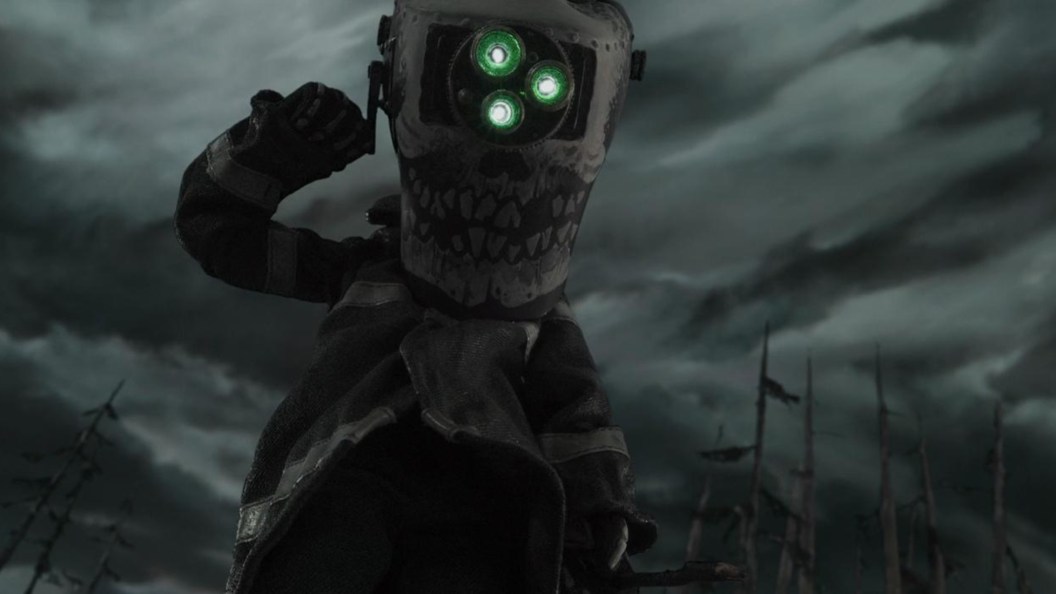
Coraline arrived on February 6, 2009 as the first feature Laika ever made, and it has spent the years since becoming the film people name when they are asked about stop-motion. Henry Selick directed it and wrote the screenplay himself, adapting the 2002 novella by Neil Gaiman, a book that won the Hugo and the Nebula for best novella and the Bram Stoker for best work for young readers before anyone tried to film it. The movie grossed close to $186 million on its original run against a $60 million budget, picked up a Best Animated Feature nomination it lost to Up, and then did the genuinely rare thing of getting a 15th-anniversary re-release in 2024 that behaved like a new hit. It is faithful in the ways that matter. The ghost children are there, the button eyes are there, the cat still bites the head off the rat. It is also carrying a major character the book has never heard of.
Wybie Lovat is not a renamed book character or a composite of two minor ones. He is an invention, and a total one. The novella’s text never uses the name Wybie, or Wyborne, or Lovat, anywhere in its 210 pages. There is a claim in circulation that the book glancingly mentions a boy who lived in the house before Coraline, and it is worth knowing that the source usually cited for it does not actually say so. The likeliest root of the confusion is that the book does contain a boy, one of the three ghost children, who remembers being made to cut his hair and wear britches — a child the Beldam killed centuries ago, not a neighbor with a bike. So Wybie belongs entirely to Selick, and the reason he exists is not a whim. It is the most basic problem in adaptation, and Selick has explained it plainly.
Henry Selick’s First Draft Was Too Faithful to Work
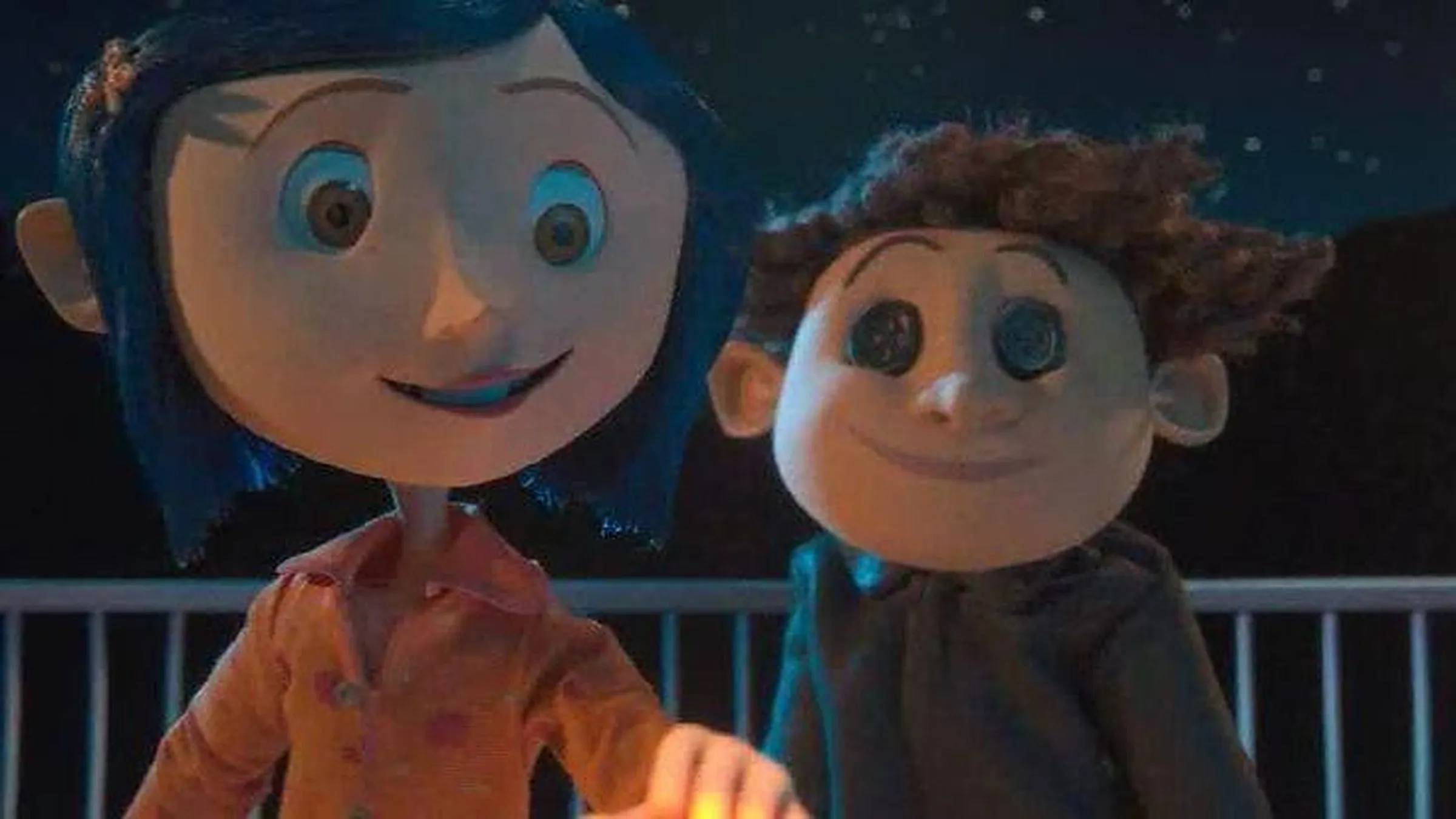
Selick has said his first pass at the script failed, and he is specific about why. “My problem with the first draft was it was too faithful, and it did not actually feel like a movie,” he said in an interview around the film’s release. That is a harder problem than it sounds. The novella is 210 pages of a girl mostly by herself, and what makes it work on the page is that the reader has access to the inside of her head. Coraline notices things, doubts things, reasons her way toward what the Other Mother is. Prose does that for free. A camera cannot.
His solution was structural rather than decorative. “I realized that Coraline needed someone in her real world to talk to,” he said, and another kid “seemed the most simple way to go.” Every thought the book could simply report now has somewhere to go. Coraline can be sarcastic at someone. She can be told something and refuse to believe it. She can have her mind changed in front of you rather than between paragraphs. The alternative was a hundred minutes of a child narrating her own suspicions aloud in an empty house, which is the version of this movie nobody wants to sit through.
What makes the choice better than a functional one is that Selick did not write a sounding board. Wybie is annoying on purpose. He turns up uninvited, knows more about the house than Coraline does, corrects her, and introduces himself with a name he clearly resents — “short for Wyborne. Not my idea, of course.” He is the first thing in the film that is real and irritating and does not bend to what Coraline wants. That matters more than it looks, because the Other World is about to offer her the exact opposite, and a story needs to show you what is being traded away before it can make the trade feel dangerous.
He Does Not Just Talk, He Rebuilds the Machinery of the Story
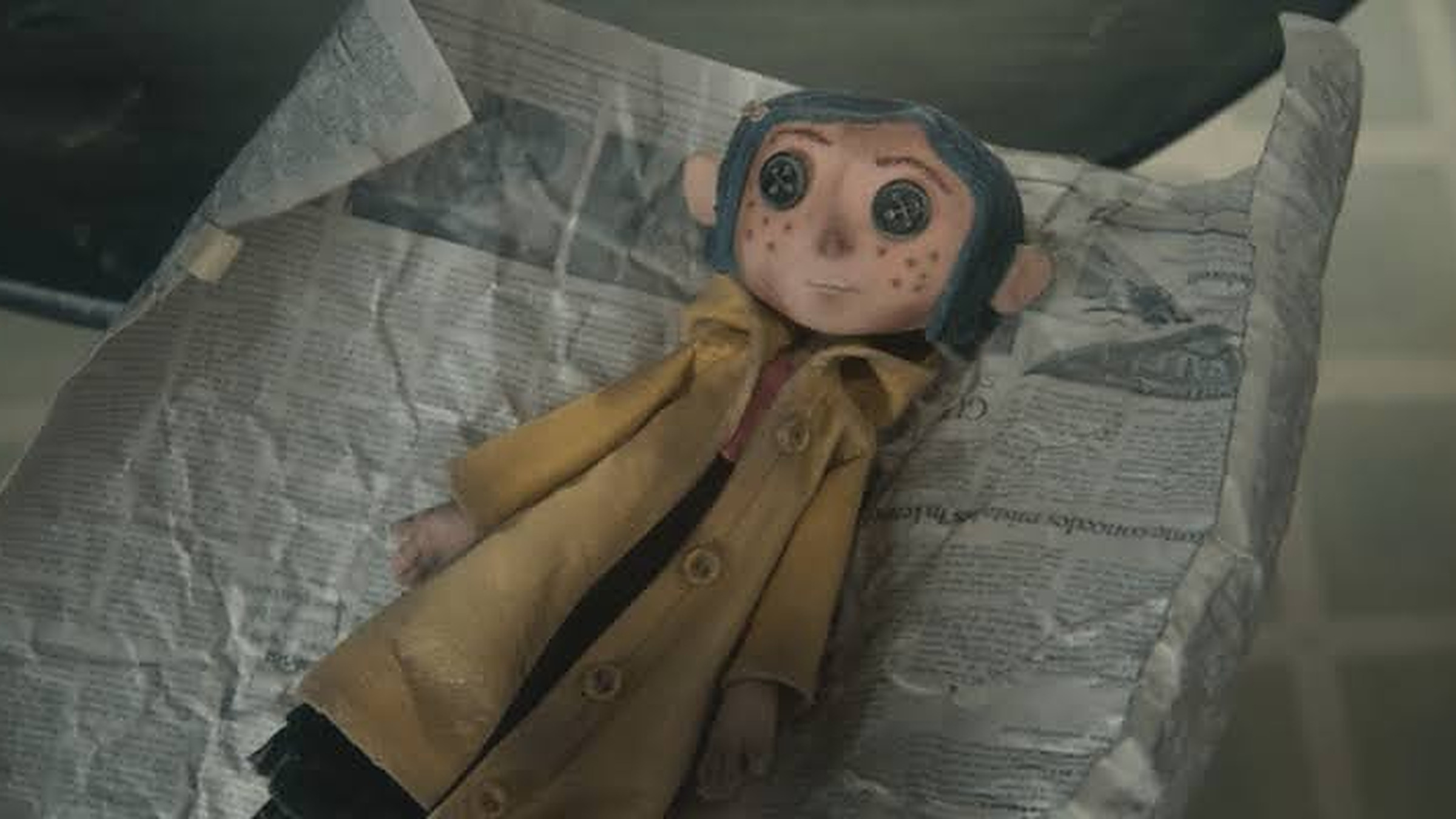
The doll is the clearest case. In the film, Wybie brings it to Coraline out of his grandmother’s trunk, and it turns out to have belonged to his grandmother’s sister, who vanished as a child. It is also how the Beldam watches her. That entire mechanism — the doll that is a surveillance device, remade to match each new child — does not exist in the novella at all. The only dolls in the book are ordinary ones Coraline sets out as bait in her last trap. So the film’s most recognizable object, the thing on the posters and the merchandise, is downstream of a character who was invented to give her someone to talk to.
The well works the same way. It is in both versions, but in the book Coraline finds it herself, the way she finds everything else. In the film Wybie shows it to her and warns her off it, telling her it is so deep that if you fell to the bottom and looked up you would see a sky full of stars in the middle of the day. That is a better line than the information needs, and it does two jobs at once: it plants the location where the story will end, and it establishes that this kid knows this place and she does not.
Then there is the ending, which is the part the book genuinely does not have. The novella closes with Coraline back in her own life and school about to start. The film adds a garden party at the Pink Palace where Wybie’s grandmother is a guest, and Coraline begins to tell her what became of the sister she lost. Every piece of that scene depends on Wybie existing. No Wybie means no grandmother, which means no missing sister, which means the ghost girl stays an abstraction. Selick used the invented character to convert a haunting into a family’s loss that somebody living can finally close.
The Other Wybie Is the Best Idea in a Film Full of Them
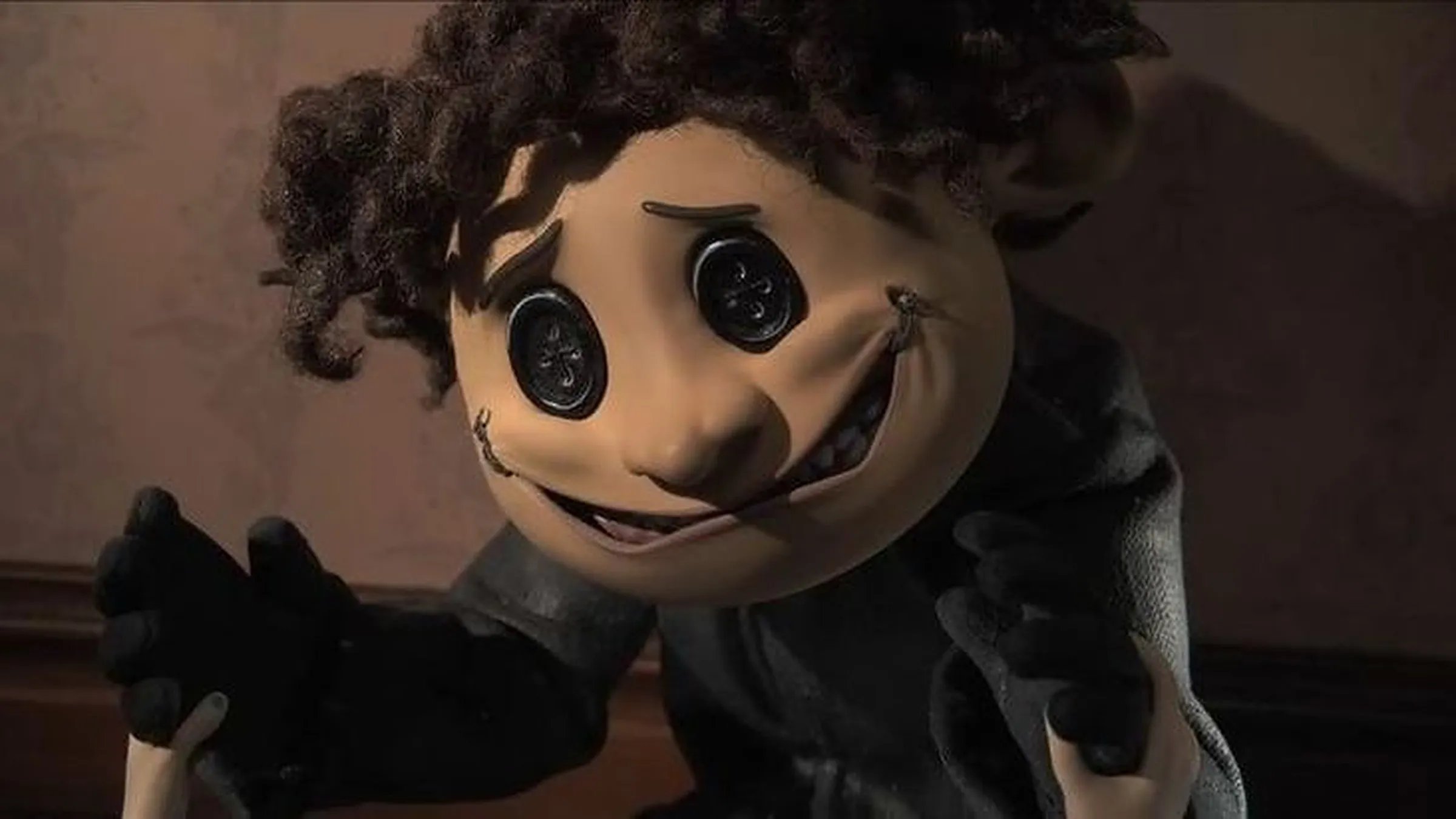
If there is a single scene that justifies the whole invention, it is the Beldam’s version of him. The Other Wybie has button eyes and a permanent grin and does not speak, and when Coraline notices, the Other Mother explains it with the most chilling line in the movie: “I thought you’d like him more if he spoke a little less. So I fixed him.” His mouth has been stitched into that smile. Coraline pulls the stitches out with her fingers. Later he peels off a glove and his hand is sawdust, and he blows on it and watches it come apart.
He helps her anyway, and the Beldam destroys him for it. What Coraline finds afterward is the image the film never tops: his clothes, emptied out, hanging on a flagpole on the roof like a scarecrow. None of that is in the book, because none of it can be — it requires a friend for the Beldam to counterfeit. The Other World’s whole pitch is a version of your life with the friction removed, and the film’s sharpest statement of that is a friend who has been surgically prevented from disagreeing with you. A book can describe a place where everything is too easy. A movie has to show you one thing that is wrong with it, and this is the thing.
The objection to Wybie is real and it deserves a hearing. Reviewing the film in 2009, critic David Edelstein wrote that Selick “creates a male peer for Coraline — a nerd called Wybie — who undercuts the bell-jar isolation she has in the book and plays way too big a role in the climax, which ought to be Coraline’s triumph.” He is right about the climax. In the book Coraline defeats the hand alone, with a fake picnic laid over the open well, and the cat only watches. In the film Wybie rides in and smashes it with a rock. That is a real loss, and it is the one place the invention overreaches.
But it is worth noticing what else happens in that sequence. Wybie is knocked out and very nearly killed by the thing he came to fight, and Coraline is the one who drags him clear. The rescue runs both directions, which is more than the criticism allows for, and it is a strange kind of theft that leaves the girl saving the boy. Set that one overreach against what the rest of him carries — the doll, the well, the grandmother at the garden party, and the hollow smiling copy of himself hanging on a pole — and the arithmetic is not close. The film would be smaller without him, and in the places that matter most it would not work at all.
