


Articles
89 Years Ago, A 10/10 Fantasy Book Was Published & Launched a $6 Billion Franchise

On September 21, 1937, a relatively unassuming fantasy novel appeared in British bookstores. The first printing consisted of just 1,500 copies, and it was marketed as a children’s book. The author? An Oxford academic who had spent years letting friends and family read the manuscript. There was no cinematic universe waiting in the wings. No studio executives were mapping out sequels. No one knew that its setting would eventually become one of the most recognizable fictional worlds in modern entertainment. Its publication quietly changed fantasy forever. The first edition sold out by December 15, less than three months after publication, turning what began as an unexpected children’s hit into something much larger.
That was only the beginning. The publisher wanted more stories about the protagonist and his friends, prompting the author to begin what would eventually become its legendary sequel. The sequel grew far beyond the scale of the original children’s adventure, transforming a fictional world into an enormous mythology. Decades later, Peter Jackson’s six films based on The Hobbit and The Lord of the Rings would collectively earn nearly $6 billion worldwide.
The Hobbit Began With 1,500 Copies — and an Extremely Unlikely Publisher

There is something wonderfully fantastical about The Hobbit having such an underdog origin story. Tolkien wasn’t writing stories in the early 1930s trying to invent a billion-dollar franchise. He was an academic, a philologist, and a father. According to Tolkien himself, the story’s famous opening came to him while he was marking examination papers: He eventually developed that stray sentence into a full story. Before then, he made no serious attempt to publish it for years. Instead, he read the manuscript to his children and lent it to friends.
Its route to publication sounds almost like a scene from a movie. Tolkien’s former student Elaine Griffiths helped bring the manuscript to the attention of Susan Dagnall at publisher George Allen & Unwin. Dagnall liked what she saw, and publisher Stanley Unwin then gave the manuscript to his 10-year-old son, Rayner, for his opinion. Rayner enjoyed it. His opinion helped convince his father to publish the book. Tolkien subsequently went all in on the presentation by creating maps, illustrations, and even the dust-jacket design himself. The publisher enjoyed his illustrations so much, that they made sure to include some in the books. The first edition appeared on September 21, 1937, in that tiny 1,500-copy run. Within three months, every copy had sold. Fast forward, and decades later there is even an illustrated graphic novel for The Hobbit.
The Success of The Hobbit Accidentally Created The Lord of the Rings
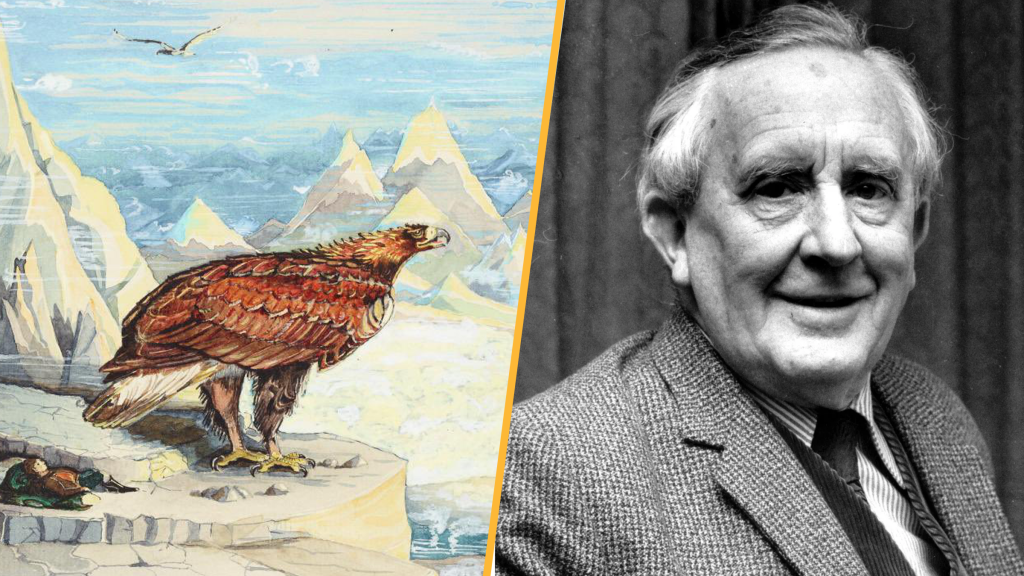
The most important factor from The Hobbit was how it convinced Tolkien’s publisher that readers wanted more. In December 1937, only months after publication, Tolkien’s publisher was already asking for another hobbit story. Tolkien initially submitted material connected to The Silmarillion, but those stories were rejected for being too difficult to market. As a result, Tolkien returned to writing about the hobbits.
There was another force behind Tolkien’s mythology that is easy to overlook: his Catholic faith. Tolkien was a devout Catholic, and his beliefs deeply shaped the moral world of Middle-earth. That influence can be seen throughout the books. Characters are tested by power and temptation. Mercy matters. Sacrifice carries a cost. Even seemingly small acts can have enormous consequences. Tolkien’s faith did not simply sit in the background of his writing. It helped shape the worldview underneath it.
What followed is one of publishing history’s great escalations. Tolkien began writing a sequel in December 1937, but the project rapidly outgrew the relatively light children’s adventure of The Hobbit. The story became darker, longer and vastly more ambitious. The story eventually evolved into The Lord of the Rings. The original trilogy became one of the most accurate fantasy book adaptations of all-time. Three volumes were published between 1954 and 1955. Tolkien himself acknowledged that the sequel had grown into something far beyond what he originally intended. In other words, one of Hollywood’s biggest fantasy franchises began with 1,500 books, a professor, a 10-year-old reader, and a sentence about a hobbit.
Tolkien’s Books Become a Hollywood Trilogy and More

The Hollywood movies took Tolkien’s success to another level. The Fellowship of the Ring arrived in 2001 and earned about $902 million worldwide. The Two Towers followed in 2002 and brought in roughly $927 million. Then The Return of the King became the first film in the trilogy to pass $1 billion, earning about $1.13 billion worldwide. It’s amazing how each subsequent film surpassed the previous in earnings while the franchise continued to become wildly popular. It was no easy task either. For example, there were 4 actors considered to play Aragorn before Viggo Mortensen.
And that was only the beginning. More than a decade later, Peter Jackson returned to Middle-earth with The Hobbit trilogy, this time circling back to the original books by Tolkien. Even more surprisingly, all three films approached or passed the $1 billion mark without much difficulty. Together, Jackson’s six Middle-earth movies earned roughly $5.9 billion worldwide. A story that began with a 1,500-copy children’s book had become a massive global movie franchise.
Tolkien’s little hobbit adventure grew far beyond the page. Middle-earth now lives in every realm imaginable—from movies and games to toys, collectibles, clothing, and countless other pieces of merchandise. What started as a story about a hobbit finding his way home ended up finding its way into just about everything.
