


Articles
The Vampire Lestat Makes Major Changes to Anne Rice’s Classic But They Tell Their Own Great Story
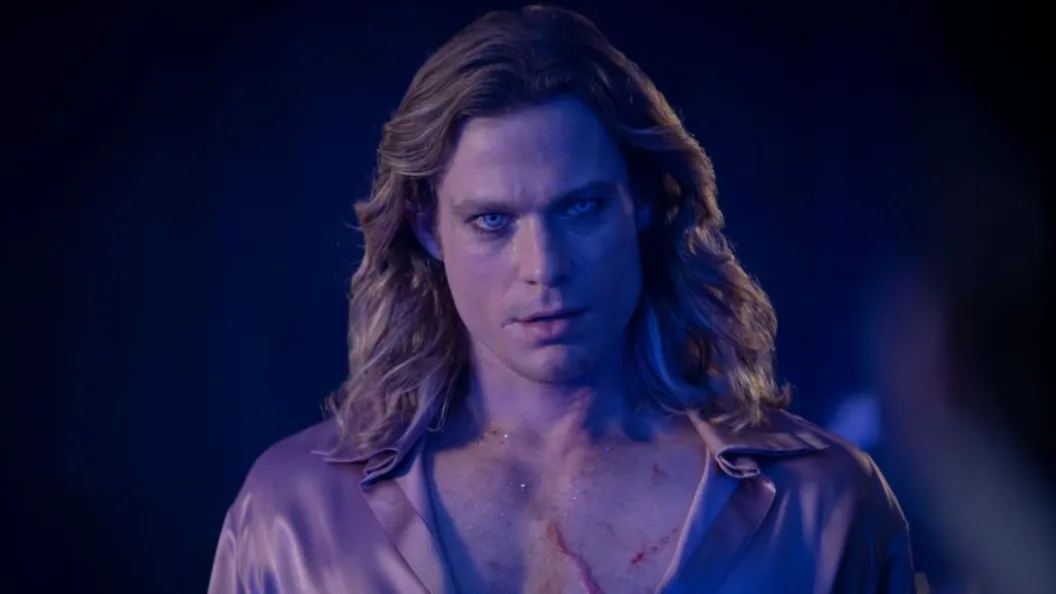
AMC’s The Vampire Lestat just concluded its season on Sunday and to say that things wrapped up in a place fans didn’t quite expect would be an understatement, particularly for fans of Anne Rice’s books. With the season being focused on Lestat sharing his story as well as his journey as a rock star, many viewers expected the season finale to conclude with an epic concert—as well as the start of the catastrophic fallout from said concert. Instead, we got some rich, emotional moments, a lot of insight into Lestat that helps shape everything that happened this season, and a tease that fans are already frantic to know if a series renewal is coming to pay off on. It was a wild, exhilarating, and somewhat confusing ride.
But while there was a lot to unpack in the season finale as well as the entire season, there is one thing that does stand out and that’s just how different the series has been from the book. This isn’t exactly new; even the first two seasons of Interview With the Vampire deviated markedly from Rice’s book of the same name. Even I have struggled with some of the larger shifts away from the novels (and this season particularly, the characterizations of key characters.) But now that the season is complete and we’re left standing with Lestat and wondering what’s next, something has sort of made itself clear. Yes, The Vampire Lestat is wildly different from Rice’s books—but it actually works very well as its own story and, if you keep an open mind, can enhance your reading experience.
The Vampire Lestat’s Changes Expand the Story (And Offer Differing Perspectives)

The biggest thing that I think works in AMC’s The Vampire Lestat’s favor in terms of its differences from the source material is centered in how the story gets expanded and we get different perspectives. Yes, the season is largely told through Lestat’s eyes the way that Interview With the Vampire is told through Louis’s. We are still very much getting merely one side of the story. However, what the season does by framing things as a series of recordings called “The Failures” rather than a “let me set the record straight” autobiography explainer the way the book is framed, means we’re getting to look at Lestat differently. The show doesn’t relitigate the past in quite the same way the book does. Instead, we get the crystallization of what the book was, in a sense, doing: showing Lestat slowly come to terms with who he is rather than running from it.
It’s a slightly different perspective, but it also helps flesh out the larger vampire world. The Vampire Lestat the novel ends with Akasha’s arrival and her attack on the vampires who oppose Lestat’s revelations about vampires—to say that Lestat’s concert is a disaster is an understatement. The series, instead, closes out before we get to that point (while also letting us glimpse the aftermath) but here we understand the tensions in a way the book doesn’t fully express. Armand’s bitterness and his more villainous aspects are highlighted. Louis’s emotional journey is explored beyond what we ever see in the book, which makes the ultimate reconciliation between Louis and Lestat much more satisfying (even if the show leaves out a detail that many fans had been waiting for.)
The biggest shift, however, might just the way the series is able to incorporate books that come after The Vampire Lestat. There are certain elements that happen far earlier on the show than they do in the books—specifically the seance where Ghost Claudia gets to have her say—and while that may feel like a huge change to deep fans of the books, there is actually a great bit of utility in bringing certain elements forward. In particular with Claudia, that seance doesn’t actually happen until the novel Merrick, the seventh book of the series, but an apparition of Claudia appears in The Queen of the Damned and again in The Tale of the Body Thief. Having that seance out of canonical sequence—and particularly since she manages to escape the salt circle—sets the stage for future emotional fallout for Lestat. What worked on paper wasn’t necessarily the best choice for live-action narrative but with some tweaks, it shines on screen.
The Series Is a “Bad” Adaptation, But It Works As a Great Story

If you’re looking at The Vampire Lestat and wishing it were a more direct, literal or even faithful adaptation you’re not alone. A lot of book fans would love to see that (me included) especially when it comes to the greater detail about Lestat’s years before Louis. There’s good story there. But when you let yourself let go of the need for it to be literal and step back to look at the themes and elements, what AMC has done actually works. The series gives a larger context and refinement to the best aspects of Rice’s characters. Louis, a character who is very critical to Lestat’s story but is largely absent through most of Lestat’s narratives, actually gets a role and maintains much of his personality while also getting to grow. Lestat develops into his Brat Prince self in a way that feels less like him telling us and more like him showing us through action and even earning it. The various shades of Armand are allowed to reveal themselves naturally, same with Daniel. And the slow set up of Raglan James feels a lot more nuanced and realistic than does his introduction in the novels—which will make the story all the more interesting should the series ever manage to work its way to The Tale of the Body Thief.
Ultimately, AMC’s The Vampire Lestat isn’t exactly Rice’s The Vampire Lestat. We may never actually get that version of the story on the screen. But in terms of a dramatic, nuanced, rich, and emotional tale of extraordinarily complicated, messy monsters who are more human than we want to accept, the series excels. It’s not a perfect series, but it’s a good one and if you can let yourself let go of the details and see the series as a companion, it’s not only a worthwhile watch; it’s great television, too.
What do you think? Leave a comment below and join the conversation now in the ComicBook Forum!
