


Articles
5 Movies Still Stuck in Development Hell (& 1 Has Been There for Decades)

How many movies can you think of that were announced but never actually happened? There are plenty of delayed projects out there, and even more that have been shelved or abandoned altogether. But then there’s the infamous development hell, where a director takes on a project and leaves it, the script gets written, the studio changes its mind, another project takes priority — and before anyone realizes it, more than 10 years have gone by. Some movies even stay stuck there for so long that it almost becomes a tradition. The sad part is that, most of the time, these are productions that have absolutely everything going for them: big-name directors and studios, well-known franchises, or books that already have several fans. And yet, actually getting them made is where things always seem to fall apart.
We picked 5 movies that have been stuck in this painful limbo for far too long and just can’t seem to get moving. One or two of them seem to be showing signs they might finally get somewhere, but things are still pretty uncertain. We’ll just have to wait and see.
5) The Adventures of Tintin 2

Who remembers The Adventures of Tintin? It’s been 15 years since it was released. It wouldn’t really be a problem for a sequel to be announced years after the original, considering how many have happened long after the first installment. However, in this case, the follow-up was practically planned from the very beginning. The idea was for Steven Spielberg to direct the first one, Peter Jackson to take on the second, and for the franchise to move forward from there. In the first movie, Tintin, a young reporter, finds a model ship that pulls him into an adventure involving the treasure of Red Rackham, Captain Haddock, and an old pirate story. The thing is that Jackson never managed to fit the sequel into his schedule, and that’s where the long wait began.
More specifically, it came down to organization and planning, which isn’t exactly uncommon in Hollywood. Sometimes, projects keep popping up, time goes by, and a production that was supposed to get underway keeps getting pushed back. Unfortunately, The Adventures of Tintin 2 ended up being mentioned far more often than it actually moved forward. But luckily, that changed this year when some new developments finally came along: Spielberg is still involved, and Jackson confirmed he has been working on the script with Fran Walsh and intends to direct the movie. Will it finally get off the ground for good?
4) Rendezvous with Rama
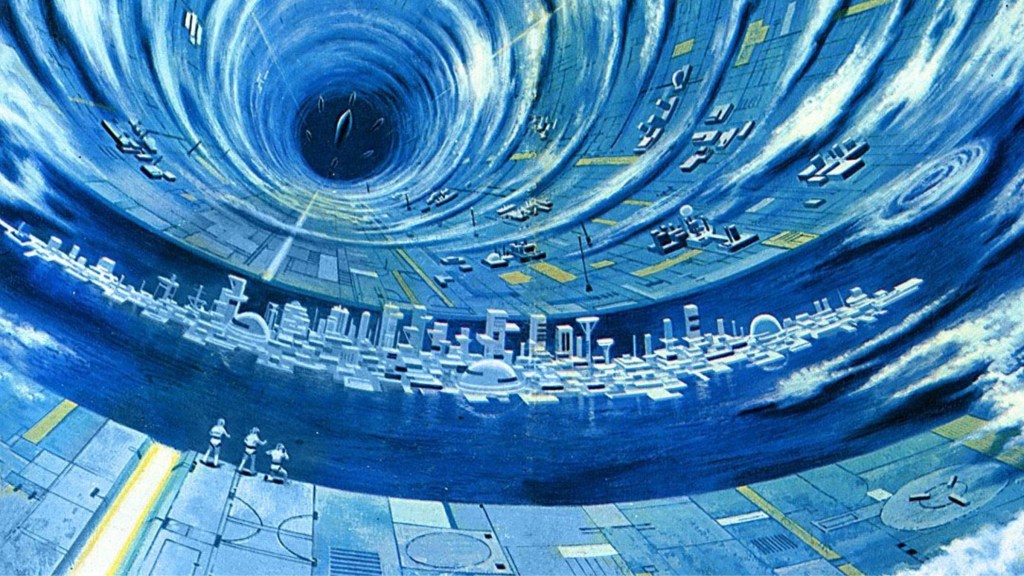
Rendezvous with Rama has been stuck in development for so long that it has already gone through several different phases of Hollywood. Arthur C. Clarke’s book tells the story of a team of astronauts sent to investigate Rama, a massive alien spacecraft that appears in the Solar System and simply continues on its way, with no one knowing exactly who built it or what its purpose is. And that’s where the problem for a movie comes in: the appeal lies in exploring Rama and discovering its secrets, not in fighting some creature or stopping an alien invasion. In theory, that shouldn’t be an obstacle considering similar films like Annihilation, Arrival, and 2001: A Space Odyssey, but here the scheduling issue seems to come up once again.
Since the 2000s, Morgan Freeman has been trying to bring the project to the big screen, while David Fincher was eventually attached to direct. More recently, however, Denis Villeneuve took over the project, which seems like almost the perfect choice for it, especially after his work on Blade Runner 2049 and Dune. But in fact, Rendezvous with Rama still hasn’t managed to make it into production, partly because he has a packed schedule full of huge projects. At least, he remains very interested and has started working on the script, but there’s no timeline for when it will finally make it to the big screen, given that the filmmaker has taken on directing the next James Bond movie, which is scheduled for 2028.
3) Akira
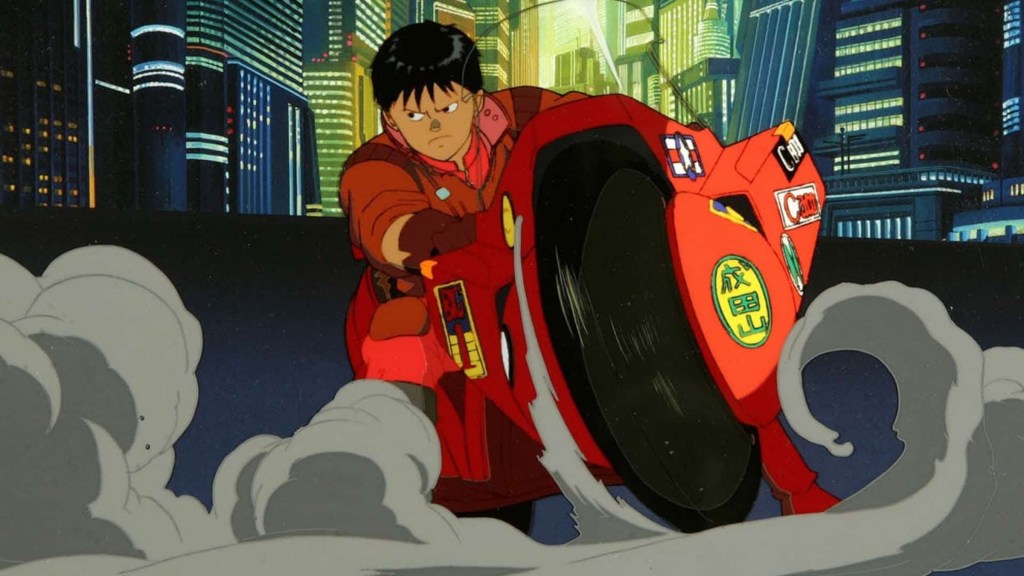
Few projects show just how well Hollywood can complicate something that already worked perfectly quite like the live-action adaptation of Akira. It is based on Katsuhiro Otomo’s manga and follows Kaneda and Tetsuo in a futuristic Neo-Tokyo, where an accident puts Tetsuo at the center of a military experiment involving psychic powers, while the city is already on the verge of chaos. It’s a huge, visually ambitious story full of ideas that seem perfect for a blockbuster — and Hollywood has been trying to do exactly that for years. Since Warner Bros. acquired the rights, the adaptation has gone through 10 different writers and at least 5 directors, with names like Jaume Collet-Serra and Taika Waititi attached to the project at some point.
For a time, it seemed like Waititi was finally going to get the film off the ground, but everything was ultimately delayed while he worked on Thor: Love and Thunder. Maybe one factor worth considering is that Akira is an ’80s classic, so any version would immediately be compared to it. And probably many factors like this had to be taken into account since the adaptation rights expired in 2025. Until then, it seemed like the biggest obstacles were the extremely high budget and casting. So, in short, the movie is currently still stuck in limbo.
2) Hyperion
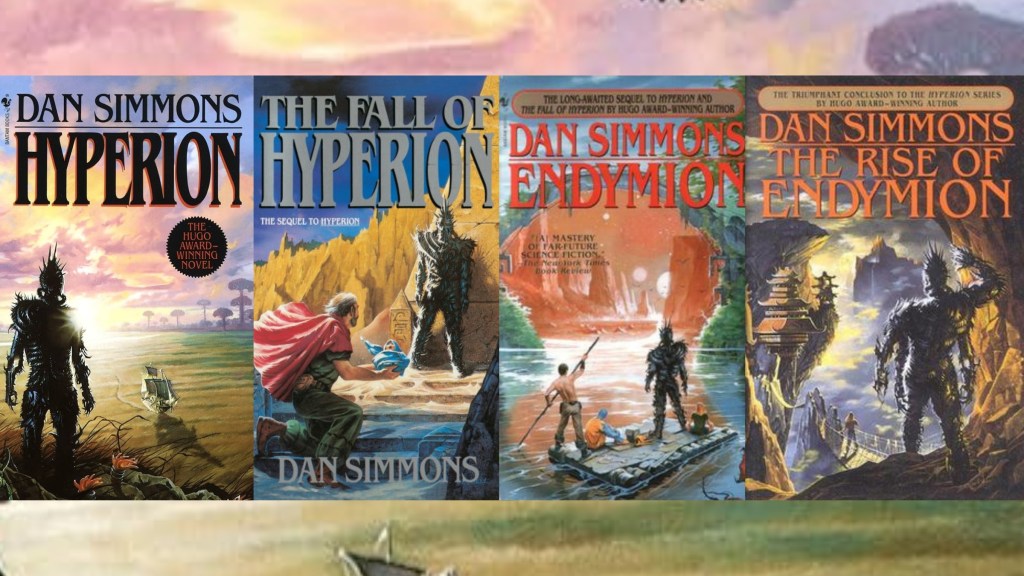
Hyperion is one of the most complex sci-fi books, so much so that when you read it, you understand why it’s been so difficult to adapt. Dan Simmons’ story follows seven pilgrims traveling to the planet Hyperion, each with their own reasons for being there and all connected to the mysterious Shrike, a creature that has become an almost religious figure in that world. But this story isn’t told like a more conventional genre adventure: during the journey, each pilgrim tells their own story, and those stories introduce completely different characters, genres, and conflicts before everything eventually starts to come together. In a book, that structure works, but it’s a headache for anyone trying to turn it into a movie with an average runtime of two hours.
The project once had Scott Derrickson involved, with plans to combine Hyperion and The Fall of Hyperion (the first duology in the original material), then it was considered as a series, but eventually returned to the feature film format with Bradley Cooper showing interest. Even so, it never reached the point where a production actually seemed ready to happen. Maybe the problem with Hyperion is that its story needs a format the industry seems reluctant to commit to these days: a big TV show with enough time to develop each pilgrim before getting to the Shrike. As a film, there’s a very real risk of turning it into an extremely rushed version of a book that inevitably depends on the gradual buildup of its world. It’s been 17 years since this adaptation was announced.
1) Blood Meridian
Here, the case is pretty severe, and it almost feels like the movie was designed to make everyone give up. Blood Meridian is a novel by Cormac McCarthy that follows The Kid, a young man who travels through the Old West and gets involved with a group of scalp hunters led by Judge Holden, one of the most disturbing figures in American literature. The plot is extremely violent, doesn’t have a traditional hero-and-villain structure, and is much more focused on showing the brutality of that world than being a straightforward Western adventure. And do you know when the first attempt to bring this story to the screen happened? 1995. Since then, the whole process has seemed like one long struggle.
Initially, Tommy Lee Jones worked on one version, then Ridley Scott and William Monahan developed another, and James Franco even filmed test footage for his own attempt — none of them managed to become anything. Now, John Hillcoat, who already adapted The Road (another McCarthy novel considered difficult to bring to the screen), is working on a new version with writer John Logan. And considering that partnership, honestly, Blood Meridian might finally have a real shot at becoming a reality. But the question that remains is: how far can this film actually go? Because if the violence and more disturbing content are toned down, it risks taking away what makes the book so memorable; but if it keeps everything intact, it will have a very difficult feature to sell to a mainstream audience.
