


Articles
4 Beloved Stop-Motion Animated Movies That Took Years to Make, Including 1 That Took Over a Decade

Have you ever wondered what it takes to make an animated movie? It’s more work than you might think, but when it comes to stop-motion, the process gets even more complicated. Bringing a story to life this way means manually adjusting puppets and photographing every little change to put a complete scene together. So basically, even the simplest movements can take hours of work, especially when a movie features elaborate sets and characters full of details. It’s a lot of work, but some studios still choose to use this technique, and the results show that all that effort can really pay off.
What many people might not realize, though, is that some of these films took years to complete. So, we’ve rounded up 4 stop-motion animated features that were big hits with audiences to show just how much planning goes into these productions — but the amount of time each one took to finish is still pretty mind-blowing.
4) ParaNorman
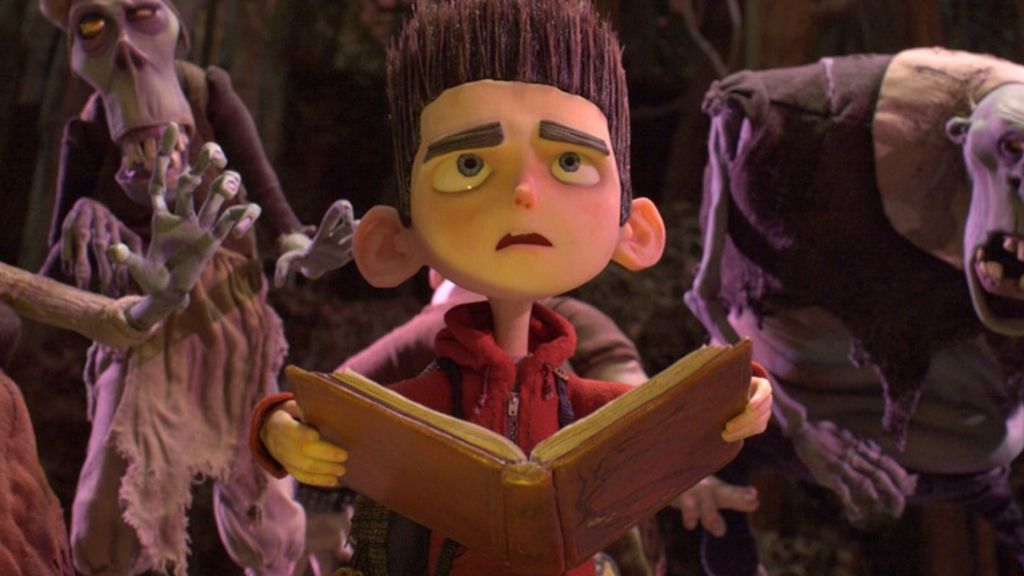
In a world with movies like Corpse Bride, Monster House, and Frankenweenie, ParaNorman came out swinging, proving that animated stories don’t have to be cute or simple to work. Here, we follow Norman Babcock, a boy who can talk to the dead and ends up having to save this town from a centuries-old curse. It might sound like just another supernatural adventure, but even bringing that story to the screen took years of work, resulting in one of the most interesting stop-motion projects ever made. Overall, the movie took around three years, but it’s worth noting that the concept had been in development long before production began, which gave the team time to experiment with new animation techniques as well.
Did you know that ParaNorman was the first stop-motion feature film to use full-color 3D printing to create replacement faces for its characters? This allowed for much more detailed expressions than traditional methods could offer. Thousands of facial components were needed to give the characters different emotions in every scene. And that’s not something to overlook, because so much of the movie depends on their reactions, whether it’s Norman trying to explain his abilities to people who don’t believe him or the entire town seeing him as the only person who can solve a problem no one else understands. And honestly, even though it has its share of fans, it deserves to be talked about a lot more.
3) Kubo and the Two Strings

Making a stop-motion animated movie already takes a ton of patience, but Kubo and the Two Strings took things to another level by creating a fantasy with the visual scale of a major blockbuster. It’s not remembered as much as it should be, but it has earned highly positive reviews from both critics and audiences. The story follows Kubo, a boy who uses a magical shamisen to bring origami figures to life and goes on a journey to face some supernatural forces connected to his family’s past. The movie took five years to go from development to completion, including around two years of filming, and, actually, it’s not hard to understand why it took so long — just look at some of the scenes.
One of the biggest challenges was bringing its creatures to the screen, especially the Giant Skeleton, a massive puppet that stood around 16 feet tall. The production also pushed the studio to develop new ways to create elements like big ocean waves, blending practical effects with CGI to make everything feel like part of the same handcrafted world. The whole thing features 1,359 shots. Still, what makes Kubo and the Two Strings such a great watch is how all that effort to create something on such a grand scale also serves the story, which explores meaningful themes like family, memory, and loss. Thankfully, the balance works perfectly, and neither the visual spectacle nor the protagonist’s personal journey overshadows the other.
2) Coraline

It’s impossible to talk about this list without bringing up Coraline, not just because of its visuals and story, but also because it was one of the most time-consuming stop-motion productions of its time. Here, we meet the titular character, a girl who moves into a new house and discovers a secret passage leading to an alternate universe. And in this other world, her parents seem more attentive, everything is more fun, and things work exactly the way she’d like them to. The problem starts when Coraline realizes that this perfect reality has something pretty sinister going on. The entire world is basically a twisted version of the things she already knows, and bringing it to life required two years of pre-production and another 18 months of filming.
When you consider every detail that went into the process, it’s easier to understand how the movie became what it is today. This was a painstakingly crafted production featuring more than 130 sets spread across 52 filming stages. Since it came out in the 2000s, it was also a pioneer in combining 3D printing with stereoscopic 3D filmmaking. Because the technology was still relatively new, the printed faces were made from white material and had to be painted by hand. Just look at the Other Mother, for example — she wouldn’t be nearly as unsettling if she’d been created entirely as a digital character. Coraline is still a landmark in stop-motion animation and one of the genre’s best films because of the message behind its story.
1) Guillermo del Toro’s Pinocchio
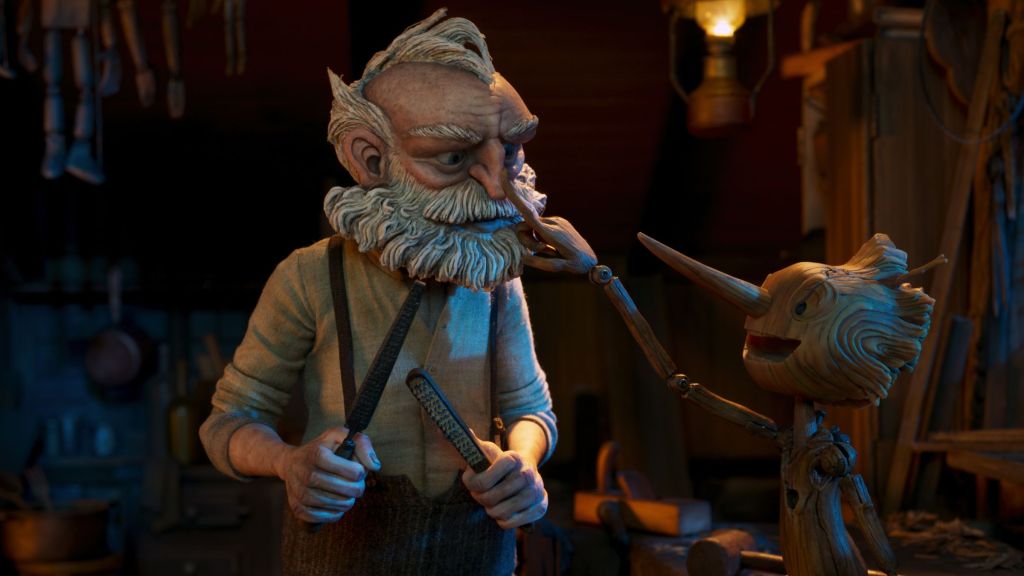
Guillermo del Toro is one of the most respected filmmakers working today, and he’s not known for rushing through a project just to get it out there. Among his many productions, Guillermo del Toro’s Pinocchio was certainly one of the most challenging, taking more than a decade to finally become a reality. He started developing the project long before it secured the support needed to move forward with production. And instead of just retelling the classic story of a wooden puppet who dreams of becoming a real boy, Del Toro decided to set the story in fascist Italy, following Pinocchio as he tries to make sense of the world while Geppetto struggles with the loss of his son. This gives the movie an identity of its own and allows it to explore some compelling themes such as grief, obedience, and authoritarianism.
And, of course, the ambition went far beyond the script. The film alone took 940 days to film, with animators moving the puppets frame by frame and using different versions of the characters so multiple teams could work at the same time. It’s the best example of why stop-motion productions can take such an incredibly long time to complete, especially when every movement has to be physically captured before the footage can be assembled into an animated sequence. In this case, though, all that hard work paid off, as the film won the Academy Award for Best Animated Feature in 2023. Guillermo del Toro’s Pinocchio is an outstanding movie from beginning to end, and one of the best adaptations since it also has something of its own to say.
