


Articles
34 Years Ago, Star Trek’s Time Travel Was So Good, Fans at Home Actually Complained About It
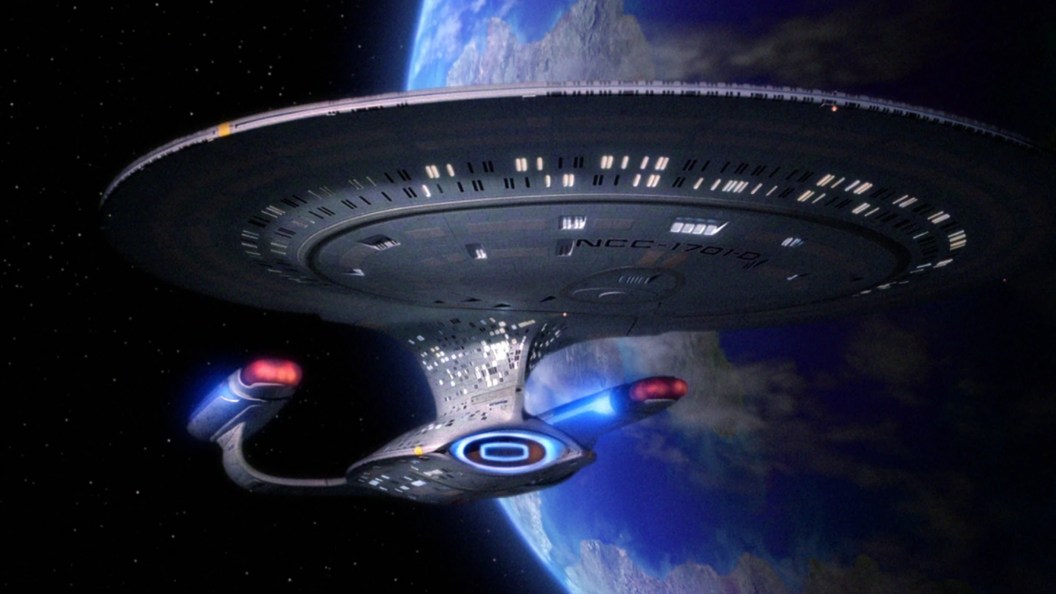
Star Trek has become one of the most well-known names in pop culture despite having a somewhat rocky start in the ’60s. It would come into its own in the ’80s, after years of syndication and movies led to Star Trek: The Next Generation. This show was something of a revelation back when it started in the 1987; special effects technology had gotten so much better that it made weekly sci-fi feasible, combining cutting-edge visuals with more philosophical storytelling. The Next Generation is home to some of the most beloved characters in the entire franchise and to some of the best moments in the Star Trek history. The only other Star Trek show that can even match its reputation is Deep Space Nine and even then, many fans still have more love for The Next Generation.
Time travel had also become a bigger part of sci-fi TV, thanks to shows like Quantum Leap. Time travel episodes of sci-fi shows can run the gamut of complexity, with The Next Generation giving its fans some of the best time travel episodes of all time. Some of them were rather simple – trying to stop someone from changing the past or people from the past trying not to change the future – but there was one that had viewers questioning whether their TVs, and by implication the broadcast systems of the their local television station, were working correctly. I’m talking about Season 5, Episode 18, “Cause and Effect”.
“Cause and Effect” Threw the Enterprise-D – and Viewers – for a Loop
Star Trek: The Original Series revolutionized time travel stories, so Star Trek: The Next Generation had its work cut out for it. Episodes like “City on the Edge of Forever” are some of the finest moments not just in Star Trek canon, but in TV history. Over its seven-year run, we (I say we because I was watching it back then, every Sunday at seven on WTOG 44 out of Tampa) got numerous time travel episodes, including classics like “Yesterday’s Enterprise”, “Time’s Arrow” Part One and Two, and, of course, the brilliant final episode “All Good Things…”. These episodes were all pretty common time travel stories and fans loved them.
However, one of the best parts about time travel in sci-fi is all of the ways you can use it. Star Trek‘s warp drive means you don’t get to do a lot of the fun time dilation stories you can with different methods of faster than light travel (go read The Forever War; it’s the tip of a glorious iceberg of realistic physics in sci-fi). However, you could still use some of the most complex time travel ideas and one that is a lot of fun to play with is the temporal causality loop. It’s not extremely complex, but it can be a bit confusing.
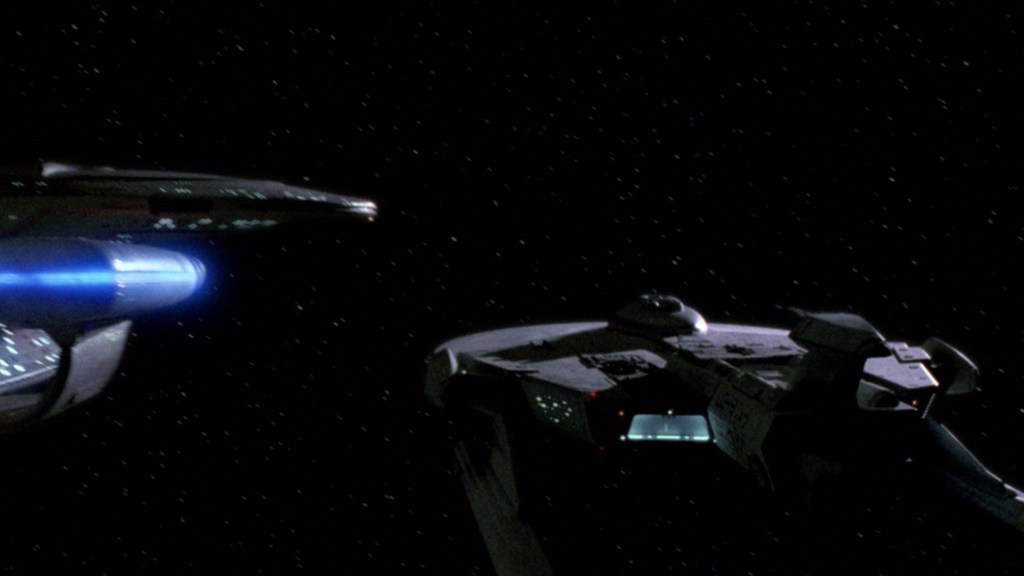
Basically, it works like this – something is thrown backwards or fowards through time and causes the accident that causes it to be thrown through time in an unending loop, a certain period of time repeating forever unless they can figure out a way to stop it. This was the plot of “Cause and Effect”. In the episode, the Enterprise-D ends up encountering a Starfleet Soyuz-class vessel, the U.S.S. Bozeman, that comes out of a temporal anomaly, crashing into the Galaxy-class ship, the explosion and anomaly combining to cause a temporal loop where it kept happening, with the crew solving eventually starting to remember the events of loop and stop it.
It’s a great episode – Kelsey Grammar plays the captain of the Bozeman Morgan Bateman (and, for my fellow ship geeks out there, the ship itself is a modification of the Miranda-class model that did a lot of heavy-lifting across early Trek history) and the whole thing is very cleverly written – exactly what you’d expect from Star Trek: The Next Generation. Seasons 5-7 were a cycle of diminishing returns in a lot of ways, but Season 5 was still the tail end of peak Next Generation. However, when this particular episode first aired, the loop aspect of the story caused something completely unexpected.
The episode works like this – we get the cold open, the set-up of the story, and the two ships destroying each other. Then, the next segment starts everything from the beginning all over again until we get to the destruction. Viewers who weren’t as quick on the uptake as others thought there was something wrong with either their TV or the broadcast facilities (or in the case of people watching a recording, the VCR), leading some of them to call the TV stations (ah, those days of sainted memory when you could actually talk to a human being at TV stations) and tell them that something was wrong with the broadcast.
Now, as a hardcore sci-fi, this is something that is easy to look at and have a chuckle about. Causality loops in sci-fi are nothing new, and they weren’t in 1992 when “Cause and Effect” aired either (the first example is “The Man Who Met Himself”, published in 1935 in Top-Notch magazine). However, 1992 was a very different time in pop culture. Sure, we’d had Star Trek and Back to the Future, but they weren’t anything close to complex time travel stories, mostly just someone going back and forth. A causality loop was new to the more casual fans of the days.
Nerd culture now means that a normie viewer is probably going to know about a temporal causality loop and have no questions; at the very least, they’ll understand what’s going on rather quickly. In 1992, Star Trek: The Next Generation wasn’t just watched by sci-fi fans; its popularity extended into the general pop culture, especially after Season 3 and 4 finale/debut “The Best of Both Worlds” Part One and Two. These were TV Guide readers who saw the praise the show got, tried it out, and enjoyed it. “Cause and Effect” was a higher level of sci-fi than they were ready for and it led to a rather funny situation in retrospect.
The Reaction to “Cause and Effect” Wouldn’t Happen Nowadays

Star Trek changed TV history numerous times over the years. It brought more harder-edged, philosophical science fiction to broadcast TV audiences and became a sleeper sensation in the ’70s, leading to its return in the movie theaters, which made Star Trek: The Next Generation possible. Star Trek is often looked at as the “uncool” sci-fi (the stories I could tell about being a Trekkie in the ’90s), but The Next Generation was a pop culture sensation, with massive crossover appeal (helped, and I’m not joking, by Patrick Stewart being seen as a sex symbol by women; he started a whole new trend of balding, older men becoming sex symbols and that’s before we even bring up the sexual tyrannosaurus that was Jonathan Frakes as Riker). The audience for the show was huge and they weren’t all hardcore sci-fi fans.
“Cause and Effect” on the scale of complex sci-fi doesn’t rank too high; temporal causality loops can get really complicated if you want them to, but this one really didn’t. It’s title pretty much describes it all – there’s a cause, there’s an effect, and they have to stop the cause to stop the effect. However, the whole thing was done so seamlessly that some viewers thought that there had to be something wrong with the TV or the broadcast. It was something that you wouldn’t get nowadays, an example of what the world was like before geek culture took over pop culture.
What do you think about “Cause and Effect”? Do you think this is funny and wouldn’t happen now? Sound off in the comment section below.
