


Articles
31 Years Ago, A Jim Carrey Movie Got a Saturday Morning Cartoon Sequel Series & Eventually Crossed Over With Ace Ventura
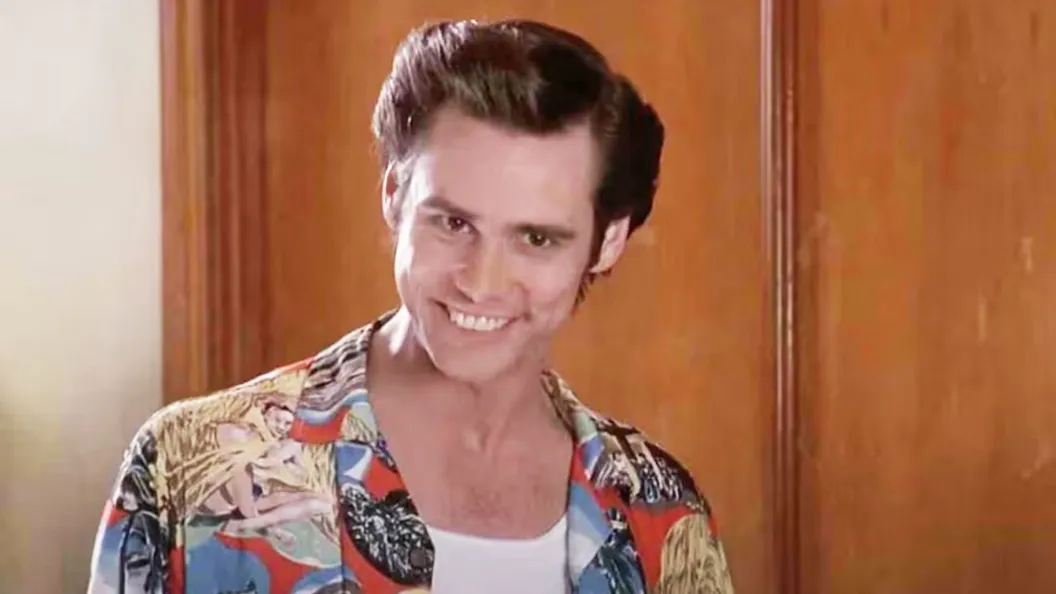
Jim Carrey spent the back half of the 1990s turning himself into the face of American comedy. Within a single stretch of years, Carrey introduced audiences to the twitchy, rubber-faced pet detective Ace Ventura, the dim-witted Lloyd Christmas in Dumb and Dumber, the Riddler in Batman Forever, and the unhinged cable installer Chip Douglas in The Cable Guy. He followed those roles with Fletcher Reede, the compulsively honest lawyer of Liar Liar, before pivoting toward the more restrained work of The Truman Show. From Bruce Almighty to The Grinch, Carrey’s performance often leans on the star’s elasticity. That said, The Mask took that concept to a whole new level.
In The Mask, Stanley Ipkiss (Carrey), a meek bank clerk, discovers an ancient mask that unleashes a manic alter ego who can change himself and the world around him through cartoon logic. That means conjuring objects out of thin air, stretching limbs, crossing impossible distances, and even changing outfits to fit the theme of each scene better. The film also stars Cameron Diaz in her feature film debut as a nightclub singer caught between Stanley and a local crime boss. Released on July 29, 1994, the film grossed $351.8 million worldwide against a reported $23 million budget. Those numbers made it one of the most profitable comic book adaptations of its era, despite deviating a lot from the bloody and gloomy Dark Horse comic in favor of a flashy adventure. Surprisingly, The Mask never got a sequel. What it did get was an animated series.
The Mask: Animated Series Gave Stanley Ipkiss a Bigger World to Play In

Developed by Duane Capizzi and produced through a partnership between Film Roman, Dark Horse Entertainment, Sunbow Entertainment, and New Line Television, The Mask: Animated Series premiered on CBS’s Saturday morning lineup on August 12, 1995. Rob Paulsen took over voicing duties for both Stanley Ipkiss and his masked alter ego, picking up the story directly from where the film left off. Rather than surrendering the mask to the authorities as he nearly does in the movie, this version of Stanley keeps it, a change that allowed writers to treat every episode as a fresh excuse for him to transform. The series also dropped the film’s rule that Loki’s mask only worked after dark, freeing the Mask to spread cartoon chaos at any hour and any place in Edge City.
The changes didn’t stop there. Reporter Peggy Brandt (voiced by Heidi Shannon), based on Amy Yasbeck’s film character, became the primary female lead of The Mask: Animated Series, while the villainous Pretorius (voiced by Tim Curry) replaced the movie’s mobster antagonist with a mad scientist better suited to a Saturday morning adventure-of-the-week format. Stanley’s dog Milo (voiced by Frank Welker) and best friend Charlie Schumaker (voiced by Mark L. Taylor) also became a bigger part of the plot, as a series stretching across three seasons and 54 episodes required a stable home life for Stanley to return to between transformations. Curiously, The Mask: Animated Series ran alongside two other cartoon spinoffs of Carrey’s 1994 movies, the Ace Ventura series and the Dumb and Dumber series. That unprecedented programming led to an unexpected spinoff.
The Mask and Ace Ventura Met Each Other in Animation
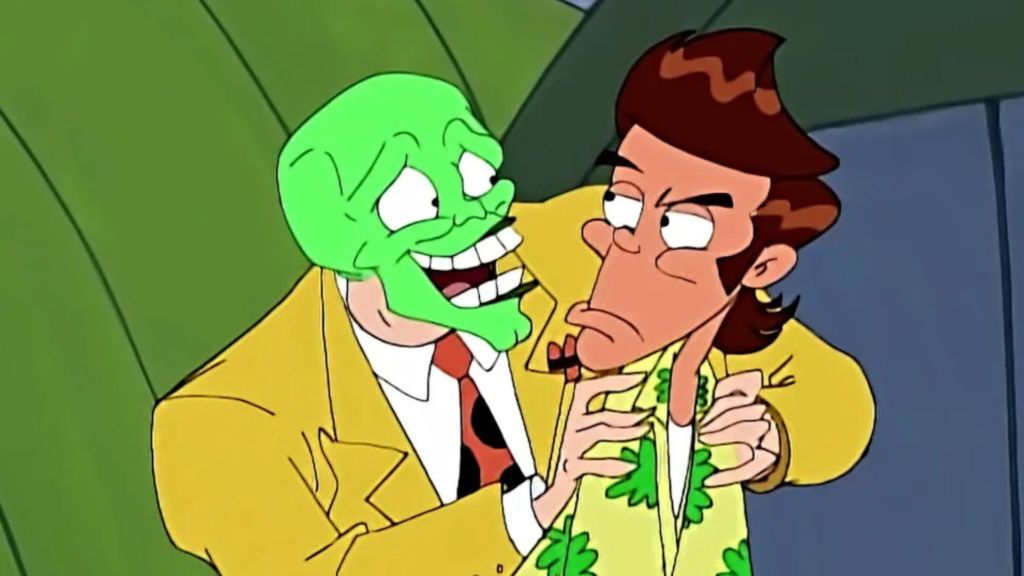
Ace Ventura got his own CBS cartoon in 1995, co-produced by Morgan Creek Entertainment and Nelvana. CBS placed the show immediately after The Mask: Animated Series in its Saturday morning lineup, a scheduling decision that paid off narratively two years later. The crossover began in “The Aceman Cometh,” the ninth episode of The Mask‘s third season and, as it turned out, the final episode of the series ever produced. In the season finale, Pretorius absorbs the stolen intelligence of a renowned scientist into a handheld device, intending to use it to fuel his machination. However, Milo gets in the way, and the stolen genius downloads into the dog’s brain instead. Pretorius kidnaps Milo to extract what he needs from the dog, so Stanley enlists Ace Ventura (voiced by Michael Daingerfield) to track him down.
The story crosses over shows, continuing in “Have Mask, Will Travel,” the second-season finale of the Ace Ventura series. Ace’s pet monkey Spike (voiced by Richard Binsley) steals Stanley’s mask at the end of “The Aceman Cometh,” so Stanley travels to Miami to reclaim it. Each show had its own animation style and unique set of tropes, so the two-part crossover allowed the Mask and Ace Ventura to visit each other’s universe. The crossover also gave Jim Carrey fans the opportunity to see two of his most iconic characters working together, something that could never have happened in film, especially given how movie logic is more tethered to reality, while animation has an inherent flexibility. The double episode remains a highlight of 1990s animation, and a relic of an era before streaming, where crossovers were genuinely surprising events.
