


Articles
3 Sci-Fi Books That Worked Better as TV Shows Than They Ever Did as Movies
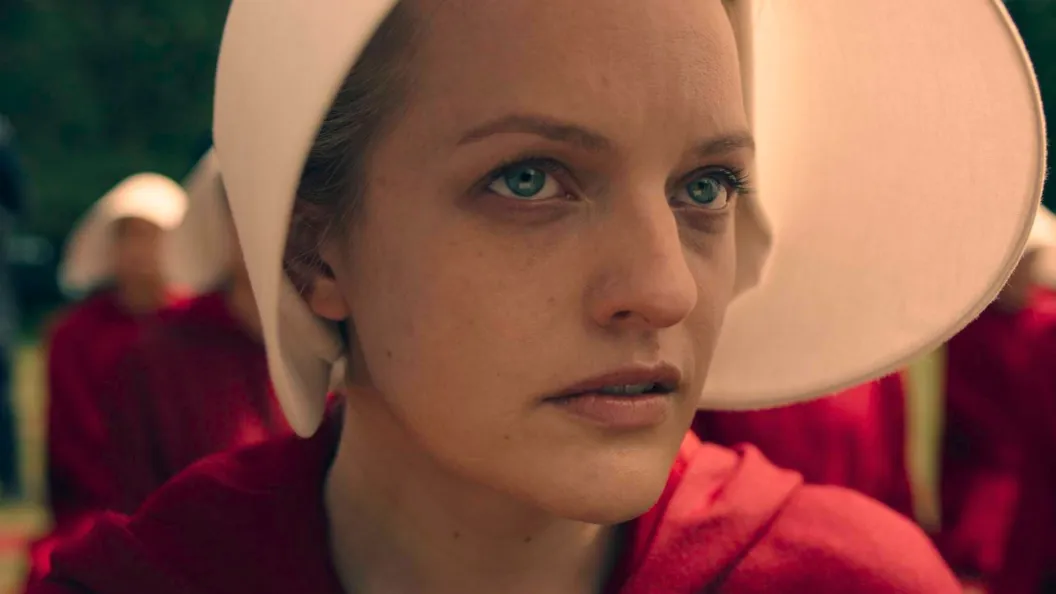
Everyone knows that sci-fi can be one of the hardest genres to adapt for the big screen since its stories tend to be more complex in general. And when that process happens, a lot of what makes the original material so good ends up getting left behind. Some just have too much information or an entire world that is too well-developed to be wrapped up in just two hours, for example. But when it comes to a TV series, things are a little different as there is more time to develop all those elements and less pressure to turn everything into one big storyline. And there are a few books that got the chance to be tested in both formats, proving exactly why that can make such a difference.
They got movie adaptations, but they were also given the chance to play out as TV seasons and episodes. These are shows that certainly aren’t perfect, especially since some of them are pretty dated by today’s standards, but they all showed that the problem wasn’t trying to adapt books in the first place — it was trying to squeeze their stories into a feature-length movie when they were never meant to fit that way.
3) The Day of the Triffids

The Day of the Triffids has a premise simple enough to fit into a film: after a mysterious event leaves most of humanity blind, walking carnivorous plants begin taking over a world that was already completely thrown into chaos. A TV series would be unnecessary to adapt the basics, right? However, John Wyndham’s book was never just about people trying to escape the Triffids, but about what happens to a society when almost everyone loses their ability to see, and the structures that kept that society running suddenly disappear. It got a movie adaptation in 1962, but it cut down a lot of that story to strip away its complexity and turn it into a more conventional sci-fi adventure for a wider audience.
Then, in 1981, a six-episode show came along, following Bill Masen (John Duttine), showing the different groups of survivors and the disputes over how humanity should move forward — and that makes a huge difference. Basically, the movie has to rush toward the next big event, while the series gets to explore the world falling apart and, above all, what people are trying to build after it does. It has more modest effects, but it understands much better what the real appeal of the original story is.
2) The Hitchhiker’s Guide to the Galaxy

Who hasn’t heard of The Hitchhiker’s Guide to the Galaxy? The sci-fi story created by Douglas Adams doesn’t unfold in a very traditional way, following Arthur Dent (Simon Jones), who finds out that Earth is about to be destroyed to make way for a space highway and ends up travelling through the universe with Ford Prefect (David Dixon). However, the story is fun because of all the things that happen along the way: the jokes, the digressions, the characters, and the ideas that sound completely pointless. It’s a story that is pretty much made for TV, so much so that it was adapted in 1981.
But in the 2000s, there was also an attempt to turn it into a movie, and it left something to be desired because of the challenge of turning all that material into something more cinematic, with a more organized plot that could work within roughly 90 minutes. That doesn’t mean doing so was a bad strategy, but it does take away some of what makes the original material good. The film has resources to show the Galaxy on a much grander scale, but the show, even though clearly aged, does a better job of preserving the rhythm and giving all the humor enough time to work.
1) The Handmaid’s Tale
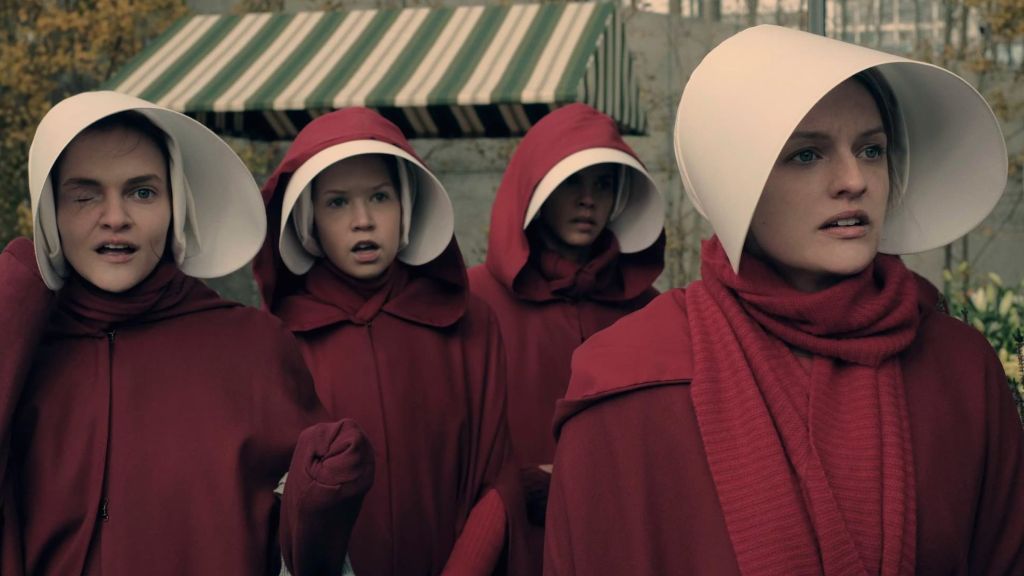
This is a dystopian story that managed to stand out brilliantly on TV, even getting a spin-off. But did you know it had already been turned into a movie? The Handmaid’s Tale takes place in a theocratic society called Gilead, where women have lost virtually all of their rights, and Offred (Elisabeth Moss) is forced to serve a powerful family because she’s still able to have children. The problem is that Margaret Atwood’s book depends on much more than just that premise, as it spends a lot of time inside the protagonist’s mind, following her memories, her fears, and the way she tries to understand the system that has come to control every aspect of her life.
In 1990, the movie came along and, naturally, didn’t have enough time to develop all of that, leaving much of this dimension behind in order to focus on the story in a more straightforward way. The show, on the other hand, benefits from what the original material does: it can take several characters and turn them into important pieces, also showing in much greater detail how Gilead works. It’s the kind of book that, if it’s going to be adapted, would ideally be better suited for TV above all else, no doubt.
