


Articles
3 ’80s Set Movies Made in the 2020s That Are More Historically Accurate Than You Think

Everyone loves the ’80s, especially when they are portrayed in movies, whether because the production was actually made during that time or because filmmakers decided to go back to the past to tell a story. The problem is that this second approach usually tends to follow a pretty predictable path: a lot of memorable music, colorful outfits, and pop culture references. That doesn’t necessarily mean it’s a bad thing, but sometimes a film can focus so much on that, that it forgets the most important part — and something many people are actually interested in: historical accuracy. And in the 2020s, some movies managed to shine in that regard, putting much more effort into not only recreating what the ’80s realistically were, but also showing what they actually felt like.
This is a decade that everyone loves to talk about because of its vibe, but it wasn’t completely stylized, and there are many things you might not even know about, since Hollywood hasn’t explored them with that level of authenticity very often. To give an idea, this list brings together some recent features that present a different version of the ’80s, all while being highly detailed in making you feel like you’re watching something that really existed.
3) Air
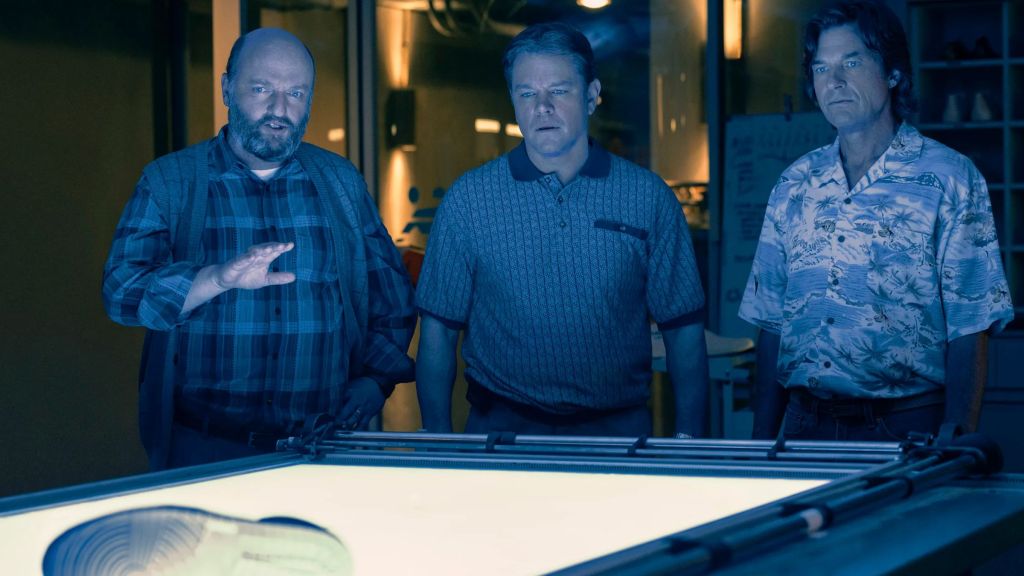
Air wasn’t talked about that much when it was released, and when we think about movies set in the ’80s, it’s pretty easy to overlook since it doesn’t rely on the exaggerated visual nostalgia that is often used to represent the decade. However, it is actually very accurate. The story is basically a corporate drama about a deal that changed the history of sports: in 1984, Sonny Vaccaro (Matt Damon), a Nike employee, tries to convince the company to bet on Michael Jordan, a rookie who hadn’t even played a single NBA game yet. The idea was a huge risk, mainly because Nike was far behind brands like Adidas or Converse in the basketball market — and this is where Air gets things right.
When it comes to historical accuracy, the movie almost perfectly understands that this was a time when companies were still figuring out how to turn athletes into brands. Nike was not the giant company we know today, and Air focuses on showing a business trying to survive by betting on a strategy that seemed insane at the time. It’s true that the film dramatizes the events, but the story itself really happened. Also, there is an extra layer of authenticity in the way executives talk, the office environment, the suits, the work culture, and even the way characters used to view advertising and sponsorships. Overall, it’s a movie that does a great job of showing what the landscape looked like and why that decision was so important.
2) The Iron Claw
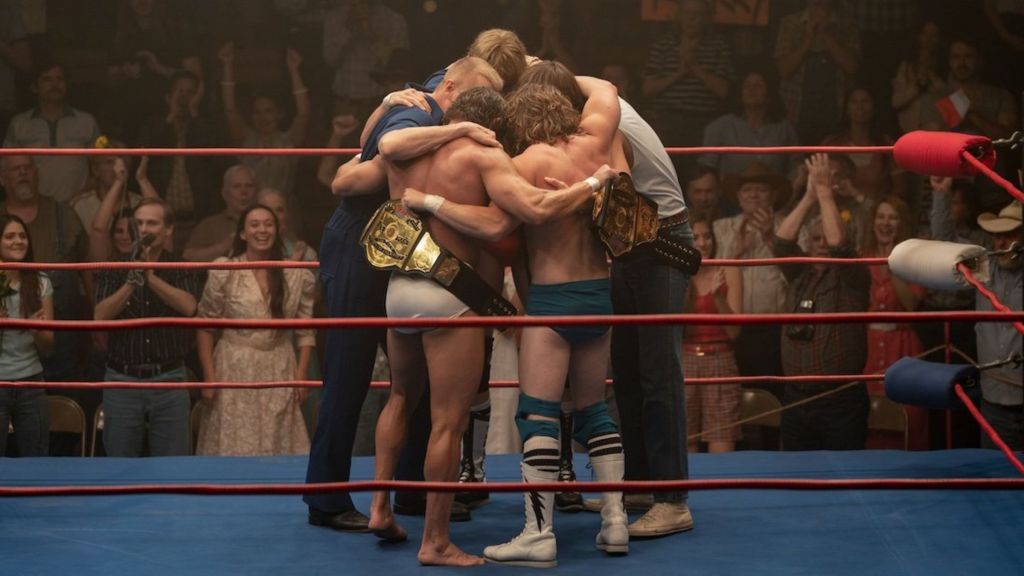
Being completely honest, The Iron Claw is a film where the period recreation could have been the least important part, but it ends up being one of its biggest strengths. Based on the true story of the Von Erich family, we follow Kevin Von Erich (Zac Efron) and his brothers as they try to maintain the legacy built by their father, Fritz Von Erich (Holt McCallany), within the world of professional wrestling during the ’80s. This is a family that practically built their entire lives around the sport, having to deal with the pressure of keeping their name among the biggest in the industry. And how does it succeed in historical accuracy? By showing that wrestling was very different from what it is today. Before WWE’s expansion, there were regional territories, local rivalries, and families that were basically brands in that world.
Basically, the film’s setting is not just a background element, because it helps explain why everything was so intense for the characters. Besides, The Iron Claw captures the mindset of wrestlers from that generation, where physical endurance, public image, and family carried enormous weight, often above their own health. The relationship between father and sons, and the pressure they faced, were some of the things that stood out the most. The feature itself is not a completely faithful adaptation, but this is mostly because it wants to keep the story emotionally focused rather than feel like a kind of documentary. It is a biopic that wants to show the audience 100% of the time what being part of that world was like.
3) Love Lies Bleeding

Nobody really talks about Love Lies Bleeding, but it might actually be one of the best examples of historical accuracy, because it manages to do that without even being based on a true story. The plot takes place in 1989, following Lou (Kristen Stewart), a gym manager in a small town, who gets involved with Jackie (Katy O’Brian), a bodybuilder trying to make it to a competition in Las Vegas. It is a crime thriller with romance, but when you analyze it based on the decade it portrays, it’s surprisingly amazing as it explores something we are not usually used to seeing: small towns, old gyms, people trying to get out of a life that felt stuck, and a bodybuilding culture that was nowhere near as popular as it is today (which is the most important detail).
At that time, women with extremely muscular bodies were still seen as something unusual, and the pursuit of that kind of physique involved intense discipline, competition, and a complicated relationship with beauty standards. This is why the gym environment, the training, and the obsession with body transformation all make sense within that context. And it’s because Love Lies Bleeding does not try to only copy the objects and clothing that are so associated with the ’80s that it feels so realistic. The idea is to look at the kind of people who existed back then, the places they went to, and the real problems they faced. Recreating a decade is not just about nailing the visuals, but about capturing what life was actually like back then.
