


Articles
25 Years Ago, The WB Started the Longest Live-Action Superman Story Ever Told (& It Took 10 Years to Finally Put Him in the Suit)

While just about everything about superhero entertainment can be debated there is one thing that is undeniable and it’s that Superman is one of the most iconic and popular characters the genre has ever seen. For almost a century, Superman has been a pop culture icon whose story has taken on many forms and iterations across just about every form of media imaginable, including television. Starting with Adventures of Superman in 1958, there have been many television series featuring the Man of Steel over the years and while they have all left their mark there is one that stands out as not only the longest run for the hero in live action, but the one that took a decade to put him in the suit at all and it turns 25 today.
Smallville first premiered on The WB on October 16, 2001. From the very start, the series was like no other version of the Superman story fans had seen. Instead of following an adult hero, the series instead centered on a teen Clark Kent as played by Tom Welling well before he became the Man of Steel. Over 10 seasons, the series would see Clark navigate his teen years and high school, have complicated romances and friendships, and eventually head into young adulthood as he grew into the iconic hero and, ultimately, fans wouldn’t get to see the final transformation until the very last moments of the series finale.
Smallville Was a Superman Show Without Superman (And That’s Why It Worked)
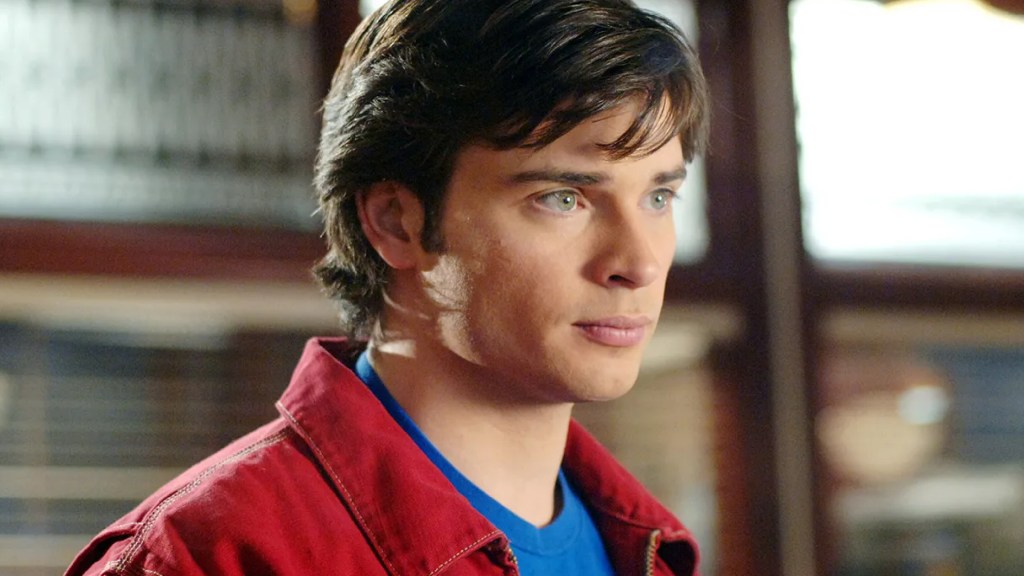
On the surface, a superhero show about a major superhero that eschews everything that is familiar when it comes to its main character — especially his super suit — might seem counterintuitive. After all, up until the show’s debut the superhero television series and movies we’d gotten all featured adult heroes who were at least somewhat established in their heroic roles and centered themselves more around the adventures the heroes had and the villains they faced. These stories were, in a very real sense, just comic book stories brought to screen. And there was nothing wrong with that. The original Superman movie, Batman and more had all been successful and popular. But by 2001, the formula of well-known hero doing well-known hero things had started to get a bit worn. There had been relatively recent failures with films like Batman and Robin and, more than that, we were entering a time where the younger generation was starting to be of an age where they would want their version of familiar heroes.
Enter Smallville. The series delivered an origin story for a familiar hero not by making it a part of his past, but by making the character younger and therefore relatable to a younger demographic and allowing the audience to experience that origin with him. Instead of meeting Superman as, well, Superman, they’d get to meet and know him as Clark Kent instead. It effectively made Superman a hero that was a contemporary of his audience and by functionally giving audiences a Superman series without Superman it felt approachable. The series was an instant hit. This version of Clark Kent was a clean slate of possibility, one that is both flawed and full of potential.
Keeping him out of the suit also allowed the story to focus on what really mattered: the relationships. For the first time, audiences were getting to see how some of the biggest foes and greatest allies factored into the big picture. Lex Luthor being Superman’s biggest enemy in the future felt all the more significant and heartbreaking once you’d seen Clark and Lex (Michael Rosenbaum) be friends first. The love story between Clark and Lois Lane (Erica Durance) meant more once you’d see Clark go through his first love and heartbreak as a teen. It was brilliant and it quickly became definitive. Suddenly, Superman was more than just the cape and S on his chest. He was just a guy, too, which made the moment we finally saw him open up his shirt to reveal the suit feel as much like our achievement as his.
Smallville Remains The Gold Standard and It’s Influence Continues

Ultimately, no television show goes on forever and Smallville would eventually conclude on May 12, 2011, ending the series after 217 episodes. It makes Welling’s tenure as Clark Kent the longest any actor has ever played the role — a record not likely to be broken any time soon. But even with the show concluding, Smallville’s impact hasn’t stopped sending out ripples. One of the biggest ripples may just be The CW’s Arrowverse. Smallville actually ended its run on The CW — The WB combined with UPN to create The CW in 2006 — and just a year after the Smallville finale, Arrow debuted. Smallville had already paved the path for Arrow by proving that superhero television had an audience and could be profitable. It also had already introduced audiences not necessarily fans of comic books to some of the iconic DC characters whose stories would end up being told in Arrow, The Flash, Supergirl, and more.
The same success also helped shows like Agents of S.H.I.E.L.D. and even the Netflix Marvel series succeed because Smallville had made superhero shows so much more than just the realm of comics fans and nerds. But Smallville’s impact hasn’t just been on the small screen. James Gunn’s Superman featured a plot point straight out of Smallville (Clark’s Kryptonian parents having less than benevolent plans for their son on Earth may have been a surprise in the movie, but Smallville did it first). The movie also had a Smallville cameo, with Rosenbaum playing one of Lex’s Raptor guards in the film. And, of course, given how long Smallville ran for we likely haven’t seen the last of the show’s influence. After all, for an entire generation of fans the series defines the most popular superhero. That is a pretty big legacy.
It seems wild to think of Smallville turning 25 but here we are. Did you watch Smallville when the series first debuted? What was your favorite episode? Let us know in the comments.
