


Articles
22 Years Ago, An Animated Movie Marked the End of a Beloved Disney Tradition

The Walt Disney Company is one of the largest media conglomerates on the planet, owning Pixar, Marvel Studios, and Lucasfilm‘s Star Wars and Indiana Jones, in addition to X-Men and Avatar through its 2019 purchase of 21st Century Fox’s entertainment assets. Despite that expansion, Mickey Mouse remains the company’s official mascot, alongside an extended cast that includes Minnie Mouse, Donald Duck, Goofy, and Pluto. Given how central that group is to Disney’s identity, both on merchandise and at the theme parks, it’s somewhat shocking that Mickey has not led a feature film in a long time. In fact, his last true attempt at feature-length storytelling predates most of the studio’s big modern acquisitions.
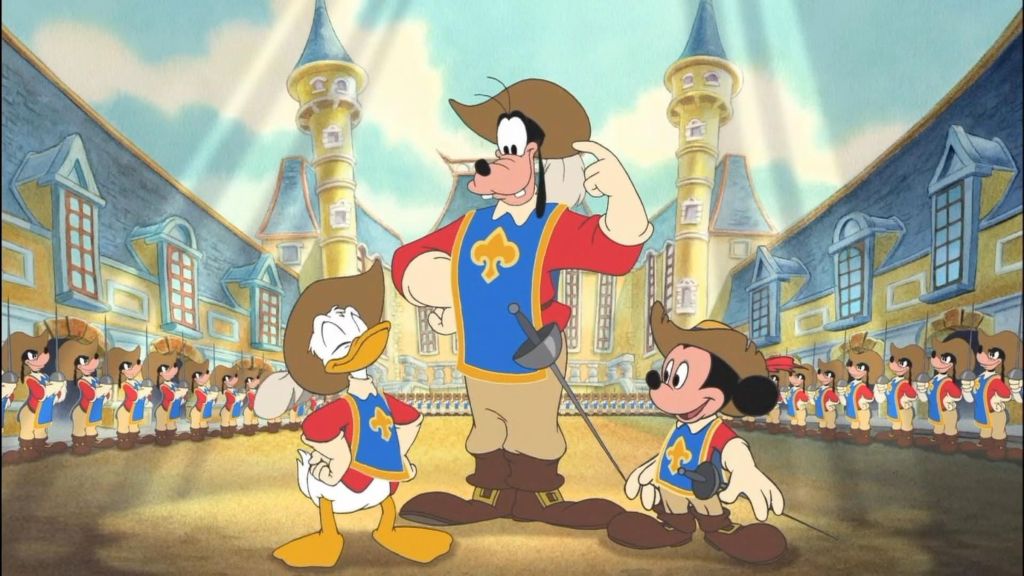
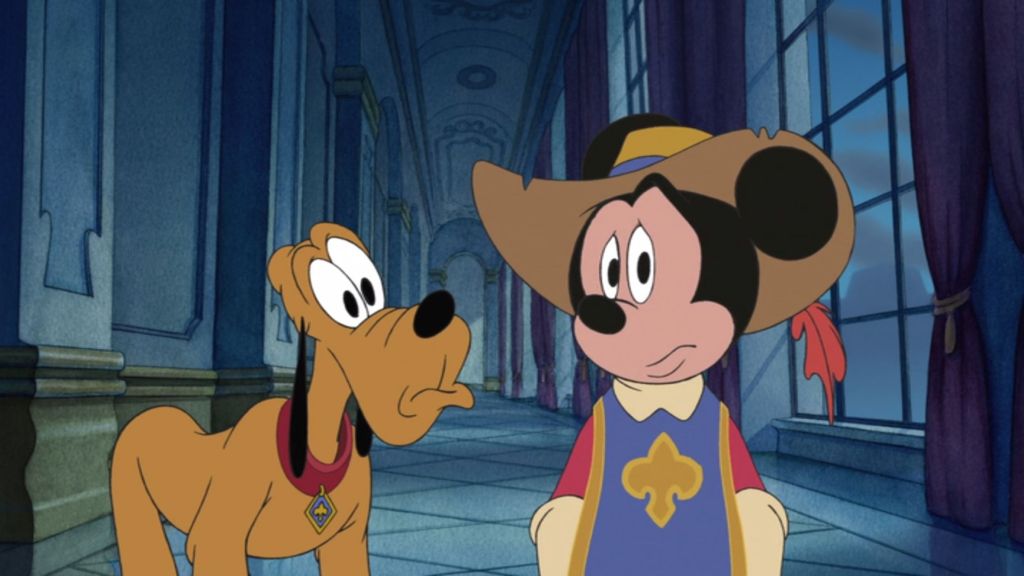
On August 17, 2004, Walt Disney Home Entertainment released Mickey, Donald, Goofy: The Three Musketeers directly to VHS and DVD. Directed by Donovan Cook, the film reimagines Mickey Mouse (voiced by Wayne Allwine), Donald Duck (voiced by Tony Anselmo), and Goofy (voiced by Bill Farmer) as lowly castle janitors who dream of becoming royal Musketeers under Captain Pete (voiced by Jim Cummings). When Pete secretly schemes to overthrow Princess Minnie (voiced by Russi Taylor), the trio sets out to prove their courage in her defense, foiling the plot through slapstick swordplay set to a soundtrack built from reworked classical melodies. The movie was, of course, Disney’s take on Alexandre Dumas’s novel The Three Musketeers, which has been adapted in film dozens of times. At 68 minutes, Disney’s The Three Musketeers also marked the first time Mickey, Donald, and Goofy had ever led a full-length feature together. Unfortunately, Disney’s favorite rodent wouldn’t have a long life on film after that.
The Mickey Mouse Movies Once Central to Disney Strategy
Mickey’s groundbreaking series of theatrical shorts is what first built the character’s relevance. Steamboat Willie introduced Mickey Mouse in 1928 as one of the first cartoons with synchronized sound, with the film’s success leading to over 120 shorts over the next 25 years, including The Band Concert in 1935, his first cartoon in color, and the Academy Award-nominated Brave Little Tailor in 1938. Mickey also anchored The Sorcerer’s Apprentice segment of the 1940 ensemble feature Fantasia, still one of his most recognized performances. That run ended in 1953 with The Simple Things, closing out the era that made Mickey the face of Disney animation.
For the next three decades, Disney kept Mickey in front of audiences through occasional theatrical featurettes. After that, Mickey’s Christmas Carol marked his first new theatrical appearance in thirty years when it opened in 1983, and The Prince and the Pauper followed it seven years later in 1990. Runaway Brain arrived in 1995 as a stand-alone short paired with A Goofy Movie, and Mickey’s Once Upon a Christmas became a direct-to-video anthology special in 1999. Those releases were spaced out, but they still reinforced Mickey’s position as leader of Disney’s animated cast, even as the company went through its renaissance with original movies such as The Little Mermaid and The Lion King.
Mickey, Donald, Goofy: The Three Musketeers was the last feature-lenght project headlined by Mickey Mouse, over two decades ago. To be fair, three months later, Walt Disney Home Entertainment released Mickey’s Twice Upon a Christmas. However, since that movie is a CGI mess and it’s an anthology with five short stories, we are choosing not to count it. Even if you do count it, that doesn’t change the math, as the last feature-lenght Mickey Mouse movie will still have been released 22 years ago. Mickey has starred in exactly two new theatrical shorts since 2004: Get a Horse! in 2013, released alongside Frozen, and Once Upon a Studio in 2023, a crossover reunion of hundreds of Disney characters made for the studio’s 100th anniversary and released alongside the re-release of Moana. That means even factoring theatrical shorts, Mickey’s output is still surprisingly thin on the film side of business.
Why Did Disney Stop Making Mickey Mouse Movies?
Disney’s answer to the end of Mickey’s feature career was to move him permanently to television. Mickey Mouse Clubhouse premiered on Playhouse Disney in 2006, teaching preschoolers basic problem-solving skills and becoming the longest-running original series on the network’s preschool programming block. In 2013, animator Paul Rudish relaunched the character in Mickey Mouse, a series of stylized shorts that won three Emmy Awards in its first year by reintroducing the mischievous energy of the original shorts. That series gave way to The Wonderful World of Mickey Mouse on Disney+ in 2020, and Disney Junior revived the Clubhouse format again in 2025. While these series are important for the character’s legacy, they shouldn’t prevent Disney from giving Mickey Mouse a feature film — if not in theaters, at least as a Disney+ event.
Television was not the only factor working against a new Mickey movie. Beginning with the 2006 purchase of Pixar, Disney spent the following years building a business model focused on acquiring existing franchises, adding Marvel in 2009, Lucasfilm’s library in 2012, and the bulk of 21st Century Fox’s film catalog in 2019. That expansion is still ongoing, with the studio continuing to juggle Pixar, Marvel, Star Wars, and Avatar as its theatrical priorities, and even slowing down the original movie output in favor of live-action remakes. While Hollywood has become all about increasing value for shareholders by cutting costs and following trends, it’s also important to honor your roots and focus on the artistic side of filmmaking. A hand-drawn, feature-length Mickey Mouse movie would be different from everything modern audiences are used to, and Disney’s mascot deserves more love.
