


Articles
17 Years Later, The Final Joke in Quentin Tarantino’s Oscar-Winning Epic Has Actually Come True
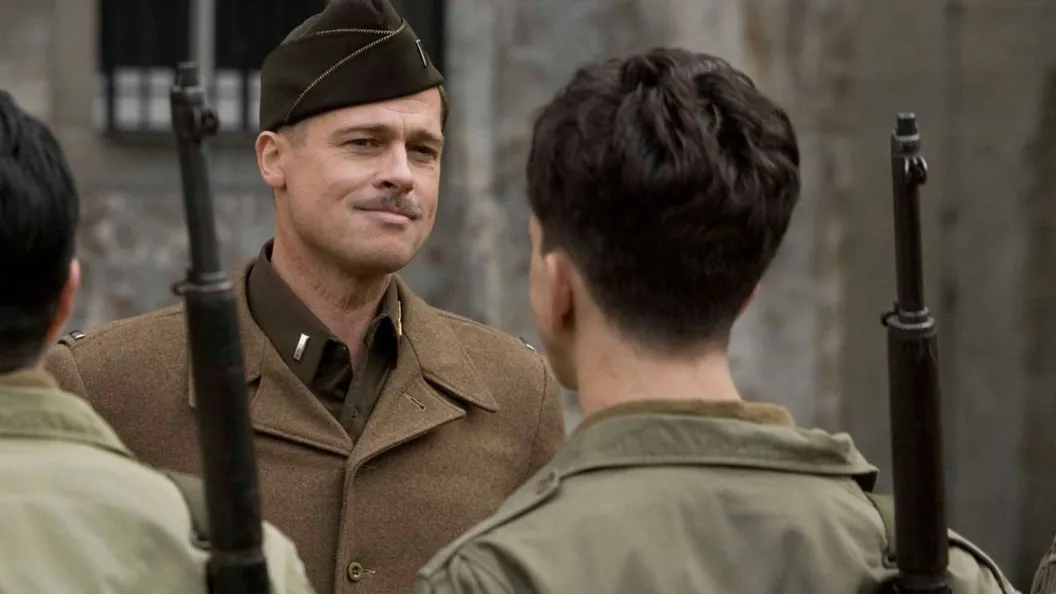
Quentin Tarantino is one of the most well-known filmmakers of the modern day, with the nine films he has released so far all being classics. The director started off with a bang when he released Reservoir Dogs in 1992, and since then, each film has been a hilarious, blood-and-swearing-filled adventure. However, ahead of Tarantino’s tenth and final film, his best movie so far just turned 17 years old.
Everyone has a different favorite Tarantino film, as each one of them is different, even if they all have shared elements. Fans who prefer Taratino’s action may put Kill Bill on a pedestal, while those who care more about Westerns may like Django Unchained or The Hateful Eight more. Others who love Tarantino because of his love for cinema may say their favorite is his latest film, Once Upon a Time in Hollywood. However, according to Tarantino, none of these films is his masterpiece.
Inglorious Basterds Hit Theaters 17 Years Ago, Today

Tarantino has always worn his inspirations on his sleeve, so when he began developing his own war movie script in the 1990s, he turned to classics like The Dirty Dozen, Where Eagles Dare, and Guns of Navarone. By the early 2000s, Tarantino realized that the project was too big, and he even considered making it a miniseries before deciding to trim the script down. While continuing to develop the story, he went on to direct Kill Bill and Death Proof, and after the latter, he returned to his war script. Then, Tarantino finally felt ready to begin production on his World War II script, 2008’s Inglorious Basterds.
Inglorious Basterds is vast in scope, telling a variety of intersecting stories set in Nazi-occupied France and Italy. The main three are a group of American Jews who form the eponymous team and drop behind enemy lines to kill Nazis, an English film critic who hopes to stage an attack at the premiere of a German propaganda film, and a woman who escaped death at the hands of Hans Landa years ago who is now using her new life as a cinema owner to bring down the Nazi high command. The film is populated with some of the most talented actors of all time, giving career-best performances, including Christoph Waltz, Brad Pitt, Mélanie Laurent, Michael Fassbender, Diane Kruger, Daniel Brühl, and more.
Inglorious Basterds hit theaters on August 21, 2009, and it was a hit. The film made $321.5 million against a budget of $70 million, making it Tarantino’s highest-grossing film (although it was surpassed by his next film, 2012’s Django Unchained). The film was also a critical success, with it getting rave reviews across the board. Inglorious Basterds would go on to find further success during awards season, with it being nominated for eight Oscars (Best Picture, Best Directing, Best Writing (Original Screenplay), Best Sound Editing, Best Sound Mixing, Best Cinematography, and Best Film Editing), and winning one, Best Actor in a Supporting Role for Christoph Waltz.
Inglorious Basterds’ Final Line Is The Perfect Tarantino Meta Joke
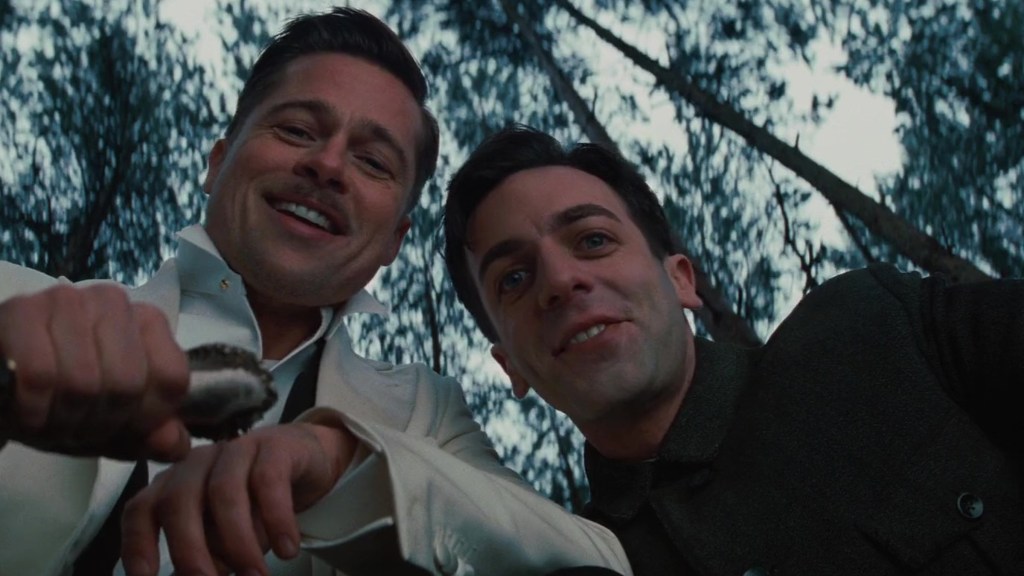
Inglorious Basterds is full of iconic scenes, but its most well-known is arguably its final one. In it, Lt. Aldo Raine and Smithson “Little Man” Utivich go back on the deal they made with Nazi Standartenführer Hans Landa, with them pinning him to the ground and carving a swastika into his forehead. This is something they do to multiple Nazis throughout the film, with Raine knowing that it will permanently show that they were Nazis well after they stop wearing their uniforms. However, the one they carve into Landa is special. When they finish the job, Raine sits up and says the film’s final line: “You know something, Utivich? I think this just might be my masterpiece.” Cut to credits.
This moment is one of Inglorious Basterds‘ funniest, and all these years later, another layer of humor has been added to it. When discussing the film in 2025, Tarantino said, “I think Inglorious Basterds is my masterpiece,” even if it isn’t his favorite film he’s made (via The Guardian). So, Raine’s final line in the film can almost be seen as Tarantino commenting on his own movie, making it a great bit of metacommentary to end on. Like Raine, Taratino is looking back on his work of carving up Nazis and their ideology and realizing that he may never be able to do better.
