


Articles
The Muppets Christmas Carol Is Still The Best Adaptation of the Charles Dickens Classic (And Will Never Be Beaten)
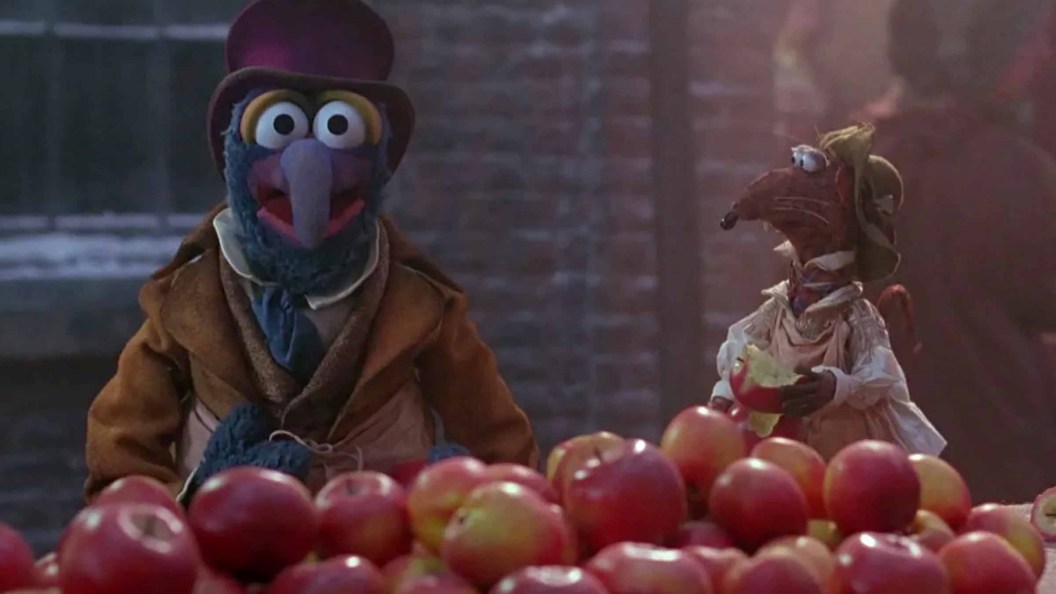
As holiday classics go, there are few more beloved and more well-known than Charles Dickens’ A Christmas Carol. First published on December 19, 1843, the novella has become a holiday staple with its story of Ebenezer Scrooge, a miserly old man visited by three ghosts on Christmas Eve and, in the process, becomes a better man come Christmas Day. The story, a phenomenon even in its own day, has been adapted countless times across nearly every form of media in nearly two centuries, but there is one specific adaptation that stands out as not only the best but possibly the most accurate overall.
Released 33 years ago, The Muppet Christmas Carol is possibly the best adaptation of the Dickens classic, but while the idea of a Muppet interpretation of any classic work of literature being quality might not itself be much of a surprise — the Muppets are, of course, a delight — what might come as a surprise to some is that the adaptation is very book-accurate. That’s right, a slightly humorous retelling of the Dickens classic as done by Muppets is one of if not the most faithful to the author’s timeless text that’s been done to date, puppets and all.
The Muppet Christmas Carol Takes Its Text Straight From the Book
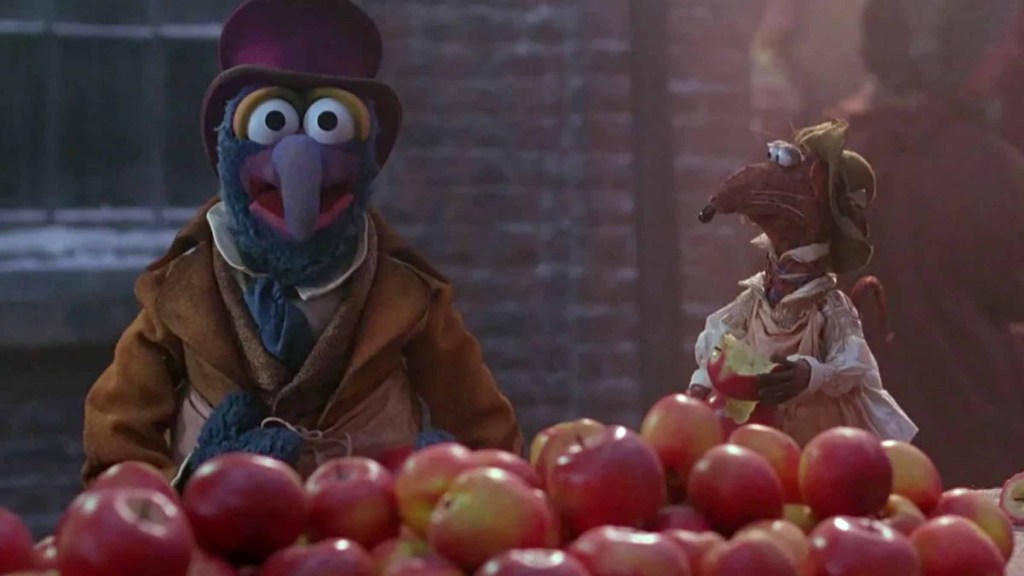
The biggest thing about The Muppet Christmas Carol that makes it so authentic to Dickens’ novella is that the words in the movie come directly from the book itself — especially when it comes to the exposition delivered by the character Gonzo in the movie. In the movie, Gonzo is Dickens and he serves as our narrator of sorts in the film. Almost every line Gonzo utters — approximately 95 percent according to the film’s director Brian Henson — comes directly from Dickens’ text.
This approach gives The Muppet Christmas Carol its authenticity in two ways. First, there’s the literal (and literary) sense. If you’re taking the words directly from the book itself, you’re generally being faithful to the story. It doesn’t get more direct and faithful than that. However, by having those lines delivered by a stand in representing Dickens himself — in this case, Gonzo — the movie also sets a tone. It allows for the viewer to associate what he’s saying with the author and, in turn, understand that these are the facts of the story. This detail is especially important when it comes to perhaps one of the most heart wrenching details of A Christmas Carol that many get wrong: the fate of Tiny Tim.
Many fans of the story believe that Tiny Tim Cratchit dies in A Christmas Carol — even after Scrooge has his transformation. After all, the Ghost of Christmas Yet to Come does show Scrooge a gravestone with Tim’s name on it and the child is described as being frail and sick. Many adaptations, however, skip an important part of the story — that Dickens directly addresses Tim’s fate after Scrooge has his transformation. Instead, most adaptations leave the viewer to believe that Tim’s fate is sealed, though his final days are brighter because of Scrooge’s change of heart. What the text actually says is “and to Tiny Tim, who did not die, he was a second father”. In The Muppet Christmas Carol, not only does the film directly address this and say that line specifically, but Gonzo does so pointedly, emphasizing that this story does, indeed, have a happy ending and that as the author, he wants you to make note.
The Film’s Performances Also Reflect Dickens’ Novella

While utilizing Dickens’ actual words does much of the heavy lifting in terms of making The Muppet Christmas Carol so accurate to the novella, the performances go a long way as well. It’s the interpretation of those words — particularly when it comes to actor Michael Caine — that makes the whole film so strong. In Dickens’ novella, Scrooge is grouch of the highest order when readers first meet him. This man is miserable in ways that defy description, but it isn’t something that is over the top. It’s a human, unflinching bitterness that could easily be dialed too much one way or the other in a performance, particularly opposite the Muppets. However, Caine manages to keep his Scrooge exactly as Dickens wrote him. Even surrounded by puppets who are, at times, a little silly, Caine never breaks from the grouchy, miserable Scrooge. Instead, just as we do in the book, we see him slowly begin to break down and reveal his very human heart underneath.
It’s the performances — both the voice actors behind the Muppets and Caine’s human performance as Scrooge — as coupled with the faithfulness to the text that has landed The Muppet Christmas Carol as not only a fan-favorite for decades but puts it at the top of many lists when it comes to the best and most accurate adaptation. Publisher Penguin Random House recently ranked several adaptations and while they acknowledged that 1999’s A Christmas Carol starring Patrick Stewart might be the most directly faithful to the novella — meaning there’s no music, no comedy, just the text — The Muppet Christmas Carol stands as the best with its combination of heartfelt moments, authenticity to the text, and strong performances — and even with the deviations from Dickens’ work (we’re talking music and “no cheeses for us meeces” here) it’s exactly what the beloved tale is meant to be.
What do you think? Leave a comment below and join the conversation now in the ComicBook Forum!
The post The Muppets Christmas Carol Is Still The Best Adaptation of the Charles Dickens Classic (And Will Never Be Beaten) appeared first on ComicBook.com.
