


Articles
Disney’s Darkest 1990s Cartoon Premiered 32 Years Ago, And the Real Secret Ingredient Was Shakespeare
In 1994, Disney released one of the most ambitious Shakespeare adaptations ever made, and it was not The Lion King. The animated blockbuster is famously based on Hamlet, with a murdered king, his treacherous brother, and a young prince fighting to take back his kingdom. But just four months later Disney unleashed another animated production, which took its Shakespearean influences much further, borrowing characters, stories, and themes from some of the Bard’s most famous plays.
Gargoyles debuted on October 24, 1994, and told the story of Goliath, voiced by Keith David, and his clan of medieval Scottish gargoyles who, after being frozen in stone for a thousand years, awaken in modern-day Manhattan. Created by Greg Weisman, the series combined superhero action, gothic horror, and historical fantasy into surprisingly mature storytelling. But its secret ingredient was Shakespeare, whose influence ran much deeper than the occasional literary reference. Gargoyles was able to create an entire interconnected universe around his characters and tragedies.
Something Wicked This Way Comes to Manhattan
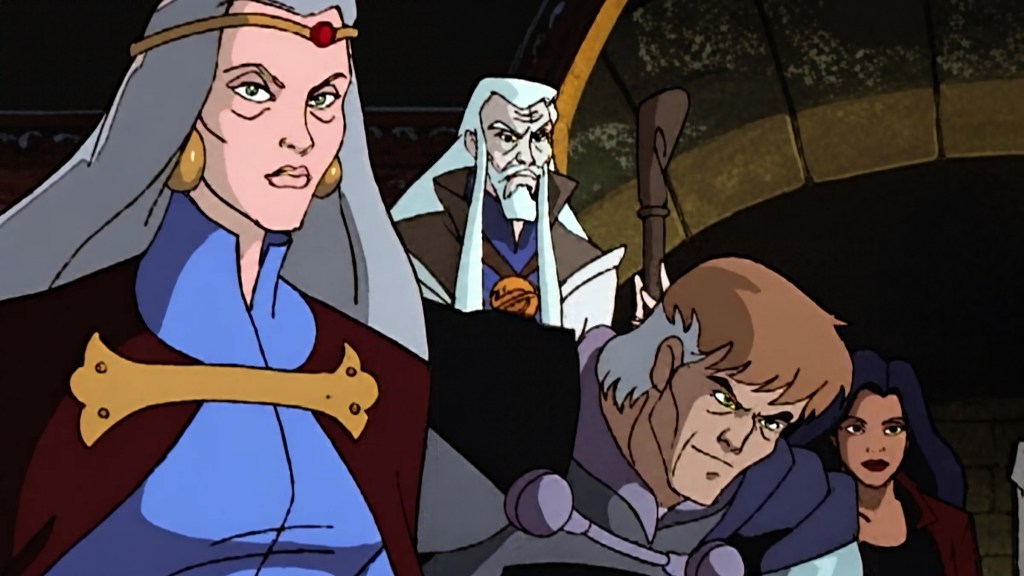
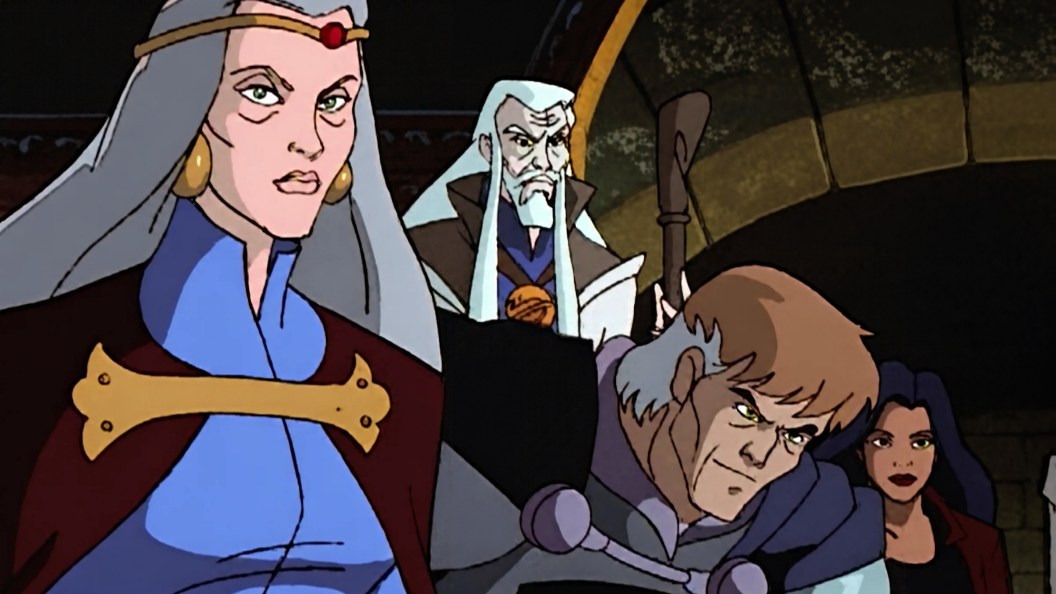
The connections to Shakespeare took root in Season 1’s “Enter Macbeth,” where the Scottish king is portrayed as an eternal hunter in pursuit of Demona. However, the second season of the show took a bold leap into the Bard’s realms, featuring Puck in “The Mirror,” delving into the tragic dynamics of Macbeth and Demona in the four-part “City of Stone,” and broadening the series’ mythology to incorporate supernatural characters from various plays by the renowned playwright. Macbeth, the titular character in Shakespeare’s play, was propelled by a blend of ambition and madness. Gargoyles offered a more compassionate interpretation. “City of Stone” chronicled his ascent to power, the political betrayals that threatened him, and the complicated circumstances that intertwined his destiny with Demona. The Weird Sisters were inspired by the witches of Macbeth and trapped the two characters in a spellbinding bond that granted them immortality but required them to share each other’s misery. Their relationship had fallen apart over the millennia in a Shakespearean drama of treachery, rancor, and retribution, with the Scottish king of Shakespearean fame destined to pay the price for another thousand years of fallout.
The series drew inspiration from Othello, yet its interpretation infused a significant amount of science fiction that likely exceeded Shakespeare’s original imagination. Three members of Goliath’s original clan were named Othello, Desdemona, and Iago, mirroring their counterparts in the play. Othello and Desdemona shared a bond, but the envious Iago cunningly twisted their connection, planting seeds of doubt between them. Things took a weird turn when their souls were trapped in a cybernetic gargoyle called Coldstone. Eventually, the three got separate bodies as Coldstone, Coldfire, and Coldsteel. Shakespeare’s tragedy of jealousy and manipulation became a science-fiction story of identity, resurrection, and revenge. This was another example of how Gargoyles didn’t just reference Shakespeare’s work. It discovered new ways to carry on exploring his ideas.
Wherefore Art Thou, Goliath?
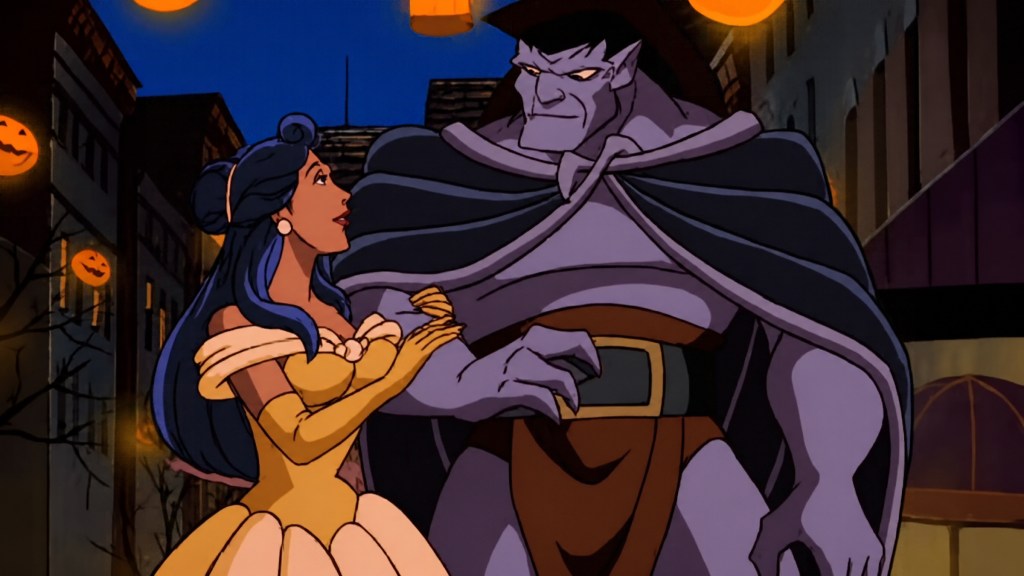
The second season added a lot to the show’s mythology. Goliath and Elisa went to the beautiful island of Avalon, where they found gargoyle eggs that had been saved a thousand years ago. Angela was one of them. She was the daughter of Goliath and Demona. Angela and Bronx went with them as they tried to get back to Manhattan. But Avalon’s magic had other plans and took them to a place they didn’t expect but may have needed more of. It took them all over the world on an adventure where they met mythical beasts, gods from the past, and mysterious beings known as Oberon’s Children. Oberon and Titania, the beautiful fairy king and queen from Shakespeare’s A Midsummer Night’s Dream, were added to the mix and became important characters in the show’s growing mythology. And then there was Puck, the mischievous trickster of Shakespeare, who was an expert at hiding in plain sight. Eventually, the series revealed Puck had been living as Owen Burnett, the seemingly ordinary assistant to billionaire David Xanatos. The revelation turned one of the show’s most innocuous supporting characters into a super-powerful supernatural being and echoed Shakespeare’s obsession with disguises, mistaken identities, and deception.
Even the main romance of the show owed something to Shakespeare. Goliath’s blossoming romance with NYPD Detective Elisa Maza was a Romeo and Juliet sort of thing, with the feuding Montagues and Capulets replaced by two species separated by centuries of fear and prejudice. An impossible relationship between humans and gargoyles seemed to challenge the divisions between the two, but unlike Shakespeare’s star-crossed lovers, they had a chance to overcome those differences. Shakespeare had a big impact on the whole series, from Demona’s sad inability to escape her past to Xanatos’ complicated plans and political maneuvering. Keith David’s strong performance as Goliath gave the show’s often silly dialog the weight it deserved. This wasn’t a surprise, since David had played Shakespeare on stage, including Macbeth, Othello, and Oberon.
Unfortunately, when the show moved to ABC for its third and final season, retitled Gargoyles: The Goliath Chronicles, the series underwent a major creative overhaul. With Greg Weisman and most of the original creative team gone, the series largely dropped its Shakespearean ambitions for more conventional Saturday morning fare. There may still be another act for Gargoyles. Although Disney+ recently scrapped its planned live-action adaptation, Brent Spiner, who voiced Puck, revealed that he’d heard a new animated series was in development. Disney has yet to officially confirm the revival, but Weisman continues expanding the original story through comics. The Lion King may have given Disney its Hamlet, but Shakespeare had a whole universe for Gargoyles to play in.
