


Articles
32 Years Ago, This X-Men Event Introduced the Next Generation of Mutants (and It’s Perfect for the MCU)
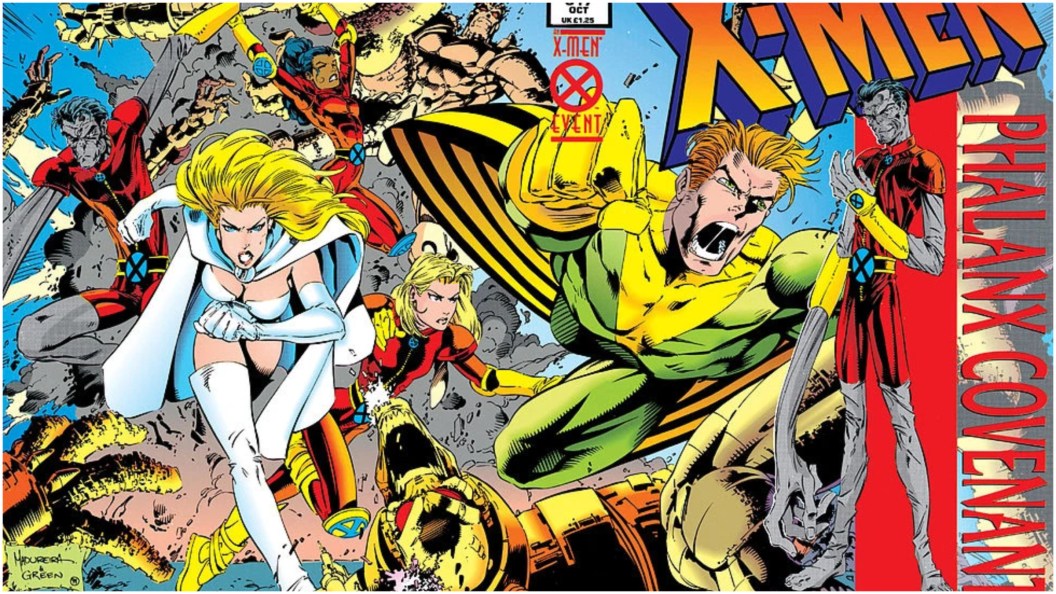
The X-Men are going to be the biggest thing in the Marvel Cinematic Universe (I have typed a variation of that sentence at least once a day for ages now) and an argument can be made that they already are. Deadpool, Wolverine, and Jean Grey have already proved that the mutants are money for Marvel Studios, with the biggest post-Avengers: Endgame successes being mutant-related. Adding mutants to the MCU is like adding a whole other universe of characters to an already large superhero community. The mutants grew like weeds in the ’80s and ’90s, overstepping the characters who came before them to become the most popular Marvel characters of the day.
When we think of the greatest successes of the X-Men, we think of the 1990s. While you can argue that ’80s X-Men stories are better, the ’90s is when the team and their allies reached the heights of their sales success. During this decade, some of the biggest X-Men stories of all-time came out, with classics like “Fatal Attractions” and “Age of Apocalypse” becoming some of the most talked about X-stories of all time. There are numerous ’90s X-tales that we’re almost certainly going to see on the big screen at some point, thanks to Marvel Studios, but there’s one that we definitely need and it’s one that not many fans talk about – “The Phalanx Covenant”.
“The Phalanx Covenant” Brought the Next Generation of Mutants to the Dance
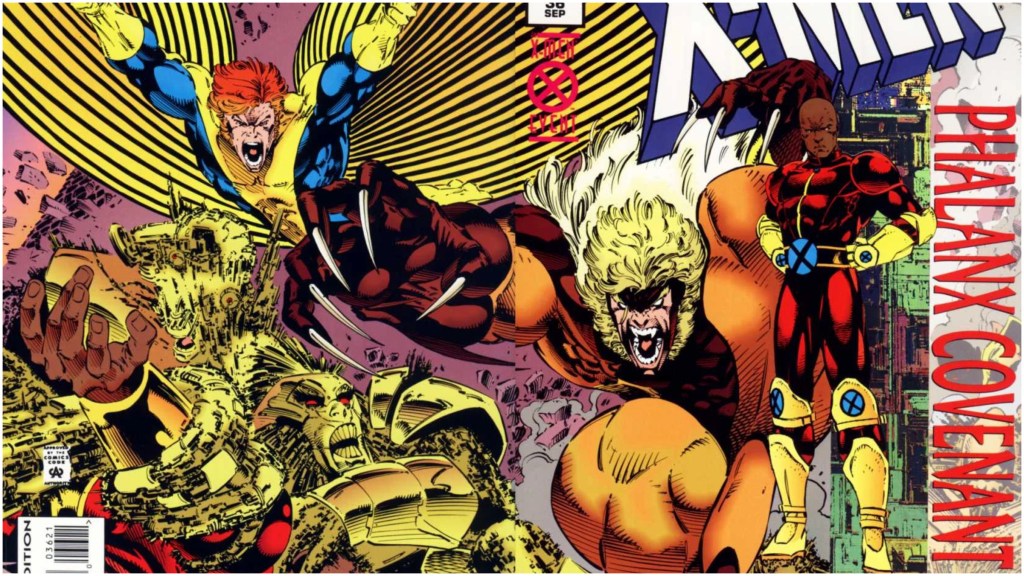
1991 rebooted the X-Men and their allies after writers Chris Claremont and Louise Simonson finally left the mutants’ books. After that, we’d get a yearly X-line crossover; 1992 would see “The X-Cutioner’s Song”, which revealed major secrets about Cable, Stryfe, and Apocalypse, and 1993 gave the world “Fatal Attractions”, paying off the Magneto plot began back in X-Men (Vol. 2) #1-3. 1994 would dawn and it was time for the next big X-crossover, which led to “The Phalanx Covenant”.
The Phalanx were a group of techno-organic aliens, much like the New Mutant Warlock. In fact, the Phalanx are basically the Technarchy, the alien race that Warlock came from, down to the assimilation of others. However, the Phalanx were the Technarchy mixed with the Borg, who had just debuted a few years earlier in Star Trek: The Next Generation, and this story would introduce them in a rather novel fashion when it comes to X-Men alien stories. They were weaponized by human bigots Steven Lang and Cameron Hodge, who tried to make them an anti-mutant weapon.
They set out to assimilate all the mutants, ending what Lang and Hodge saw as the mutant scourge. The story would run through Uncanny X-Men, X-Men (Vol. 2), Wolverine (Vol. 2), Cable (Vol. 1), X-Factor (Vol. 1), Excalibur (Vol. 1), and X-Force (Vol. 1). Unlike most big X-crossovers that came before it, the story was split into three different sections, with Uncanny X-Men and X-Men the main part of the story, “Generation Next”, “Life Signs” bringing together X-Force, X-Factor, and Excalibur, and “Final Sanction” running through Wolverine and Cable.
The opening assault sees the main team taken out of the fight, with Banshee, Sabretooth, and Emma Frost escaping the attack and setting out to save a group of young mutants who could be the key to battling the aliens in “Generation Next”. “Life Signs” saw X-Factor, X-Force, and Excalibur fight to stop the human-created Phalanx from calling the alien ones, leading to a full-scale invasion that Earth is not ready for. “Final Sanction” saw Cyclops, Jean Grey, and Cable team up with Wolverine to rescue the rest of the team and take the fight to Lang and Hodge.
“The X-Cutioner’s Song” and “Fatal Attractions” were events that both played off the team’s past, with “The X-Cutioner’s Song” meant to remind readers of “The X-Tinction Agenda” and “Fatal Attractions” playing into the team’s history with Magneto. “The Phalanx Convenant” found a way to combine aspects of “The X-Tinction Agenda” like Lang, Hodges, and their hatred of mutants with the Borg. This isn’t the first time that X-Men comics copied other sci-fi stories; just look at the Brood and the Xenomorphs. The Venn diagram of young ’90s teens reading X-comics and watching TNG was basically a circle, so it made sense.
However, the story wasn’t just an empty event for the sake of having a yearly event. “Fatal Attractions” had major repercussions for the X-Men comics and Marvel wanted “The Phalanx Covenant” to do the same. So, they used it to introduce the newest generation of mutants, Generation X. The story debuted young mutants Synch, Husk, M, Skin, and Blink, the mutants who would form the nucleus of Generation X along with Jubilee and their teachers Banshee and Emma Frost.
“Generation Next” was cool because it did a fantastic job of mixing together Banshee, Emma, and Sabretooth. ‘Tooth had been living with the X-Men since Wolverine left, kept under control with special restraints that would stop him from hurting anyone. Banshee was a longtime X-Man that hadn’t really ever been popular and Emma was back after her “death” in Uncanny X-Men #281, dealing with spending years in Iceman’s body. “Generation Next” not only sold their dynamic well, but also showed readers what they could expect from the new young mutants.
As far as it goes, “Life Signs” and “Final Sanction” are kind of superfluous sidequests to the overall main story, but both of them are pretty cool (“Final Sanction” is better because it’s from the Larry Hama/Adam Kubert era of Wolverine). “The Phalanx Covenant” came from that period of time when the X-Men’s comics were going to sell regardless of whether the story was good or not. However, if you compare it to the other X-Men events of the ’90s, it’s one of the better ones. It’s not the pay-off to some longterm story arc and it was only two months long, so it barely took up any time, but it was a solid fun story that put the spotlight on some new characters.
Marvel Studios Would Do Well to Remember “The Phalanx Convenant”
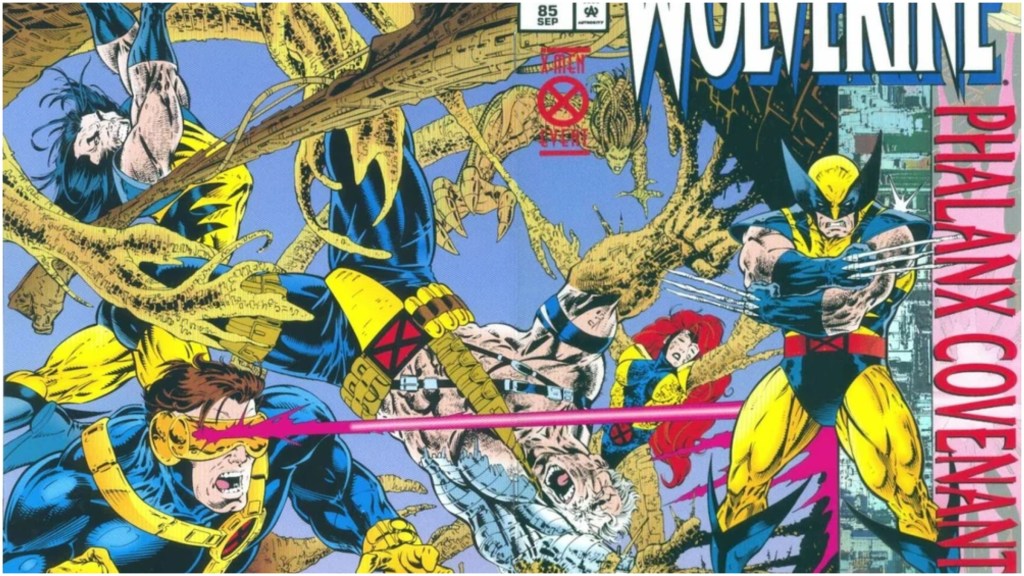
“The Phalanx Covenant” was meant to introduce readers to the next generation of mutants and a new villainous alien race. It came during that period when the team was completely untouchable and gave readers a good yet forgettable story. However, Marvel Studios forgetting about it could be a massive mistake. The X-Men are known for their place as Marvel’s greatest civil rights metaphor, but they’re also home to some amazing sci-fi concepts and stories. The Phalanx are one of the coolest of these and would be an excellent addition to the MCU.
One of the problems with the MCU is how focused it is on Earth. The Marvel Universe is just that, an entire universe of alien species, yet the MCU version seems so very small, even with films like the Guardians of the Galaxy trilogy or the Captain Marvel movies. Bringing “The Phalanx Covenant” to general audiences would show them the potential of X-Men stories and add something new to the films that would allow for greater stories in the future.
What do you think about “The Phalanx Covenant”? Do you think it should be adapted? Sound off in the comment section below.
