


Articles
Robert Downey Jr’s First Movie After Iron Man Was a Controversial Comedy That Landed Him an Oscar Nod
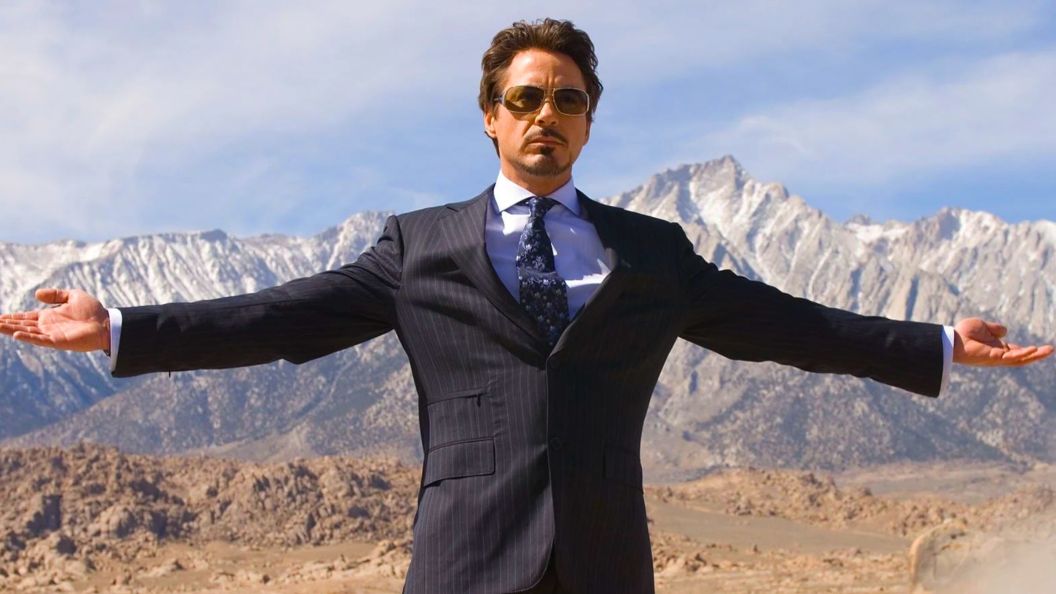
After years of trying to rebuild his career, Robert Downey Jr. finally found the role that would change his life in Tony Stark. Iron Man hit theaters in 2008 and helped turn the actor into one of Hollywood’s biggest stars, but his journey that year wasn’t just about the beginning of the Marvel Cinematic Universe. Just a few months later, he showed up in a comedy that seemed like an unlikely choice for someone who was about to become the face of a billion-dollar franchise. It was a movie that got a lot of mixed reactions, both over the film as a whole and Downey’s character in particular. And believe it or not, it earned him an Oscar nomination. The wildest part is that this film deliberately leaned into his performance, practically daring audiences to question whether its satire had gone too far.
Ever heard of Tropic Thunder? Directed by Ben Stiller, it follows a group of arrogant actors trying to make an epic war movie who end up facing real danger in the jungles of Southeast Asia. Downey plays Kirk Lazarus, an Australian actor who takes method acting to absurd extremes and undergoes a procedure to darken his skin so he can play a Black character. Naturally, that proved controversial, and the debate still comes up from time to time.
How Tropic Thunder‘s Robert Downey Jr. Role Became a Major Controversy
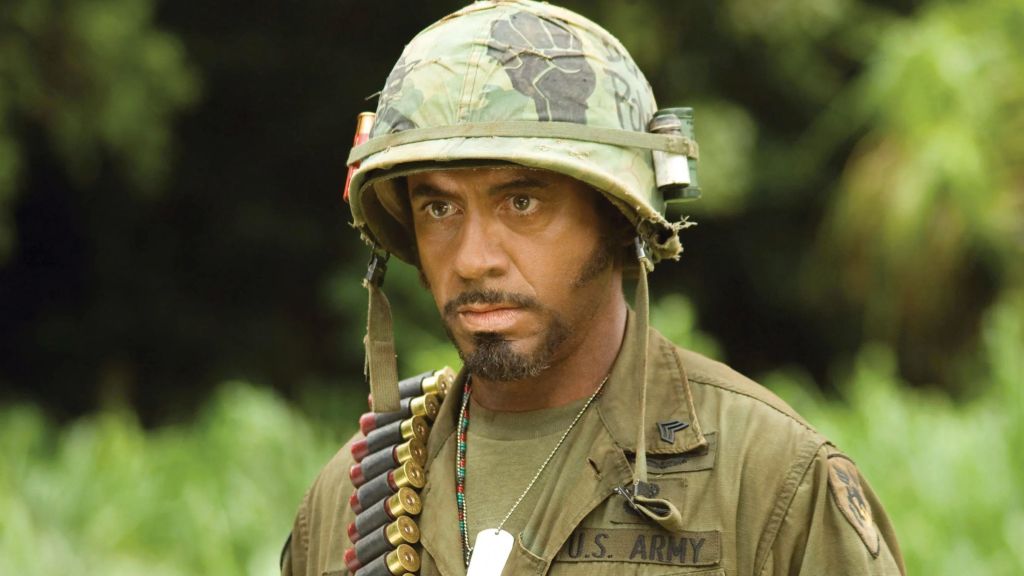
Every now and then, people bring the movie back up, and images and memes of Downey’s character start making the rounds again, usually without much context. That can reignite the controversy, even if it doesn’t exactly set the internet on fire. But one interesting way to explore both the issue and the movie itself is to look at Brandon T. Jackson’s comments about Lazarus on the RealLyfe Street Starz podcast in 2024. Jackson, who also appears in the film, shared his perspective on Downey’s portrayal as a Black actor himself. Of course, understanding the context doesn’t automatically make every joke acceptable, but it can help explain why the satirical intent behind Tropic Thunder and the way audiences received it aren’t always the same thing:
Lazarus is one of the most memorable parts of the entire movie because he represents everything Tropic Thunder wants to make fun of about Hollywood: he’s an award-winning actor who’s incredibly vain and convinced that his dedication to his craft gives him the right to do absolutely anything for a role. So when he’s cast as a Black soldier, he doesn’t stop to question whether he should be playing the character — instead, he sees it as another chance to prove just how extraordinary an actor he is. For Lazarus, the physical transformation is a sign of commitment, even when the result is so ridiculous that it’s hard to miss the ego behind it.
And that’s the key difference between the fictional character and Downey’s performance. He isn’t playing a man who just believes he’s Black; he’s playing a white actor who thinks he can portray anyone without recognizing the limits of that belief. The satire takes aim at the idea that talent, fame, and professional dedication are enough to justify any artistic choice. Lazarus isn’t presented as an example of realistic acting. Honestly, that makes the movie’s satirical intent pretty clear, even if not everyone is going to interpret it the same way.
Throughout Tropic Thunder, we see egotistical actors, executives who only care about money, and industry professionals who seem more concerned with protecting their reputations than doing their jobs — that lines up pretty closely with Hollywood’s real-world reputation. Downey’s character fits right into this world because his obsession with method acting turns a war film into a competition over who can be the most committed performer. And the humor comes from the contrast between how seriously Lazarus takes his transformation and how little he seems to get its implications. At the same time, it’s easy to see where the backlash comes from, because the makeup his character wears doesn’t exist in a cultural vacuum.
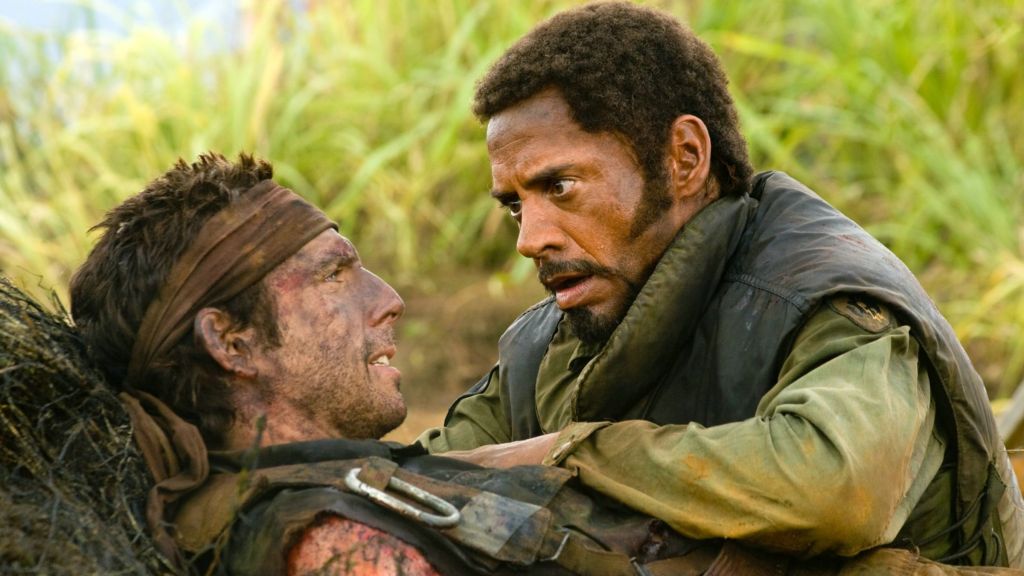
It’s important to remember that blackface has a long history rooted in racist entertainment, where white performers darkened their skin to portray Black people through offensive stereotypes. For decades, these performances helped reinforce racist ideas and turned Black identity into something to mock. So, even when a movie is trying to criticize that behavior, the image of a white actor made up to look Black carries a meaning that can’t simply be erased, regardless of the filmmakers’ intentions. Ultimately, the reaction isn’t just about praising Downey’s performance, but about questioning the limits of comedy and whether a movie can criticize discrimination while reproducing one of the most historically offensive forms of racial caricature.
Many people (especially critics) felt Tropic Thunder crossed an unnecessary line, while others defended it by focusing on what it was trying to say — but intention and impact aren’t the same thing. You can argue that the comedy already had plenty of material to make fun of Lazarus’ vanity through his behavior, his declarations, and the way other characters react to him. Well, overall, it’s a complicated issue to discuss, even if an actor like Jackson has suggested he personally wasn’t offended by the portrayal. And yet, Downey came pretty close to taking home an Oscar, didn’t he?
How RDJ Looked Back on the Role
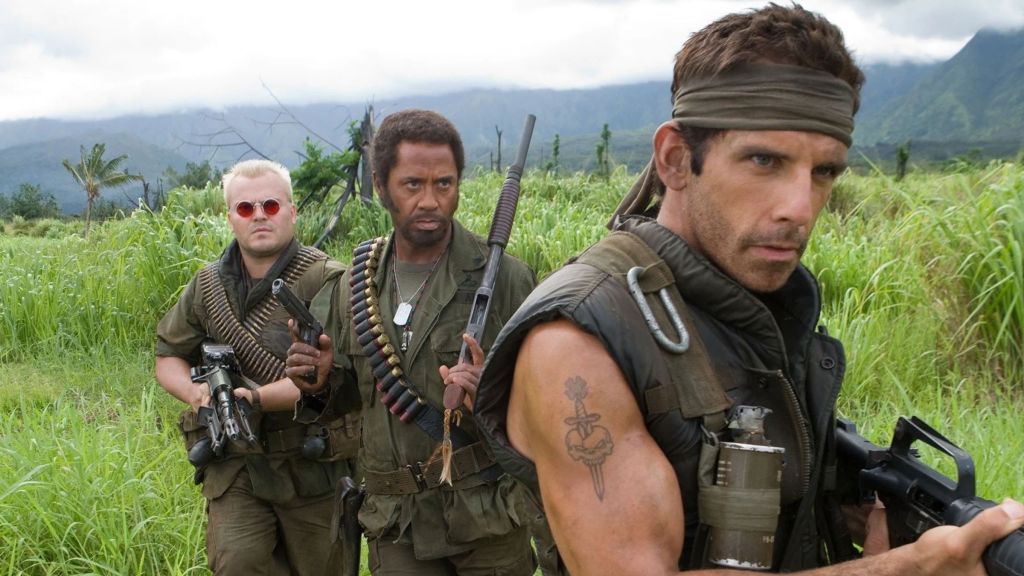
Despite all the criticism, Downey received an Oscar nomination for Best Supporting Actor in 2009 for the film. It was a significant recognition, as it showed that the Academy saw artistic merit in a performance that relied on both physical comedy and the actor’s ability to maintain such an exaggerated personality. Lazarus could have become a walking caricature, but Downey managed to make the character feel convincing. Still, he had some serious doubts about taking on the role before filming even began.
The actor had discussed the movie a few times over the years, but in 2020, he returned to the subject on The Joe Rogan Experience podcast, revealing that his mother had been concerned about his decision and that he wasn’t entirely sure it was the right move either. Let’s be honest, Iron Man had changed Downey’s career (and personal life), so taking on Tropic Thunder right afterward could have felt like throwing away the new opportunity he’d worked so hard to get. However, he spent a lot of time thinking about his intentions for the character, which helped him feel more comfortable moving forward with the project:
“Then I thought, ‘Well, hold on, dude, get real here. Where is your heart?’ My heart is… I get to be Black for a summer in my mind, so there’s something in it for me. The other thing is, I get to hold up to nature the insane self-involved hypocrisy of artists and what they think they’re allowed to do on occasion, just my opinion,” he explained. Downey also said he had a pretty good idea of the reaction the movie would get, but that 90% of his Black friends praised it. He acknowledged the other 10%, though he believed the film’s intentions mattered most and chose to stand by the idea that it was criticizing blackface and showing why the practice is wrong. As he put it, “having a more psychology is job one.”
In the end, reducing Tropic Thunder to a single debate about Downey’s character would mean overlooking much of what the movie is doing. But treating its satirical intent as a definitive defense would be just as simplistic, wouldn’t it? Today, the film is an interesting example of how comedy doesn’t necessarily age well or badly, but can become more complicated over time without losing its relevance entirely. How far can a satire go? Does getting a joke mean you really have to accept it? That’s something worth thinking about.
Tropic Thunder is available to stream on Paramount+.
What do you make of all this? Did the movie get its satire right, or did it go too far with Downey’s character? Share your thoughts in the comments!
