


Articles
5 TV Shows Critics Loved, But Audiences Hated (& All Were Still Renewed)

By now, it’s pretty clear that critics loving a TV show doesn’t mean audiences are going to agree. There have been hundreds of cases like this over the years, but it’s still strange when, despite that, it feels like the show either isn’t listening to its audience or just wants to keep renewing it season after season to see if things will eventually turn around. But why keep insisting? What exactly are critics seeing that clearly isn’t working with the audience at all? In some cases, the answer comes down to ambition, while in others, it’s a familiar franchise, a popular cast, or simply the fact that critics and executives see value where the audience doesn’t. And some shows manage to survive for years in this particular situation.
We’ve put together a few examples that fit the bill. All of them were well-received by critics, but look at their audience scores, and the gap is quite noticeable. It’s impossible to say that 100% of the fans hated them, but many still can’t understand how a series in this situation managed to stick around for so long.
5) Batwoman

Critics were willing to buy into Batwoman when it premiered, even though it didn’t exactly have an easy time with audiences (to the point that it’s rare to hear anyone bring this show up nowadays). The idea here was to follow Kate Kane (Ruby Rose), Bruce Wayne’s cousin, as she took on the mantle of Batwoman to protect Gotham after Batman’s disappearance, and it had pretty much everything going for it, especially as another piece of the famous Arrowverse in the 2010s. It was a new hero and a Gotham without Batman, which critics were quick to praise, especially when it came to Rose’s performance and the show’s intention to give Batwoman her own identity instead of just making her a female version of the hero we know.
On the other hand, Batwoman also had plenty of what tended to divide audiences when it came to CW shows at the time: melodrama, romances, personal conflicts, and storylines that weren’t always as interesting in execution as the premise made them sound. Even when Rose left and Javicia Leslie joined it as Ryan Wilder in Season 2, that didn’t turn things around. In the end, audiences never seemed all that interested until the series reached Season 3 and was canceled. CW president Mark Pedowitz said the decision came down to financial and strategic reasons, although reports at the time also noted the show’s viewership had dropped by around 20% compared to the previous season.
4) The Lord of the Rings: The Rings of Power

The controversial The Lord of the Rings: The Rings of Power does have an audience that appreciates it, but it’s also easy to find a portion of Tolkien’s fans who still have issues with the series. Its story takes place thousands of years before Peter Jackson’s movies, telling stories from the Second Age of Middle-earth, with characters like Galadriel (Morfydd Clark) caught up in Sauron’s (Charlie Vickers) return. For critics, there has always been plenty to enjoy: a massive production, high-quality sets and visual effects, and a first-class treatment of the franchise. However, making some changes here and there and filling in gaps from the original works didn’t sit well with a large portion of the fanbase, and that ended up weighing more heavily than anything else.
And sure, the slow pacing at the beginning, characters taking a while to win viewers over, and a whole story that needs setup before reaching the bigger and more familiar events can be a lot to ask from an audience. Critics considered these things, and the series tried to improve on them starting with Season 2. Overall, whether the show is good or not depends on who you ask. But if you do a little digging, you’re probably going to find more people criticizing it than defending it. Still, The Rings of Power gets a lot of credit for its ambition and for expanding a universe that has shaped pop culture and the fantasy genre for years, heading already into Season 3.
3) Riverdale
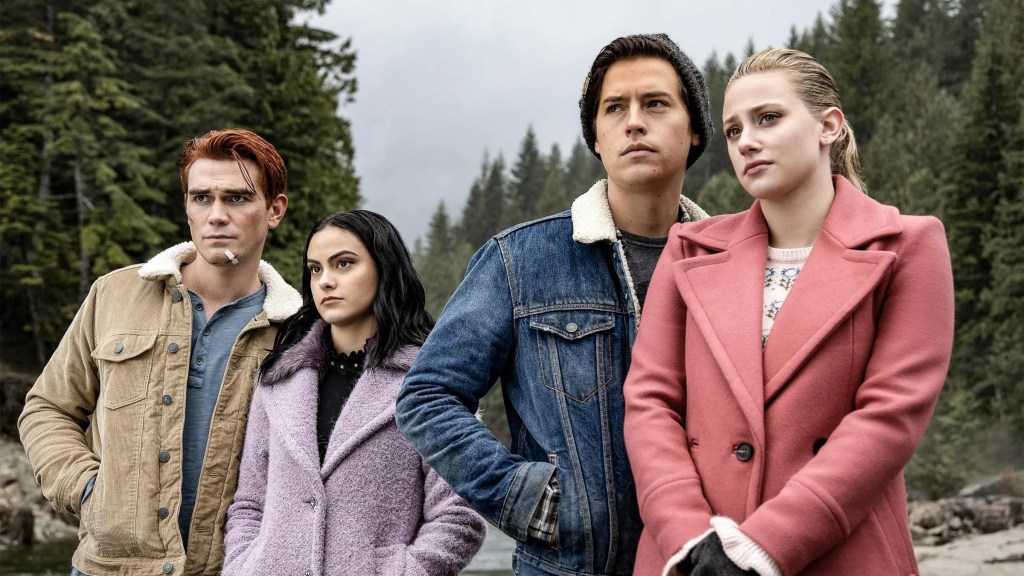
Ever imagined a show where both fans and the cast seem kind of embarrassed to talk about it? Riverdale actually started pretty well, but over time, it was as if the entire production had lost the plot, and the story started going in some very weird and incomprehensible directions, changing its whole personality. At first, it was a teen mystery about the death of Jason Blossom, with Archie (KJ Apa), Betty (Lili Reinhart), Veronica (Camila Mendes), and Jughead (Cole Sprouse) trying to figure out what was really happening in their small town (very much Twin Peaks-ish). However, it started picking up increasingly ridiculous elements here and there, like cults, an RPG game, superpowers, time travel, musical episodes, and so on. For audiences, it was a drastic change to swallow, but for critics, it was apparently part of the fun.
The show seemed to have absolutely no fear of getting wild, changing genres, and taking its stories from 0 to 100. But there’s a difference between a production that is deliberately ridiculous and one that just seems to have lost control. As Riverdale kept piling on cults, serial killers, conspiracies, and all kinds of sci-fi elements (along with plenty of other unlikely twists), part of the audience started feeling like it had very little to do with the show they had started watching. Even so, it kept getting renewed until it reached an impressive seven seasons. It’s ironic since critics are usually the stricter ones, and in this case, they were perfectly willing to roll with it.
2) Star Trek: Discovery
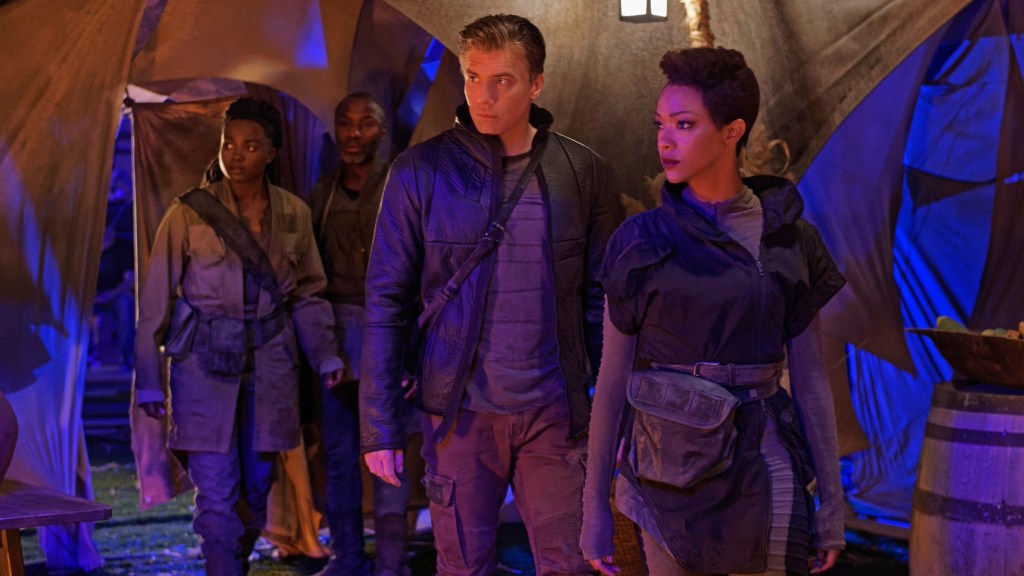
Star Trek has an enormous reputation both in the sci-fi genre and in pop culture. So, when Star Trek: Discovery arrived, it had a difficult task: modernize one of the most traditional franchises around without losing what made it Star Trek in the first place. It follows Michael Burnham (Sonequa Martin-Green) and the crew of the USS Discovery, starting out before the original series and eventually taking the story much further into the future. Critics generally liked the attempt to make Star Trek feel more like a contemporary streaming production, especially thanks to its visual scale, cast, and more serialized format. For some fans? Having so many dramatic arcs, personal conflicts, and one overarching story was just too big a change to accept.
Some viewers started missing the more conventional structure and spirit of the franchise. In other words, critics liked exactly what audiences disliked, because the attempt to modernize everything ended up hurting the very few things that made Star Trek feel like Star Trek. But here’s another case where, despite that, the show kept getting renewed for a few more years until it reached its fifth season, when it was decided that Discovery had already served an important purpose for the streaming era. Reportedly, the decision was treated as a natural ending to the show’s run, and no specific reason related to audience numbers or performance was ever officially given.
1) Supergirl

Before Milly Alcock, there was Melissa Benoist on TV. In Supergirl, Kara Danvers is a Kryptonian who has to balance her job, personal life, and the responsibility of being one of National City’s main heroes. Did people like it? Yes, to an extent, especially since it was another series connected to the Arrowverse, and the character had enough charisma to carry things even when some of the storylines weren’t all that interesting. Besides, something that was praised by both audiences and especially critics was the way the show incorporated themes of identity, discrimination, and representation into the superhero genre, which at the time was genuinely worth highlighting.
But none of that could make the series exciting enough to keep everyone watching. Much like Batwoman, part of the backlash came from the formula that CW tended to use across so many of their projects, which made it difficult for Supergirl to stand out. The show could be pretty inconsistent, constantly switching between good moments and plots that felt generic. Still, like several other productions on this list, it managed to survive until Season 6, which was a joint decision between the creative team and Benoist, although the decline in viewership over the years and production delays caused by the COVID-19 pandemic also played a role.
