


Articles
Before Stranger Things, David Harbour Showed Up In A Groundbreaking Western With A Dark Knight Star
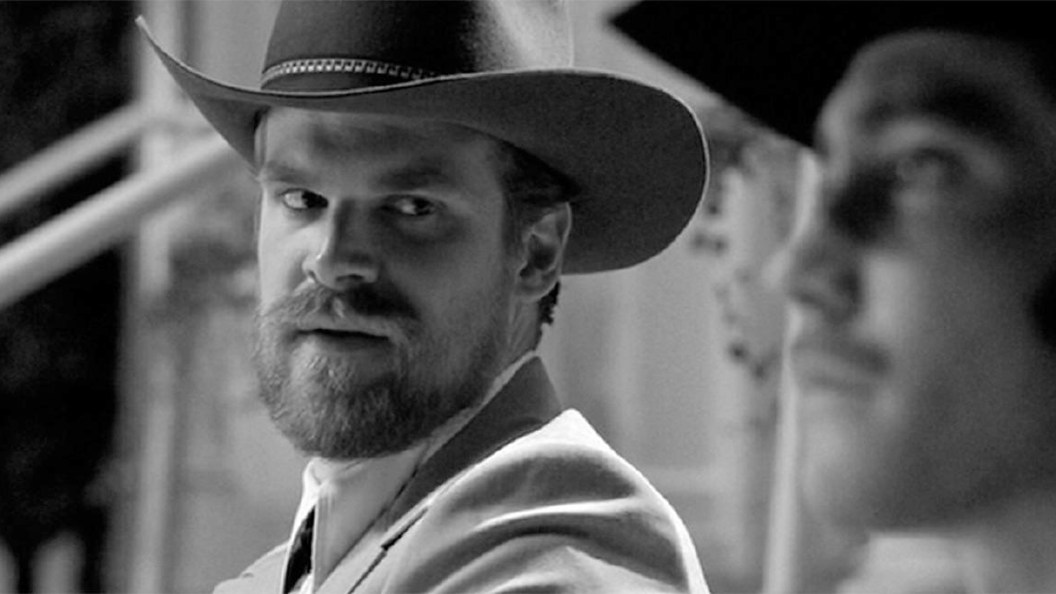
Eleven years before he became Jim Hopper, David Harbour turned up for a single scene in the most talked-about American film of 2005. Brokeback Mountain was Ang Lee’s adaptation of an Annie Proulx short story, a decades-spanning romance between two ranch hands that Rotten Tomatoes’ critics still describe as an epic Western, though it is really a contemporary drama running from 1963 to 1983 that borrows the genre’s landscape and quiet. It earned eight Oscar nominations, won three, and went into the National Film Registry in 2018. Harbour is in it for roughly ninety seconds as Randall Malone, a married Texan making a careful, coded approach to Jack Twist. Playing Ennis Del Mar in the same film, three years from becoming the Joker in The Dark Knight, was Heath Ledger. What makes the coincidence worth more than a trivia note is what the film did to each of their careers, which turns out to be almost the opposite of what anyone would guess.
The two of them were on the same call sheet, and the decade that followed sent their careers in directions nobody sitting at the 2006 Academy Awards would have predicted. Ledger left Brokeback Mountain with a Best Actor nomination and the kind of reviews that turn a young actor into a permanent leading man, and the next casting announcement he made was met with organized online hostility. Harbour left the same production as a working character actor with a Tony nomination and a face that kept putting him in one-scene parts for another decade. One of them was told he was wrong for the villain. The other was told by one of the most decorated directors alive to be more handsome. Both notes ended up mattering more than they should have. The film sat quietly on one resume until a Netflix series made him a household name, and it sat on the other as proof of range that the industry then spent three years arguing about.
David Harbour Was In Brokeback Mountain For Exactly One Scene, And He Is The First To Say So
There is no version of Brokeback Mountain where Harbour is a co-lead hiding in plain sight, and he has never pretended otherwise. Talking to Kyle MacLachlan years later for Variety’s Actors on Actors series, he described the whole experience in a sentence: “I had one scene, and I came in on coverage, and he was like, ‘more handsome,’ and I was like, ‘Wow.’” The note from Ang Lee, one of the most decorated directors alive, was to be more handsome. That was the job. The scene itself is a benefit dinner in Texas, where Randall Malone talks to Jack about a fishing trip in language that both men understand to mean something else, and it lands because Harbour plays the public gregariousness and the private loneliness at the same time.
It is also worth noting that Harbour and Ledger never actually appear in frame together. Harbour’s material is in Texas with Jake Gyllenhaal, while Ennis is in Wyoming, and the film cuts between them. They were in the same movie. Whether they were ever in the same shot is a different question, and a smaller one than what happened next.
In 2005, David Harbour Was Not An Unknown, Which Makes The Next Decade Stranger
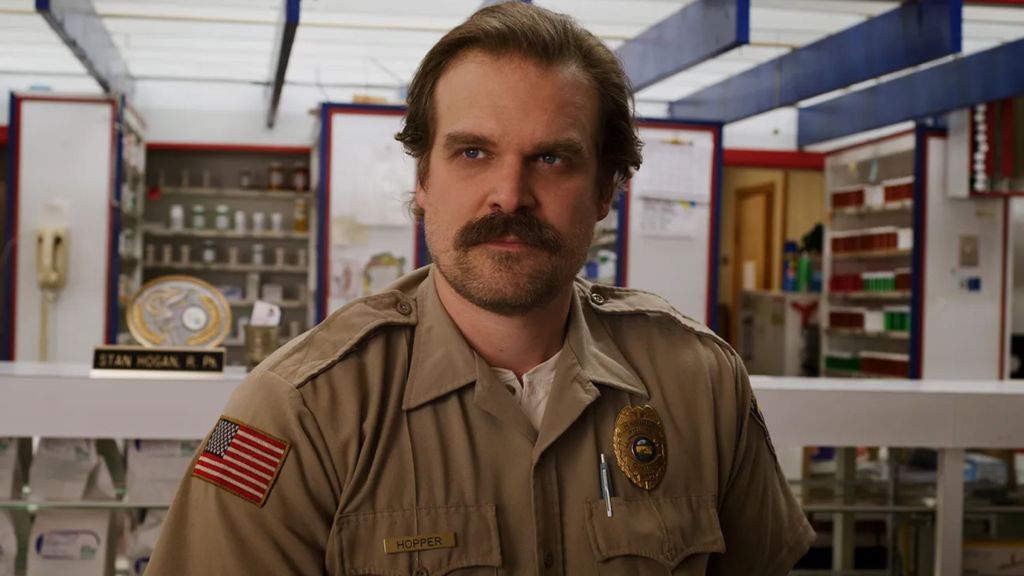
While Harbour’s appearance in Brokeback Mountain wasn’t memorable or headline-making, it also doesn’t mean that he simply disappeared for the next decade. The opposite is actually true and the actor’s career continued just maybe not in the direction he expected. In the same year he shot his ninety seconds for Ang Lee, Harbour was nominated for a Tony Award for playing Nick in the Broadway revival of Who’s Afraid of Virginia Woolf?, opposite Kathleen Turner and Bill Irwin, ultimately losing to Liev Schreiber.
But on screen, he spent the next 11 years picking up smaller parts, and by his own admission it was frustrating. He was in Quantum of Solace. He was in Revolutionary Road and State of Play and The Equalizer. He was recurring on Pan Am and The Newsroom but he told Time Out London that he had nearly quit, in a line that says everything about how the industry treats a working actor: “Theatre is home. Film is a pretty girl who doesn’t like you that much.” He was 41 when a Netflix show about kids on bikes finally changed it.
The Same Film Convinced Everyone That Heath Ledger Could Not Play The Joker

But while Harbour’s career was on a slow burn trajectory, Ledger’s exploded, but not in the way most of us remember now. Brokeback Mountain made Ledger a serious actor overnight, earning him a Best Actor nomination at 26 and the New York Film Critics Circle award, and he talked about Ennis with genuine care and respect for the character. But when Christopher Nolan cast him as the Joker, that same performance he was lauded for was used as the argument against him. The reaction at the time was open contempt, captured in comments like “The pretty boy lead of Brokeback Mountain playing the Joker?
Come onnnnn.” Jonathan Nolan has recalled that “no one got it” and that the production was “f—ing pilloried for it.” Ledger did not ride Brokeback to the Joker. He had to overcome it. He died in January 2008, at 28, in a death the New York medical examiner ruled accidental, and won Best Supporting Actor posthumously the following February, the first acting Oscar ever given for a comic-book film.
Both Careers Ended Up Turning On A Comic Book Role
It’s ultimately the impact one film had on two actors that is extremely interesting. Two men appear in the same prestige film in 2005. One is nominated for Best Actor and has to spend three years convincing people that the nomination does not disqualify him from playing a clown. The other is nominated for a Tony the same year and spends eleven years in the middle of the call sheet. Both of them eventually break through the same way, by being cast against everything the industry had decided they were.
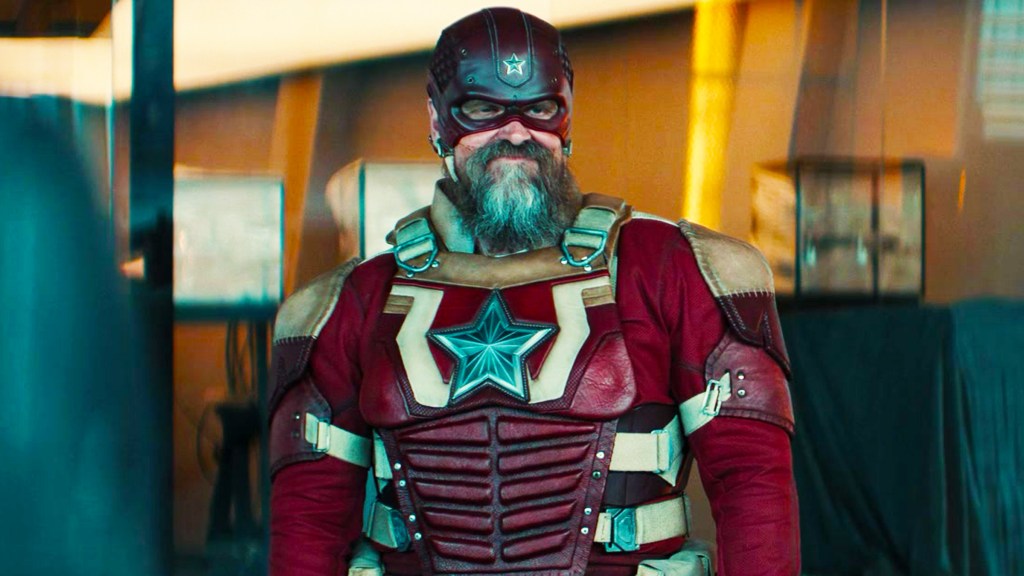
Ledger’s Joker is still the genre’s high-water mark for a performance. Harbour went from Hopper to Hellboy, a film he assessed with unusual honesty, saying “we did our best, but there’s so many voices that go into these things and they’re not always going to work out,” and then into the MCU as Alexei Shostakov, the Red Guardian, in Black Widow and Thunderbolts, with Avengers: Doomsday ahead of him. A 2005 gay Western is, improbably, a shared origin point for two of the most significant comic-book performances of their respective eras.
The lesson buried in all of this is not the sentimental one about patience. It is that proximity to a great film is not a career, and that being in the right movie can work against an actor as easily as for it. Ledger had to escape the thing that made him respectable. Harbour had to wait for an industry that had already seen him be excellent on a Broadway stage to notice him on a screen. Both of them got there, and both of them got there through characters drawn in ink. Harbour picked up his first career Emmy at this year’s Creative Arts Emmys, for HBO’s DTF St. Louis, after two nominations and no wins across nine years of Stranger Things. More than two decades after Ang Lee told him to be more handsome, he finally won something for a performance nobody had to be talked into.
