


Articles
Robin Williams’ Second Movie Ever Was a Box Office Bomb That Became a Cult Hit (And Still Has a Fun Park in Europe)
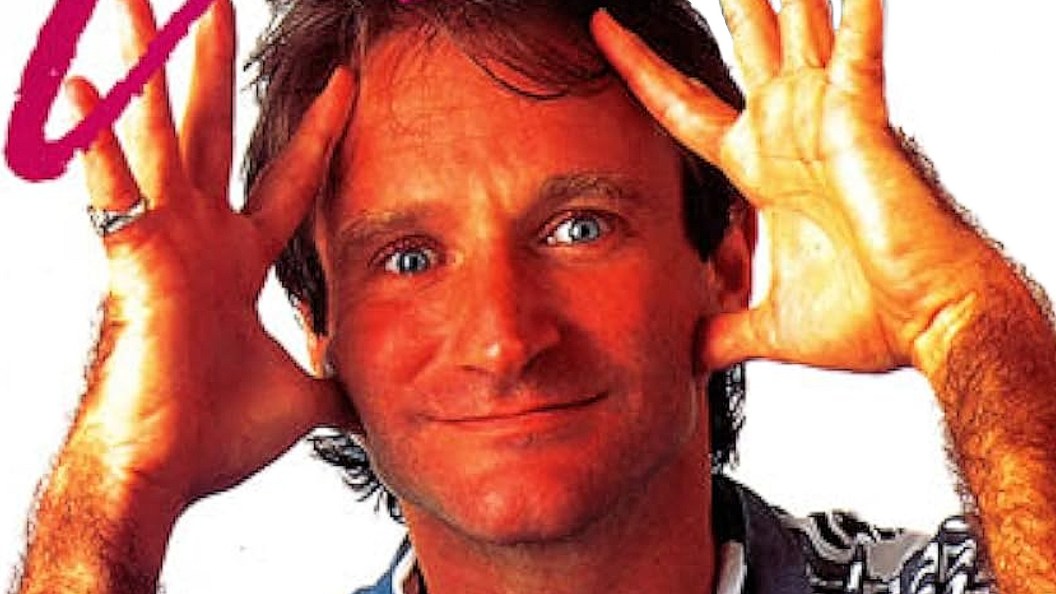
There was a time before Robin Williams became the manic genius of Mrs. Doubtfire, the voice of the Genie, and the Oscar-winning star of Good Will Hunting. At this point in his career, he was already a television sensation thanks to Mork & Mindy. What most people might forget are the early days of Williams’s movie career. His jump from sitcom sensation to movie star came with a rather unusual challenge—taking on an iconic character in an unusual movie. And if there was one thing Williams was about to prove, it was that Hollywood had no idea what to do with a talent that unruly.
At the center of it all was a young Robin Williams who seemed so natural when delivering an unnatural performance. This would also be Williams’s first true feature film role. Previously, he had a minor role in Can I Do It… ’Til I Need Glasses?, though he wasn’t initially credited until after his success on Mork & Mindy. Unfortunately, his first official Hollywood feature later released and wasn’t a success. Over the years, this particular misfire developed a loyal following, much to everyone’s surprise. Even more surprising, the production set found an entirely unexpected second life.
Robin Williams’ First Breakout Feature Film Was a Very Strange Hollywood Gamble
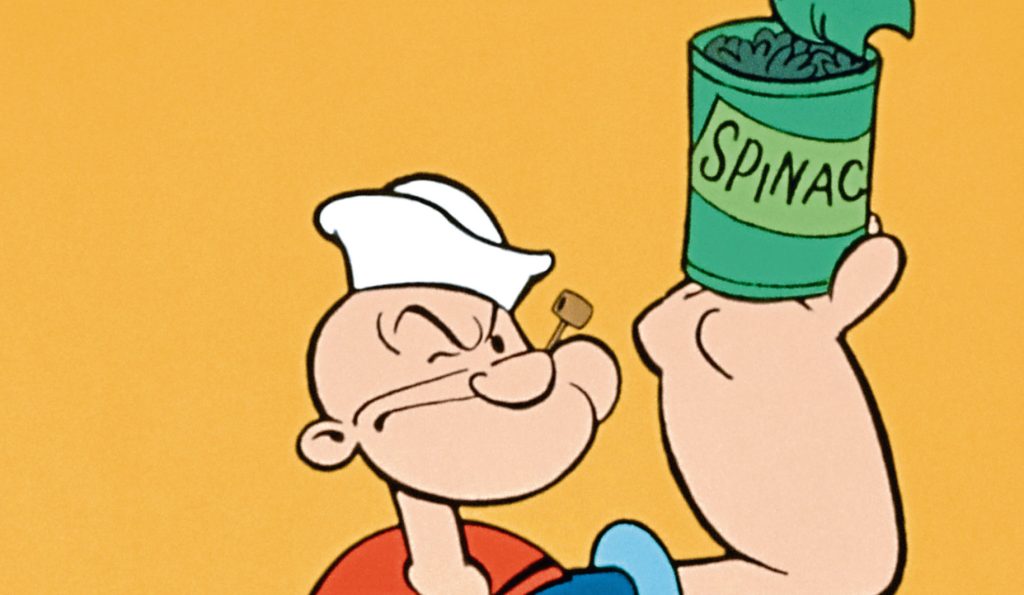
Released in 1980, Popeye starred Robin Williams as the cartoon sailor. Shelley Duvall played Olive Oyl and Paul L. Smith was Bluto. Robert Altman directed, while cartoonist and playwright Jules Feiffer wrote the screenplay. The creators transformed the movie into a peculiar live-action musical filled with songs, oversized personalities and Altman’s unconventional style. Robin Williams approached the character with a physical comedy style that would become one of his trademarks. He squinted, muttered, flailed like none other. And somehow, he made a sailor who speaks almost entirely in grunts feel like a natural vehicle for his enormous comic energy (very different from the recent Popeye horror movie that emerged from the character entering the public domain).
Check out the trailer for Williams’ Popeye:
The movie ultimately earned about $49.8 million domestically, but that wasn’t enough to make the expensive production the smash success Hollywood wanted. The problem was that Popeye was not exactly cheap. Estimates of the production budget vary, with figures ranging from around $12–13 million during production to approximately $20 million in later accounts. The film’s reception was similarly complicated. Some viewers found the musical numbers and strange tone charming, while others seemed to wonder why anyone had decided that Popeye needed to become a Robert Altman musical. In retrospect, however, the movie’s weirdness became one of its biggest assets. It had something increasingly rare in studio filmmaking: an unmistakable personality. It wasn’t overpolished into blandness. It was loud, peculiar and unmistakably cartoonish.
How Popeye Became a Cult Favorite and a Fun Park in Malta
Once the harshest criticism had faded, audiences could appreciate the movie on its own strange terms. Williams’ performance became easier to admire as an early glimpse of the comic force he would soon become. The songs, oddball supporting characters and ramshackle atmosphere also gave the film a distinctive charm. It wasn’t the conventional blockbuster audiences might have expected, but that turned out to be part of the fun. What initially seemed like excessive weirdness gradually became the very thing that gave Popeye its staying power.
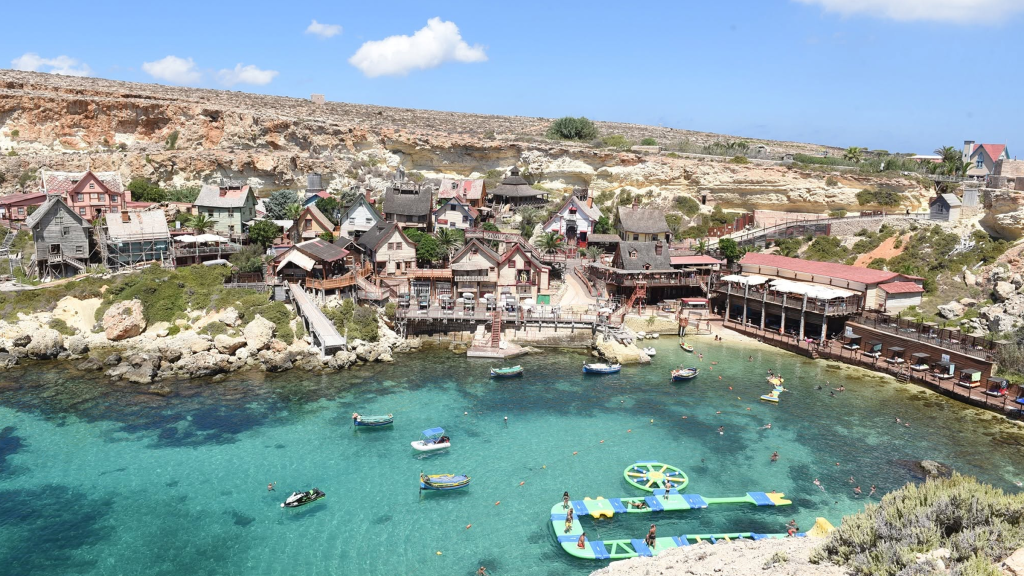
The production constructed the village of Sweethaven at Anchor Bay in Malta, creating a collection of wooden buildings and colorful structures specifically for the film. There were homes, shops and other buildings designed to make the fictional community feel like a real place. After filming ended, the elaborate Sweethaven set was not immediately torn down. Instead, it was preserved, allowing visitors to walk through an actual piece of movie history. It later became Popeye Village, a tourist attraction. Today, visitors can explore the original set, see characters from the movie and enjoy activities built around the location.
And that makes the movie’s history particularly satisfying. Popeye may not have delivered the financial triumph Hollywood hoped for in 1980, but its elaborate production created something audiences could keep visiting for decades. Williams helped give the movie the larger-than-life personality that eventually made it a cult favorite, while the set gave that strange world a life beyond the screen. In the end, perhaps the movie just needed a little time to find its spinach — enough to turn an old box-office disappointment into a cult classic and a lasting tourist attraction.
