


Articles
Forget Game of Thrones, This Historical Epic Did Politics and Warfare Even Better
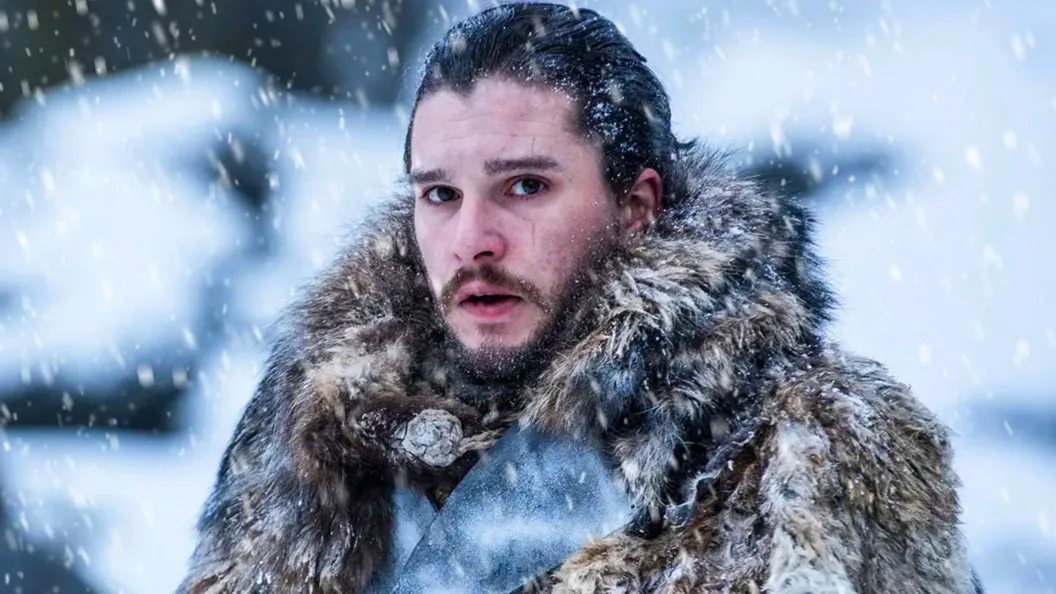
When Game of Thrones premiered in 2011, it came out swinging with a first season that immediately showed just how complex the show was going to be when it came to power struggles. Not every fantasy or historical series manages to be this good at that, since most of them would rather focus on big conflicts, action, and even romance, leaving politics in the background. And even today, it still stands as the biggest name on TV, with nothing else quite able to match its legacy (even with that disastrous final season). However, while everyone remembers just how popular it was, there’s another show that has been completely overlooked and that, honestly, can easily go toe-to-toe with HBO’s production.
It doesn’t have dragons or magic, but as a whole, it has much richer and more interesting wars and medieval politics. And the best part is that a good chunk of this story actually happened, with a few very convenient liberties taken along the way. The story deals with Saxon kings, Danish invaders, succession disputes, political marriages, and territories constantly changing hands during a time when England was still being put together. And okay, it might not sound as intriguing as GOT just yet, but plenty of people who watch the show tend to realize just how much it deserved the same kind of hype without thinking twice.
How The Last Kingdom Manages to be Better than Game of Thrones

The Last Kingdom hit TV in 2015, based on Bernard Cornwell’s The Saxon Stories series of novels, and follows Uhtred of Bebbanburg (Alexander Dreymon), a young Saxon who is captured and raised by the Danes after his father is killed. That puts him in a pretty convenient position: he belongs to both sides while also never really belonging to either one. So, as an adult, Uhtred ends up growing closer to Alfred the Great (David Dawson), right when Wessex is trying to survive the Danish expansion. His personal goal is still to reclaim Bebbanburg, but his life becomes tied to the larger project of creating a unified England.
Then you start wondering what exactly makes the show stand out and keeps you wanting to watch. Well, nobody in the story is simply fighting because “that’s the good side.” Uhtred can help the Saxons at one point and have perfectly understandable reasons to side with the Danes at another; Alfred can need Uhtred and still distrust him; nobles can swear loyalty to a king and start looking for other options once they realize that king is losing his grip on power, and so on. And yes, GOT also has these kinds of morally gray characters, but The Last Kingdom adds another layer by having many of them divided not just between people, but between beliefs and interests. Nobody is totally comfortable with the side they’re on, and that makes the political side of the plot even stronger.
That’s where the desires become much more specific, because someone can want revenge while also needing an army; someone can hate a ruler while depending on him to get their lands back; or someone can disagree with an ally’s religion and still know they have no chance of winning a war without their help. GOT has this too, but it uses it differently, tying those conflicts to power, survival, ambition, and family, making it complex through sheer scale; while The Last Kingdom uses them with Saxons, Danes, religion, loyalty, and Uhtred’s identity, making it complex through concentration.

To get a better idea of what that means, just look at the dynamic between the protagonist and Alfred, for example, since Uhtred is pretty much built around contradiction: he was born a Saxon, raised by Danes, and spends much of his life being seen as someone who is never Saxon enough for the Saxons or Danish enough for the Danes. That could’ve turned into the cliché of “the man caught between two worlds,” but the show takes a more practical approach and makes him aware of what each side has to offer, also knowing that almost nobody does anything for free. With Alfred, this is even clearer: both need each other, but neither of them particularly likes being dependent on the other. Overall, there isn’t really a friendship, but a relationship built on necessity, distrust, and respect. And sure, GOT has this kind of dynamic as well, but it isn’t explored or brought back as consistently.
Still, there’s one very specific thing about The Last Kingdom that sets it apart even further from George R. R. Martin’s adaptation: the fact that winning a war is only the beginning of the problem. Imagine conquering a territory, only to realize that now you have to decide who will rule it, convince the people living there that your king is legitimate, keep enough soldiers around to prevent a rebellion, deal with the former ruler, and probably face someone who believes they have a better claim to the land than you do. And if a new enemy shows up, you might even have to ask for help from the very person you just defeated. That whole cycle is basically the trajectory of the entire show, whereas GOT, while it does deal with these things, tends to focus more on big moments like an unexpected execution, a wedding gone horribly wrong, or a betrayal at the worst possible time.
The Last Kingdom has a greater tendency to show the administration and maintenance of conquered power as an ongoing part of the story. So, instead of a political decision being the end of a conflict, it becomes the starting point for the next problem. No one there just “wins” England, because the story doesn’t reset every time a king dies — the problem just gets passed on to the next generation. Meanwhile, GOT often uses the consequences of politics to create new major conflicts, twists, and shifts in power. It might seem like a subtle difference, but it actually changes everything.
Some Fans Already Consider The Last Kingdom the Winner

Today, The Last Kingdom holds a 95% audience score on Rotten Tomatoes, with all five of its seasons receiving plenty of praise, which makes it kind of crazy that it never became more of a mainstream hit. Plus, a lot of people point out that the conclusion of the story is much more satisfying than GOT‘s, which makes sense because, while HBO’s show is still the more influential one by far, it’s impossible to forget that Season 8 happened. Also, a large part of the audience has highlighted the show’s consistency over the years, with many arguing that its quality never really took a major nosedive (you can find several comments on Reddit from the past few years making the same point).
But of course, it would be impossible to say the series is 100% perfect, especially when it comes to the plot: Uhtred gets way too much credit, some events are compressed, characters are changed, and some relationships are completely reworked to fit the TV format better. However, none of that stops the show from being one of the most effective adaptations, since it understands that historical accuracy isn’t just about repeating dates and names; it’s also about making you understand why that period was so unstable, and that’s something a fantasy story like GOT doesn’t have to worry about in quite the same way (since Westeros was created as a fictional world). The Last Kingdom is about wars and political schemes being connected to a process that genuinely needed decades to unfold.
At the end of the day, this comparison is always going to be controversial, but in some aspects of war and politics, The Last Kingdom manages to score a few extra points. Plus, although it also got the movie The Last Kingdom: Seven Kings Must Die as a direct continuation and official conclusion to the story, fans still wish the universe would return in some form, whether through a spin-off or another production, given how much some people still care about it. At first, it might look like nothing more than a story about Vikings, Saxons, and battles, but it’s a great recommendation for anyone who loves GOT or is looking for something that might actually surprise them more than Westeros. It’s just a shame that so few people seem to talk about it.
The Last Kingdom is available to stream on Netflix.
