


Articles
4 Disney Movies Way Too Dark For Kids, Including a Film They Waited Years to Release on VHS

Over time, Disney established its brand in cinema and created an image that, to this day, the entire world associates with fairy tales, musicals, and stories with a happy ending. However, its history hasn’t always been filled with lighthearted and cheerful things. Long before productions from other studios like Coraline, Monster House, or ParaNorman, for example, showed that movies made for children could also be dark, Disney had already done that a few times itself, believe it or not. And many of these films still don’t have the same popularity as the studio’s most famous titles, partly because of that. How did a studio known for creating movies for the whole family end up producing films that were so heavy?
Today, despite that, they have found their own audiences. And at the very least, they remain a reminder of Disney’s attempts to build a more unique and experimental catalog, if that’s what we can call it. Want to know which ones? Here are 4 examples.
4) Fantasia

Not many people remember Fantasia, and some don’t even know it exists. That’s partly because it was one of Disney’s earliest films and, compared to the studio’s other classics, it was never exactly a popular one — mostly because it’s far from conventional. It’s funny because the title itself suggests something classic and beautiful, but the movie is actually made up of several independent segments, with no single storyline connecting them, each one created to bring a piece of classical music to life. But if that was the only thing making it different, it wouldn’t be here, because the film ends with one of the most unsettling sequences Disney has ever put into an animated movie: it introduces Chernabog, a gigantic demonic creature who awakens during the night to command spirits, ghosts, and damned souls.
Overall, it’s a heavy visual experience even by today’s standards, especially considering this is a film released in 1940. Fantasia feels like it was made to be admired more than widely embraced, and most of the movie is much more contemplative than traditional Disney storytelling. However, those final minutes are more than enough to justify its place on this list. It’s not exactly a horror movie (that would be a bit too much even for Disney), but it’s definitely not the calm and comforting experience many people expect from one of the studio’s classics.
3) Pinocchio

When people think of Pinocchio, they usually think of an emotional story about a wooden puppet whose nose grows whenever he lies. But anyone who only remembers that part is probably forgetting the other half of the movie. The animation follows the protagonist as he tries to prove that he deserves to become a real boy, but that goal is pushed aside several times as he finds himself trapped in situations that get surprisingly close to psychological horror for a children’s movie. Need an example? The Pleasure Island sequence is still one of the most uncomfortable moments in Disney history: children are lured to a place where they can do whatever they want, only to discover too late that they are being transformed into donkeys and sold as working animals.
Today, you look back at that idea and realize just how disturbing it actually is, even if you might overlook it because it’s part of a fantasy movie. But the most unsettling part is how the film never tries to soften the desperation of those boys. Now add kidnappings, child exploitation, cruel villains, and a chase involving a gigantic whale — things that audiences tend to forget, right? The reality is that Pinocchio is a much darker movie than it first appears.
2) The Hunchback of Notre Dame

This one is a little easier to understand because The Hunchback of Notre Dame already presents itself as a tragic story (even though it still has its beautiful moments). And yes, it still looks like a classic Disney animated movie just like many others, but its complexity is where things start to stand out. Pay closer attention to the story, and you’ll notice that it deals with subjects that are usually explored more in adult dramas rather than children’s movies. The plot follows Quasimodo as he tries to gain his freedom after spending his entire life isolated in a tower by Judge Claude Frollo, but the movie uses that journey to explore intolerance, persecution, abuse of power, discrimination, and religious fanaticism.
Because the story wasn’t originally created by Disney, the studio naturally softened many elements of the source material. However, the essence of the story is still there, and a lot of that comes down to Frollo. Among all of Disney’s villains, he is easily one of the most evil and disturbing ever created, because he doesn’t need magic or monsters to be terrifying. His actions are completely human, and that creates a level of discomfort that affects adults, but especially children. The Hunchback of Notre Dame is far from being a lighthearted Disney film, and that may be one of the reasons why it never reached the same level of popularity as many other classics from the studio.
1) The Black Cauldron
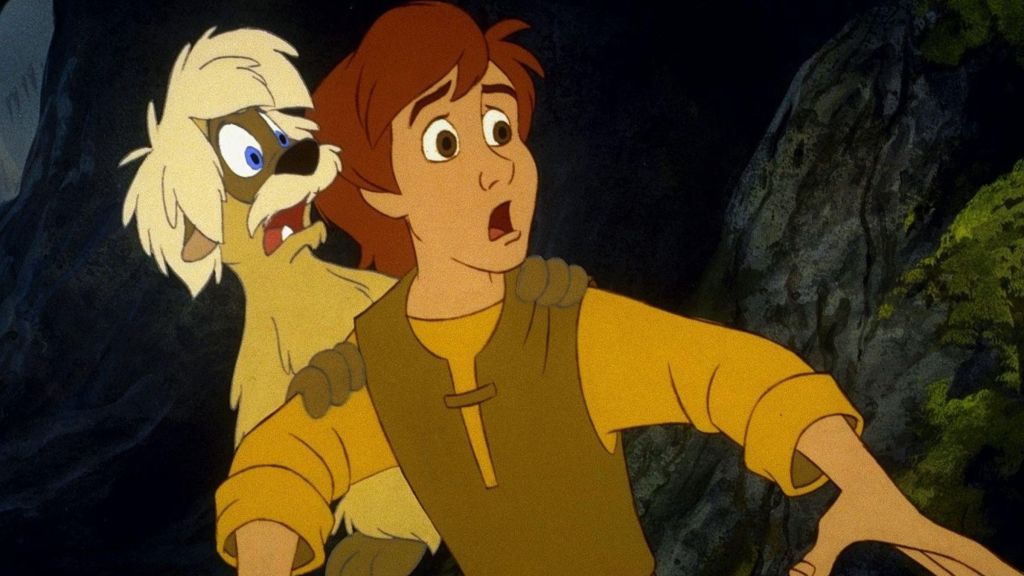
Out of all the movies on this list, this is probably the one the fewest people know about — and do you know why? Because it’s dark. The Black Cauldron feels like it was made by a completely different Disney from the one audiences were used to, following the story of a young boy named Taran who tries to stop the Horned King from getting his hands on a magical cauldron capable of creating an army of the undead. However, what really stands out isn’t the premise itself, but the atmosphere of the movie. There is almost none of that lighthearted sense of adventure that usually defines Disney animation; instead, the film leans into dark magic, decaying castles, grotesque creatures, skeletons, and the feeling that something terrible is about to happen.
And this is the movie from the list that took years to arrive on VHS, because it became such a major commercial failure. The villain also played a big part in that reputation, since the Horned King was truly terrifying for kids. So, because of the film’s reception, Disney essentially shelved The Black Cauldron and rarely acknowledged it for years. What makes the situation even more surprising is that, during the ’80s, it was actually the most expensive animated film the studio had ever produced. It was only more than a decade later, after growing interest from a cult audience, that the VHS release finally happened. At the very least, the movie left Disney with an important lesson about how far the studio could push its own formula.
