


Articles
Christopher Nolan Responds to Obsession & Backrooms Success (With Two Warnings for Hollywood)
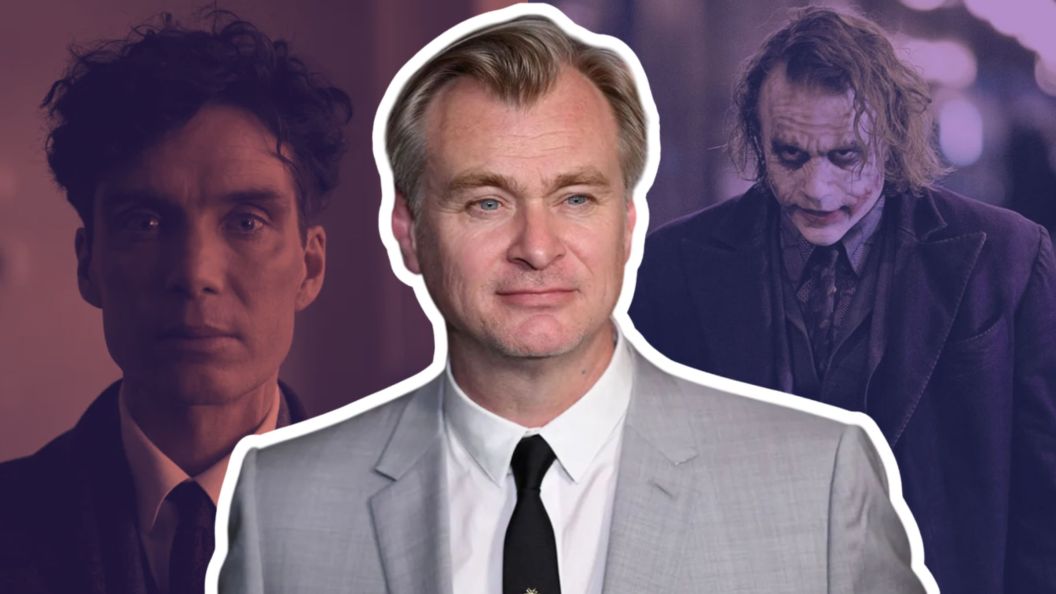
Christopher Nolan’s reputation may be built on blockbusters like The Dark Knight Trilogy and his upcoming take on The Odyssey, but he cut his teeth on low-budget arthouse fare like Following, Memento, and Insomnia. In a recent talk, he shouted out two fellow auteurs enjoying indie success, holding them up as a blueprint for post-blockbuster filmmaking in Hollywood.
As most hardcore movie nerds no doubt realized, the directors in question were Curry Barker and Kane Parsons, whose Obsession and Backrooms films are currently shattering global box office records on minuscule budgets. For Nolan, the success of those films is more than a marketing quirk; it’s an affirmation of hands-on filmmaking in the age of AI. To that end, he has two messages for moviemakers and movie fans alike.
Respect Your Audience, Particularly Young Fans
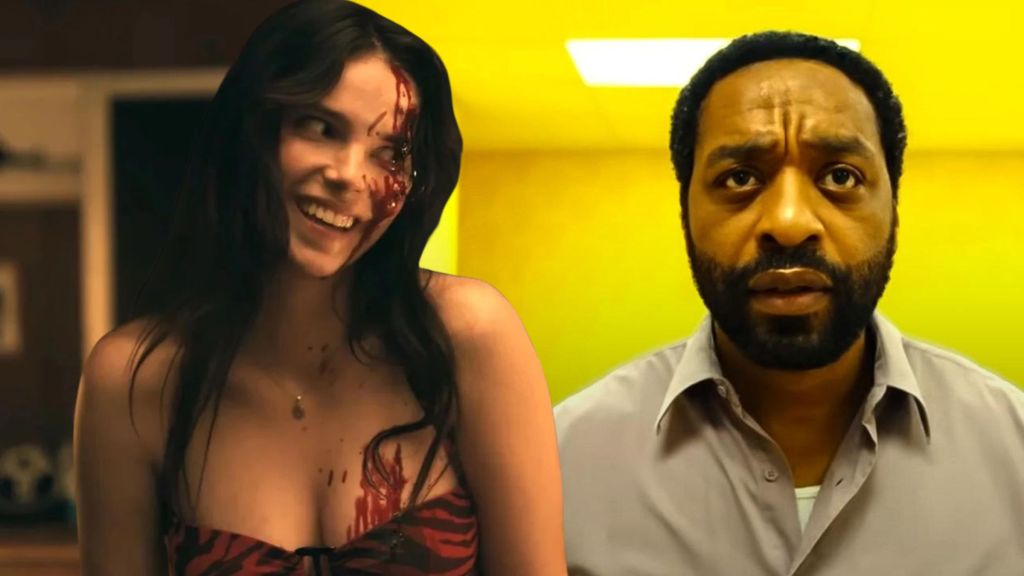
Reading Nolan’s conversation with The Telegraph, one could be forgiven for thinking the man is a fossil. He’s unimpressed by social media backlash, has strong views on generative AI, and doesn’t own a smartphone. On the one thing that matters, however, he’s right up to date: respect for the next generation.
“I never bought into the arguments that young audiences’ attention spans are too fried to enjoy a three-hour Greek epic,” Nolan told The Telegraph. In Nolan’s view, the “mysterious,” “ruminative” qualities of Parsons’ Backrooms and Barker’s Obsession show young fans’ willingness to engage deeply with challenging, rewarding works. “Parts of Backrooms are like David Lynch at his most obscure. And yet young people can’t get enough of them.”
Nolan attributes older artists’ occasional hostility to younger audiences to elder stubbornness rather than Gen Z apathy. Nolan does save a few jabs for younger generations, mostly re: the aforementioned smartphones: “You’ve all become pod people!” Teasing aside, he sees Gen Z and Alpha audiences as smart, incisive, quick to embrace works worthy of their respect, perfectly willing to mock projects that aren’t.
Don’t Trust AI – At Least Not Yet

One quality of younger audiences Nolan singled out for particular praise was a deep, wry skepticism toward AI. Of his teenage and early-20s children, Nolan noted “their judgment of AI slop has been immediate and harsh. They see it for what it is very quickly – and it’s much easier for them to identify it, because it grew out of an online world they know really well.”
As an alternative, Nolan enthused over the power of practical effects. He credited the legendary stop-motion sequences of Ray Harryhausen for inspiring the effects of The Odyssey and laid out potent practical-effect sequences in his upcoming film, including Bill Irwin’s partly-CG, partly-physical cyclops Polyphemus and Samantha Morton’s Circe shaping Odysseus’s men into pigs like clay beneath her hands.
He sees a direct throughline from artists like Harryhausen to the effects in Obsession and particularly Backrooms. He puts the analog effect of the latter in the same category as Harryhausen’s relentlessly physical and handmade animations, the ones where, if you squint, you can see the impressions of animators’ fingers on the figures. Neither pretends to deliver realism. Instead, they conjure visions.
On the subject of conjuring visions, Nolan is unimpressed with AI’s filmmaking potential, particularly for younger audiences. “I’ve never seen a more rapid wholesale dismissal of a supposedly foundational jump in technology in my lifetime.” He warns filmmakers not to overcommit to a tool audiences are already meeting with a measure of disdain. He notes that AI isn’t necessarily “useless or meaningless, [but] in film-making it’s hitting at exactly the wrong time. After years of driving towards heavily virtual environments, we’re seeing a renewed interest in more tactile, more real forms of storytelling.”
What’s the best Nolan film to date (The Prestige, fight me)? Leave a comment below and join the conversation now on ComicBook Forums!
