


Articles
The Vampire Lestat’s Sheila Atim Teases “Calm Before the Storm” With Akasha (& How Lestat Is Her Vampiric Match) [EXCLUSIVE]

AMC’s The Vampire Lestat has given fans a lot to feast upon this season, between the rock star stylings of the titular vampire, and the twisty, unfolding drama that is the aftermath of Louis’ story through Daniel’s book from Interview With the Vampire. But tucked in between the banger songs and the shocking relationship turns and revelations, there’s been something else brewing in the background. From a brief mention in the season two finale of Interview With the Vampire, fans have been waiting for the arrival of Akasha, the mother of all vampires to arrive and this week, in the episode “New York”, we finally meet her.
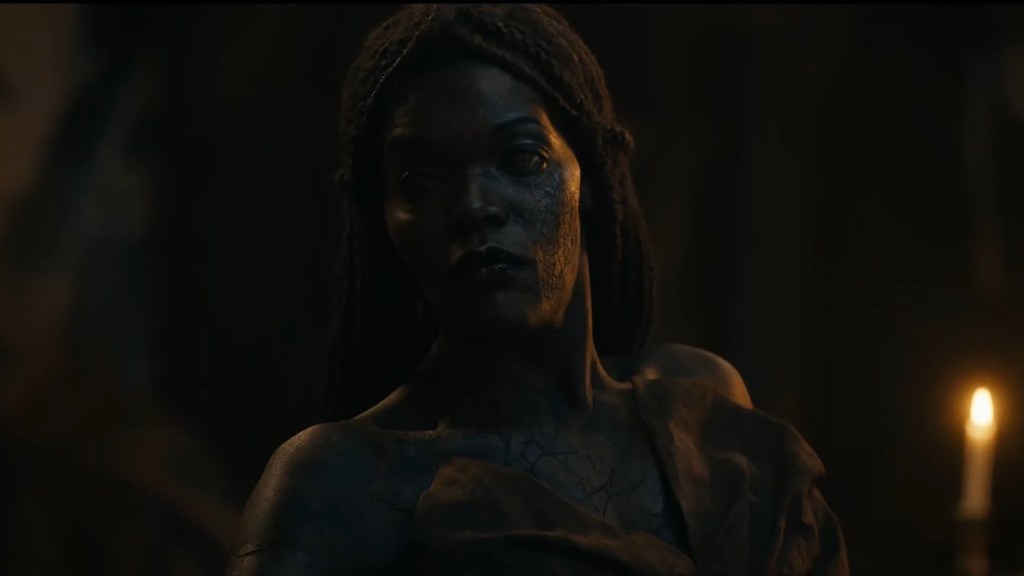
Portrayed by Sheila Atim, the time we spend with Akasha in the episode is brief but significant. Thanks to breadcrumbs scattered through other episodes this season, we know that something very significant—and devastating—is on the horizon involving Akasha that will have global impact and major consequences for some of our favorite characters. Fans of Anne Rice’s books already have an idea of what is coming, but this week’s episode certainly gives fans a taste of what to expect. We sat down with Atim to talk about Akasha’s debut, her connection with Lestat, and that final scene with the vampire queen and how no one is prepared for what’s to come.
Warning: Spoilers for The Vampire Lestat, episode 5, “New York”, beyond this point.
The Importance of Music, How Lestat is Special, and Why Akasha is a Force to be Reckoned With
ComicBook: This season is very much about Lestat but we’ve also been laying the groundwork for Akasha’s arrival. And we finally meet her in this episode. She’s a key figure in Lestat’s story, but as Anne Rice fans know, she’s also a pretty big deal for the overall Vampire Chronicles, too How did knowing Akasha’s significance impact your approach to this character in our introduction to her?
Sheila Atim: I just knew it had to be pretty major. But the good thing is I didn’t really have to worry about that too much because everyone else already knew that anyway. SO, I just had to turn up an do my part, so to speak. And I tried not to let it get in my head too much, because that’s always a recipe for disaster when you overthink things and you become overly aware of, you know, a kind of pressure that doesn’t need to be there. And I thought, let’s just have fun with it. But at the same time, I appreciated how much love there is for this character and how much dedication had gone into crafting her entrance into this show from the team. So, like I said, I just turned up and played my part, very literally. I said let me just make sure I’m super prepared, I’ve done my work, and I’m ready to give it the best I’ve got.
Music is almost its own character in this series. With Lestat we see it as a storytelling device and also as a catharsis. We also see that it has meaning for Akasha. Marius tells Lestat that she likes music, and we see her tapping her fingers, which I think is cool, like, she’s vibing. What does music represent for Akasha from your perspective?
I think, you know, when you think about when the time that Akasha is from, first of all, she wouldn’t have had all this modern tech, right? So, one of the main forms of expression or creativity or, you know, anything that she’d be engaging with outside of just the day-to-day would have been music. Music, dance, storytelling. I think also she likes music and she sees Lestat’s passion for music and sees that it’s genuine beyond just Marius saying hey, play her a song every now and then and seeing that he also wants to engage with the music. He feels the same passions and frustrations, and that music invokes something in him. It, you know, provokes thoughts.
It provokes emotions and questioning, and he goes on a journey with the songs. That’s why he’s so frustrated when he scratches that record. So, I think there’s just a real connection that comes from sharing music with people, and it’s probably one of the few times she’s able to feel kind of human again, feel some semblance of what that meant. And yeah, it’s just one of our most ancient art forms so I think all of those things together make it really potent and of course, really exciting because then we go on to see that Lestat becomes a modern-day musician. And, surprise, surprise, she may make an appearance for that very reason.

One of the things that I find interesting in the episode is that Lestat is being brought to watch over Akasha, and it’s presented that he’s being chosen because he’s worthy. And Marius also notes that it took Akasha a long time to speak to him. But Akasha opens up, in a sense, to Lestat right away. What makes Lestat so special?
He just is a special vampire. Already, he’s unlike the others. Lestat is kind of embodying all the complexities of being undead in a way that I think a lot of the other vampires are trying, really everyone’s trying to find their identity and get to grips with this new way of existing which is not easy. And I think Lestat does so without filter. That’s not to say he’s not, you know, calculated at times or cunning or, you know, astute. He absolutely is, but you kind of see him at all the extremes. You see him at extreme passion, extreme rage, extreme love, extreme dismissal, extreme avoidance. He kind of is encompassing all of it and, in a sense, living the full vampire life.
And I think if you’re gonna try and embark upon the journey that Akasha wants to embark upon, you need somebody, you need an entity like Lestat by your side or at least in tone to be able to do that. So, I think she believes he’s worthy because she sees that he’s an intense guy. And so is she, you know, so she’s found a match, so to speak.
The final scene we get of her in the episode, which by the way is phenomenal, is when she’s awake and Marius comes back and he has what I refer to as a hissy fit. He’s big mad, he’s trying to put her back on that slab, and she’s not having it. There’s this last part, rant is the wrong word, but she declares “I am the answer”. There is so much there to unpack, but I feel like there’s some parallels between what Akasha is trying to claw back her power and what Lestat’s journey is doing with his journey as a musician and everything that he’s been going through with Louis outing him to the world in this book. But there’s also some big foreshadowing going on there as well. What does that moment mean for both Akasha, for you as a performer, and how scared should we be of her and what’s really coming? Because this feels like, in a way it feels like a metaphor for being a woman.
I think we should be very scared because I actually believe this is the calm before the storm, ironically. I think there’s something about the explosion of rage and pure emotion and whatever else she’s feeling in that moment, while simultaneously still being stuck to this stone slab, right? That intensifies this volcanic eruption. But then there’s the after bit. She gets off the slab and now she’s really capable of some stuff. And she’s gonna sit with it. She’s gonna have some thoughts and she’s gonna have some feelings and she’s gonna plan some stuff out. And that stuff to me is way more terrifying because now it’s actually seeing her put some of these things into action.
So yeah, we should be super scared of her. But I think preceding that action, it’s important for all of us to feel the depth of where that is coming from. I think with all of these characters, because they are monsters and some of them do some very atrocious things by our human standards, we need to be able to connect to the kind of pure unfiltered quintessence of how they feel about things and their emotions to be able to still be drawn to them. So, I think once you’ve heard that speech about the girl on the side of the road and girls being stoned and tongues being cut out and the rest of it, hopefully that will make it a bit more compelling when you watch her rampage.
What do you think? Leave a comment below and join the conversation now in the ComicBook Forum!
