


Articles
KPop Demon Hunters 2 & 7 More Upcoming Animated Sequels We Can’t Wait To See
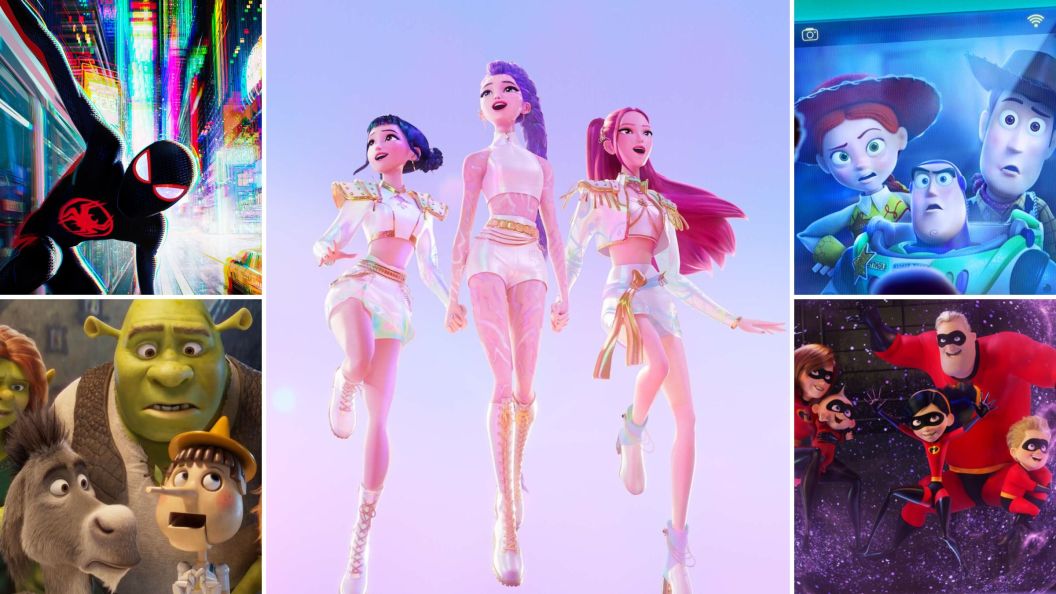
Few animated films became as culturally important as KPop Demon Hunters. Directed by Maggie Kang and Chris Appelhans for Sony Pictures Animation, the film debuted on Netflix on June 20, 2025, and quickly became the platform’s most-watched film of all time. That streaming dominance translated directly into awards recognition, with KPop Demon Hunters sweeping the Golden Globes and Critics’ Choice Awards before arriving at the 98th Academy Awards as the prohibitive favorite. Surprising no one, the film claimed both Best Animated Feature and Best Original Song for “Golden” at the Oscars, making Kang and Appelhans the first filmmakers of South Korean descent to win in the animated category.
A sequel to KPop Demon Hunters was officially announced three days before the Oscars, with Kang and Appelhans signed to a multiyear exclusive deal with Netflix to return as writers and directors. The filmmakers have described the follow-up as an opportunity to thrust protagonists Rumi (voiced by Arden Cho), Mira (voiced by May Hong), and Zoey (voiced by Ji-young Yoo) in new directions, with a 2029 target that reflects the same ambitious production timeline the original demanded. While KPop Demon Hunters 2 sits further on the horizon, the animation landscape between now and 2029 is stacked with sequels that carry their own extraordinary expectations, from dormant franchises finally returning to a cliffhanger that fans have been waiting four years to see resolved.
7) The Legend of Aang: The Last Airbender

The Legend of Aang: The Last Airbender is the first fully realized project from Avatar Studios, the division formed in 2021 under original series co-creators Michael DiMartino and Bryan Konietzko. Director Lauren Montgomery sets the story in the gap between the Avatar: The Last Airbender finale and The Legend of Korra, following a young-adult Aang (voiced by Eric Nam) as the discovery of an ancient power reignites a threat to Air Nomad survival. In addition to a crispy animation, the movie also features a star-studded cast that includes Steven Yeun as Zuko, Dave Bautista as the central antagonist, and supporting roles filled by Taika Waititi, Ke Huy Quan, and Geraldine Viswanathan, with Dee Bradley Baker reprising his multi-character work from the original series. Production of The Legend of Aang: The Last Airbender wrapped in early 2026, and the film premieres on Paramount+ on October 9, 2026. While its theatrical absence is a justified source of frustration for fans, with director Montgomery publicly speaking against the release strategy, the movie is an otherwise exceptional-looking production.

6) Teenage Mutant Ninja Turtles: Mutant Mayhem 2

Teenage Mutant Ninja Turtles: Mutant Mayhem earned $181 million globally against a reported $70 million budget and, more importantly, convinced Paramount and Nickelodeon that the franchise had the potential to charm theatrical audiences and critics alike. The post-credits scene of the original made the sequel’s direction explicit, as Cynthia Utrom (voiced by Maya Rudolph) recruits Shredder to eliminate the Turtles, a setup that returning director Jeff Rowe has described as deliberately villain-forward. Rowe has compared holding Shredder back to holding the Joker in reserve, and that the character’s introduction was the sequel’s structural purpose from the beginning. Nicolas Cantu, Brady Noon, Micah Abbey, Shamon Brown Jr., and Ayo Edebiri are all expected back as the core cast, with Seth Rogen and Evan Goldberg continuing their producing partnership through Point Grey Pictures. After a shift from its original October 2026 date, the sequel is now scheduled for August 13, 2027.
5) Shrek 5
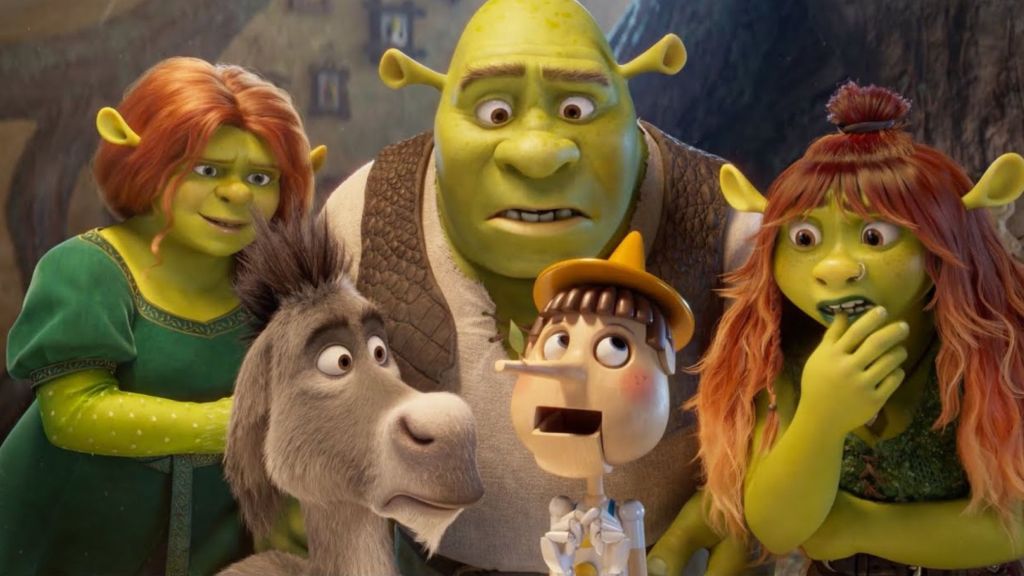
The 17-year gap between Shrek Forever After and Shrek 5 is the longest dormancy in the history of any major CG animated franchise, and that absence has fundamentally reshaped the audience waiting for it. That’s because the children who grew up with the original films are now adults, and their own kids have never seen a Shrek movie in theaters. DreamWorks built the new installment around exactly that generational shift, as the story centers on Shrek and Fiona’s three teenage children, with Zendaya voicing daughter Felicia and Marcello Hernández and Skyler Gisondo as sons Fergus and Farkle. In addition to the new voices, Shrek 5 brings back Mike Myers, Eddie Murphy, and Cameron Diaz, the latter returning to acting after a decade-long absence. While the film’s first teaser sparked backlash over updated character designs with smoother textures and larger eyes, it’s worth noting that DreamWorks’ Puss in Boots: The Last Wish received similar criticism before being embraced as one of the best animated movies ever. Shrek 5 opens June 30, 2027.
4) The Super Mario Galaxy Movie

The Super Mario Bros. Movie hauled $1.36 billion worldwide in 2023 and became the highest-grossing video game adaptation in cinema history, a result that gave Illumination and Nintendo a clear path forward with The Super Mario Galaxy Movie. Returning directors Aaron Horvath and Michael Jelenic use that commercial result to expand the universe dramatically, launching Mario (voiced by Chris Pratt), Luigi (voiced by Charlie Day), Princess Peach (voiced by Anya Taylor-Joy), and Toad (voiced by Keegan-Michael Key) into outer space after Bowser Jr. (voiced by Benny Safdie) interrupts Peach’s birthday with a campaign to restore his father’s empire. That cosmic setting also allows the sequel to introduce two of gaming’s most beloved characters to the film series, with Brie Larson voicing Rosalina and Donald Glover voicing Yoshi, alongside Luis Guzmán as King Wart and Issa Rae as the Honey Queen. Composer Brian Tyler also returns with a 70-piece orchestra performing newly recorded themes from the Super Mario Galaxy games, giving the sequel the full orchestral scope the first film teased. The Super Mario Galaxy Movie opens April 1, 2026.
3) Toy Story 5
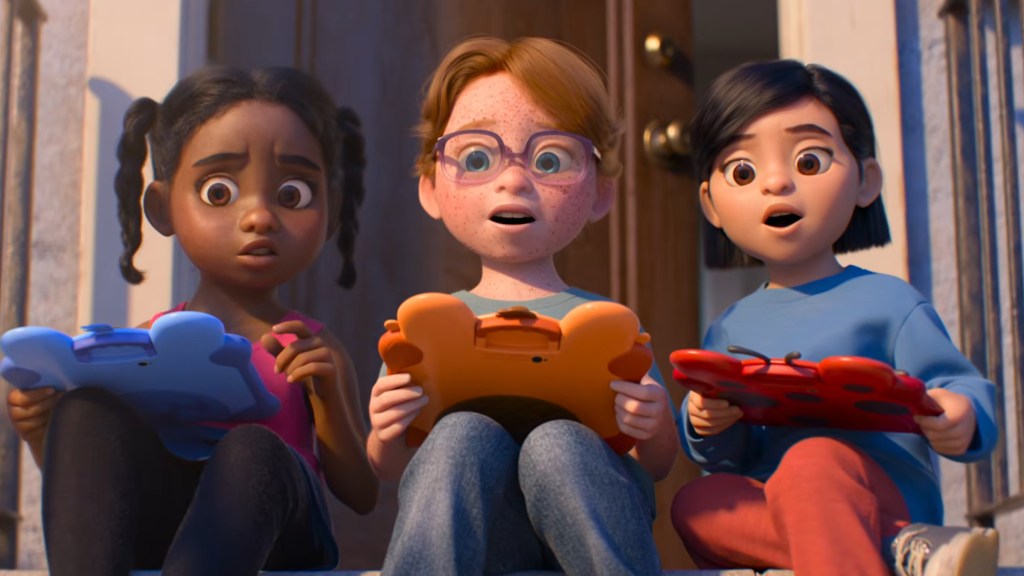
Toy Story 3 and Toy Story 4 both crossed $1 billion globally, and that back-to-back commercial record means Toy Story 5 carries a commercial pressure that no other Pixar sequel currently faces. Furthermore, the new movie must justify the franchise’s return to an audience that Toy Story 4 appeared to send off with a definitive conclusion. To meet these high expectations, the studio brings back the full ensemble—Tom Hanks as Woody, Tim Allen as Buzz, Joan Cusack as Jessie, and Annie Potts as Bo Peep—while centering the new story on a conflict the franchise has not previously explored. In the sequel, Bonnie’s AI-enabled tablet, voiced by Keanu Reeves, functions as the film’s primary antagonist, framing analog toys as obsolete against the smart devices replacing them in children’s lives. That generational tension is handled by Andrew Stanton, co-directing alongside McKenna Harris, who returns to a franchise he helped originate as a writer before directing Finding Nemo and WALL-E. Toy Story 5 opens June 19, 2026.
2) The Incredibles 3
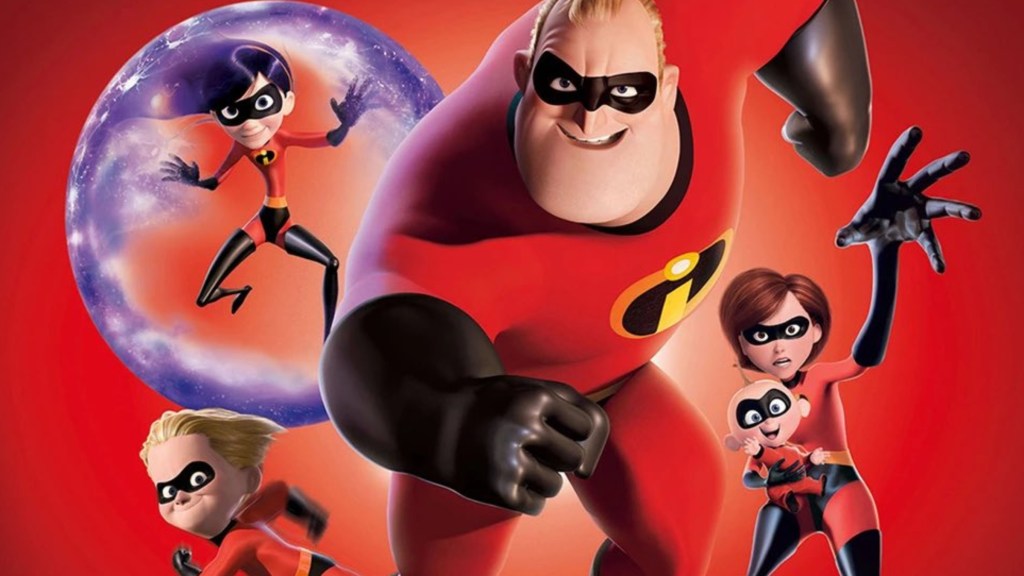
Incredibles 2 holds the North American opening-weekend record for an animated film and grossed $1.24 billion globally in 2018, driven in large part by an audience that had spent 14 years waiting for the Parr family’s return. The Incredibles 3 now asks that same audience to wait a decade more, with Brad Bird returning to write and direct a third chapter that he has kept in complete secrecy. We know that Craig T. Nelson, Holly Hunter, and Samuel L. Jackson are all back to voice Bob, Helen, and Lucius, but the silence around everything else is consistent with Bird’s production posture on both prior films. Disney announced the project at D23 in August 2024 with an initial spring 2026 window before moving the release to June 16, 2028, extending the production timeline by two years. That decision signals a studio prioritizing the integrity of the third chapter over capitalizing on short-term franchise momentum, and Bird’s track record suggests the additional runway will be justified.
1) Spider-Man: Beyond the Spider-Verse

Across the Spider-Verse ended with Miles Morales (Shameik Moore) stranded in an alternate universe, hunted by the Spider-People he once considered allies, and powerless to protect his family from a threat he cannot yet understand—a cliffhanger that has now gone unresolved for four years. Beyond the Spider-Verse was built to answer it, with directors Bob Persichetti and Justin K. Thompson helming the conclusion from a script by Phil Lord, Christopher Miller, and David Callaham. Lord and Miller have described the film as the most emotionally demanding chapter of the trilogy, one in which Miles operates as a fugitive from the multiverse with almost no trustworthy allies. In addition to resolving Miles’ arc, the production has developed entirely new animation techniques to expand The Spot’s (Jason Schwartzman) visual vocabulary into territory that pushes beyond anything the previous two films attempted. After production setbacks, a script overhaul, and the SAG-AFTRA strike pushed the release well past its original 2024 date, Spider-Man: Beyond the Spider-Verse is now set for June 18, 2027, in IMAX and premium large formats.
Which animated movie sequels are you most excited for? Leave a comment below and join the conversation now in the ComicBook Forum!
