


Articles
Marathon’s Major Change Just Fixed The Biggest Issue With Live Service Games
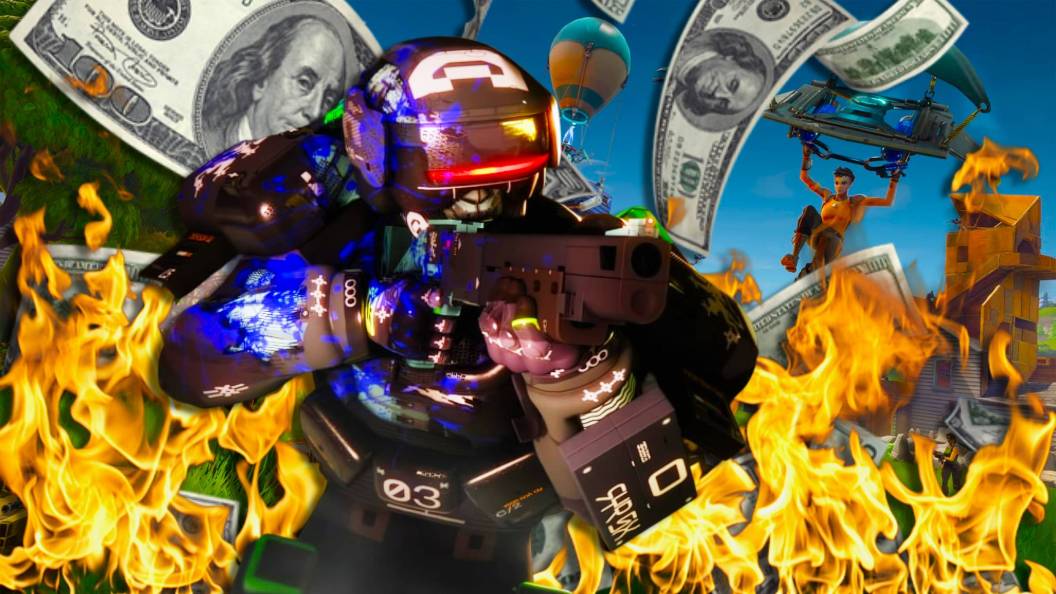
In an era in which live service games like Fortnite continue to support the predatory monetization methods of yesteryear to make a quick buck off of unassuming consumers and plague the gaming industry with outdated game design and unsustainable development practices, it is always refreshing to see a game eschew the norm and try to push the medium forward in a healthy and progressive way. These rare examples prove that live service games do not have to be terrible, and there is certainly a place for their style of gameplay evolution.
Some of the greatest live service games have completely changed the way we approach the genre and the way developers promote them. I had assumed that Marathon, Bungie’s latest attempt at enrapturing the live service market, would fail to join their hallowed ranks and move the needle in some all-important way. However, Bungie has recently changed a core part of Marathon’s live service model in a way that could have a hugely positive impact on the medium as a whole, and I am frankly in complete disbelief. This one move may finally resolve the biggest issue with live service games.
Marathon’s Monetization Method Is Finally Fair
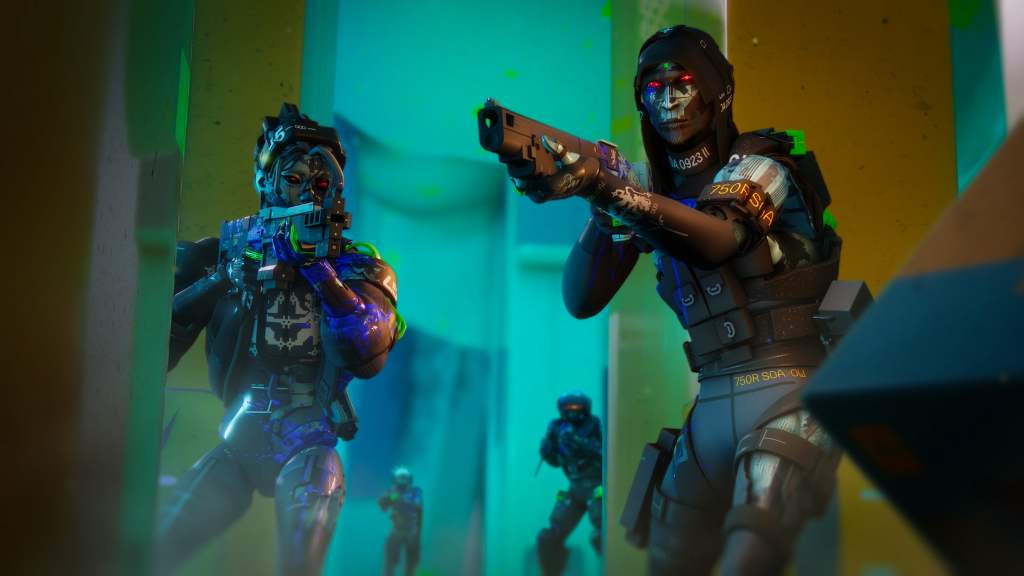
While Marathon may have continued a somewhat confusing trend of premium games charging for microtransactions (it wasn’t okay when EA and Ubisoft did it, and it still isn’t now), Bungie has somewhat earned a little bit of respect for its recent move to eschew live service norms and traditions and make its monetization model just that little bit more fair. Crucially, it used to be that $10 got you 1,100 of its in-game currency, LUX, which was just 20 short of its cheapest skin’s cost. That meant you had to pay an additional $5 just to afford one skin. Regardless of your feelings about whether a skin should cost nearly half the price of the game itself, this continuation of a well-known live service monetization method is utterly predatory and unfair.
Fortunately, in a major Marathon update, Bungie addressed this issue by making it so that $10 now gets you exactly 1,120 LUX. It is a small change, one that may seem largely insignificant. However, not only is this saving the average consumer a lot of money (while also costing Bungie nothing, as in-game currency’s real-world value is completely nebulous and arbitrary), it is setting an incredibly positive precedent that I sincerely hope other live service games follow in the very near future. This is, of course, not the first time this has happened, as live service games, especially from AAA developers, have tried to make their monetization methods appear fairer for some time.

However, it is nevertheless an important move, one that both illustrates Bungie’s ability to respond to player feedback and willingness to abandon the outdated monetization practices of early live service titles. If Bungie wishes to remain a key player in the market and, indeed, keep Marathon alive, then this feels like an utterly necessary decision. Furthermore, this also showcases an understanding that these practices are simply no longer tolerated and that even large AAA studios like Bungie cannot get away with it. The more studios are backed into giving up utilizing these predatory microtransactions, the better this frankly bizarre virtual economy will get, and the easier it will be on consumers’ wallets.
Now, I do not want to devalue the positive outcome of Bungie’s shifting strategy when it comes to generating revenue fairly. After all, the news of it increasing the amount of LUX players get preceeded Epic Games’, the billion-dollar studio behind the biggest game of all time, baffling decision to make Fortnite’s V-Bucks even more worthless in an attempt to get its core consumer to pay for its rising development costs. However, despite its best efforts, it’s hard not to feel that Marathon has joined a dying breed of live service games, and, ironically, this recent shift isn’t helping.
Marathon Is At Risk Of Becoming A Dying Breed

The more live service monetization becomes fair and unobtrusive, the more premium experiences with microtransactions will become a thing of the past. While Helldivers 2’s revolutionary approach to battle passes certainly worked in its favor, it also being a $40 game with in-game currency just doesn’t make any sense. Of course, both Helldivers 2 and Marathon have done extremely well by most metrics, and will likely continue to sell well and bring in plenty of revenue for their respective developers and PlayStation for some time. However, I cannot see how this format continues long into the future, nor that it should, frankly.
Should Bungie’s shift in strategy, Helldivers 2’s battle pass tweaks, and the plethora of other ways live service monetization methods have evolved positively over the years inspire change in free-to-play games, then there will be little reason for consumers to buy these premium products, regardless of the pedigree behind them. One needs only look to Concord’s $400 million flop as a prime example of how this structure will ultimately fail. It may have been lessened somewhat, ironically, had it been released for free rather than as a premium product. The notion of a cash shop in a premium game that players were already immensely skeptical of likely didn’t help bolster confidence in anyone weighing up whether they should spend their hard-earned money on it.
Of course, going free-to-play doesn’t always result in success, but it certainly doesn’t hurt. I would have thought Bungie, of all studios, would have known this, as it switched Destiny 2 from a premium experience to a f2p one back in 2019 to better compete with the likes of Fortnite and further increase the chances of someone actually shelling out money for its overpriced skins. You simply cannot be charging for games like Helldivers 2 and Marathon (while also including paid currency, battle passes, etc), when games like Fortnite, Genshin Impact, and Where the Winds Meet are free. These games, among others, established an expectation that live service games worked on the understanding that in-game currency was the cost of playing them, rather than an upfront charge. Marathon and its ilk eschewing that understanding hasn’t proven to be revolutionary as much as it has been utterly divisive.
The Future Of Live Service Gaming & Marathon Is Precarious
As I hear about Overwatch 2’s outrageously priced skins costing players thousands of dollars and Genshin Impact’s ridiculous number of currencies causing confusion and frustration, I can’t help but wonder what the future of this genre truly looks like. As aforementioned, I sincerely doubt that Marathon’s monetization method will become the norm. Its premium cost is too divisive, and Bungie’s (among many other developers’) strides to make microtransactions fair will only lead to free-to-play games feeling like an infinitely attractive option. Yet, perhaps these fairer practices are only possible as a result of the initial investment from players, and losing those kinds of games will see the predatory microtransactions return.
However, as the free-to-play model and the premium with a paid cash shop model cannot exist in tandem, as the former will always make the other seem redundant, one cannot imagine the existence of Marathon-esque games lasting much longer. Again, I do not want any of this to diminish the fact that Bungie’s key change to Marathon’s monetization has furthered the efforts to rectify the unfair digital economy of the live service genre, and I am grateful it made that move. Rather, I think it is interesting how these fixes can expose alternative issues, keenly the dichotomy between the premium live service release and the hopeful rise of fairly monetized free-to-play titles.

The best case scenario is that the temporary rise of monetized premium experiences brings about the downfall of unfair microtransactions and helps improve the free-to-play landscape. The worst-case scenario is that their impact is minimal, and once they eventually fade into obscurity, the monetization methods that plagued the early days of live service games rear their ugly heads once more. I sincerely hope that Marathon leaves a positive legacy behind and that the gaming industry can find a healthy equilibrium of revenue and respect for its consumers. It remains to be seen, of course, but at the very least, as we meditate on the doom and gloom of this live service generation, Marathon fans can now get their LUX for a much fairer price, and that’s pretty nice.
What do you think will be Marathon’s future? Leave a comment below and join the conversation now in the ComicBook Forum!
