


Articles
What the Upside Down Really Is Explained After Stranger Things Retcons 9 Years of History
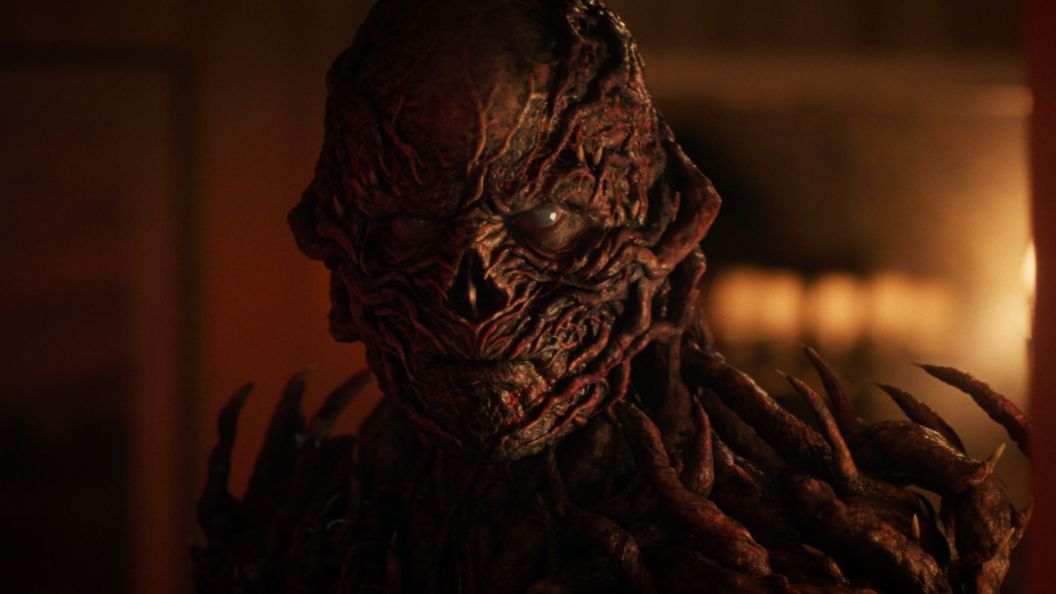
Since the pilot episode aired in 2016, the mythology of Stranger Things has revolved around a terrifying location known as the Upside Down. This dark reflection of Hawkins served as the primary setting for the series’ horror elements, a decaying landscape where ash falls like snow and monsters prowl the ruins. Over the course of four seasons, Stranger Things meticulously expanded the lore of this alternate dimension, introducing an ecosystem of predators like the Demogorgons and the Mind Flayer before finally pulling back the curtain to reveal Vecna (Jamie Campbell Bower) as the architect behind the chaos. Audiences spent nearly a decade operating under the assumption that this shadow realm was a parallel world or a psychic projection. However, Stranger Things Season 5 has upended these foundational truths, delivering a massive retcon that proves everything viewers thought they knew about the Upside Down was wrong.
Warning: Spoilers below for Stranger Things 5, Volume 2
In Season 5 of Stranger Things, Dustin Henderson (Gaten Matarazzo) explores the ruined version of Hawkins Lab within the Upside Down. In a secret room hidden within the facility, he uncovers the private journals of Dr. Martin Brenner (Matthew Modine), which provide a scientific explanation for the supernatural phenomena plaguing the town. Dustin discovers that the Upside Down was not created by Vecna, nor is it a naturally occurring parallel dimension. Instead, it is the result of human experimentation gone wrong.

The swirling sphere of energy that Nancy Wheeler (Natalia Dyer) and Jonathan Byers (Charlie Heaton) encounter in the lab is not a weapon or a shield generator, but a mass of exotic matter. This substance is the only thing stabilizing the realm, because the Upside Down is actually a wormhole. It functions as a bridge connecting two distant points in space-time, meaning the vine walls surrounding it form a cosmic tunnel, instead of hiding a fully formed world.
Hawkins, the Upside Down, and the Abyss in Stranger Things

Dustin’s discovery redefines the cosmology of the franchise by establishing three distinct planes of existence: Earth, the Upside Down, and a third realm dubbed “The Abyss.” The Upside Down acts solely as the transit zone between the other two. When Dr. Brenner used Eleven (Millie Bobby Brown) to contact Henry Creel years ago, the psychic connection bored a tunnel through the fabric of reality. The reason the Upside Down resembles Hawkins is that it exists as the friction point where the wormhole pushes against the physical world, creating a distorted echo of the environment. The exotic matter found in the lab acts as the glue holding the walls of this tunnel together, preventing the bridge from collapsing into non-existence.

The Abyss, named by Dustin after the chaotic planes of Dungeons & Dragons, is the true destination at the other end of the wormhole. This desolate wasteland is the original habitat of the Demogorgons and the source of the Mind Flayer particles. It is also the location where Eleven banished Henry Creel in 1979, a place distinct from the dark version of Hawkins he later came to inhabit.
Finally, the relationship between these dimensions is vertical. The “ceiling” of the Upside Down serves as the floor of the Abyss. This is confirmed when Holly Wheeler (Nell Fisher) falls through a portal in the sky of the Upside Down after jumping through a hole in the Abyss, while trying to escape Vecna.
What Is Vecna’s Plan for the Upside Down and the Abyss?
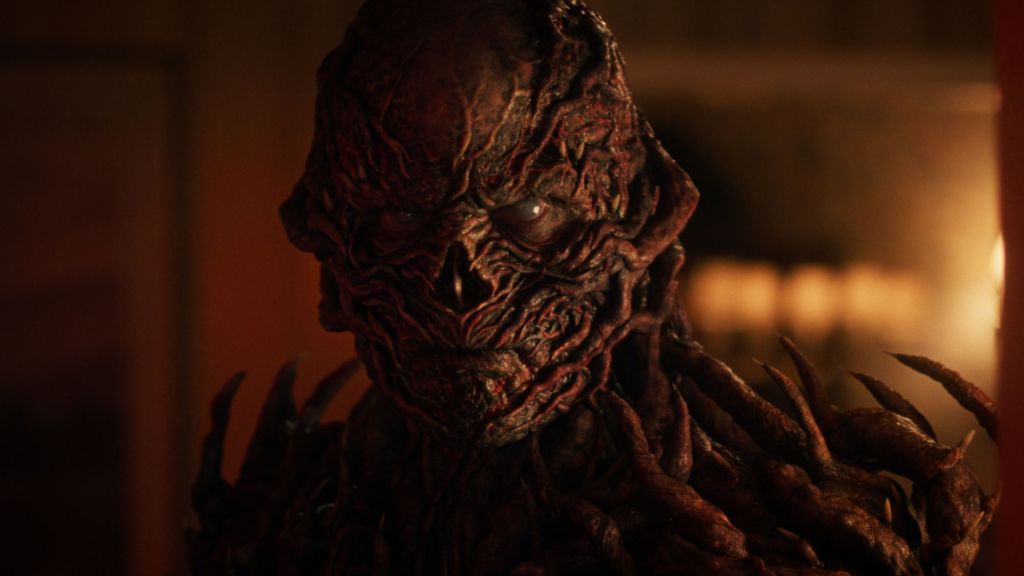
Vecna’s endgame is to engineer a dimensional collision. The rifts he opened in Hawkins during the fourth season were merely the demolition work required to weaken the barrier separating Earth from the wormhole. Meanwhile, and unknown to all, Vecna has also been creating rifts in the barrier separating the wormhole from the Abyss. By fracturing both ends of the bridge, Henry intends to pull the Abyss through the Upside Down and force it to merge with the physical world. This convergence would obliterate the world, potentially terraforming Earth into a realm of monsters. Or it could simply cause the extinction of all life.
To achieve this feat of cosmic lifting, Vecna requires a massive amplification of psychic energy, which explains his abduction of twelve children in Season 5 of Stranger Things. The series reveals that Will Byers (Noah Schnapp) was the prototype for this plan. In the second season, Vecna used Will as a vessel to dig the tunnel network beneath Hawkins, proving that a human host could tap into the hive mind and channel Henry’s psychic powers. The penultimate episode concludes with Henry conducting a séance where the captured children, including Holly, enter a synchronized trance. Their combined psychic output provides the power necessary to drag the Abyss down through the wormhole, threatening to crash the dimensions together in the series finale.
Volume 2 of Stranger Things Season 5 is currently streaming on Netflix. The final episode arrives on January 31st.
Did you enjoy Stranger Things‘ final twist on the nature of the Upside Down? Leave a comment below and join the conversation now in the ComicBook Forum!
The post What the Upside Down Really Is Explained After Stranger Things Retcons 9 Years of History appeared first on ComicBook.com.
